

The career connection learners want, and the data issuers don't have

The previous section focused on helping learners communicate the value of a credential to employers. The next opportunity is helping learners understand what that credential means for their career over time and collecting the evidence to prove it's working.
Learners want to see the career connection
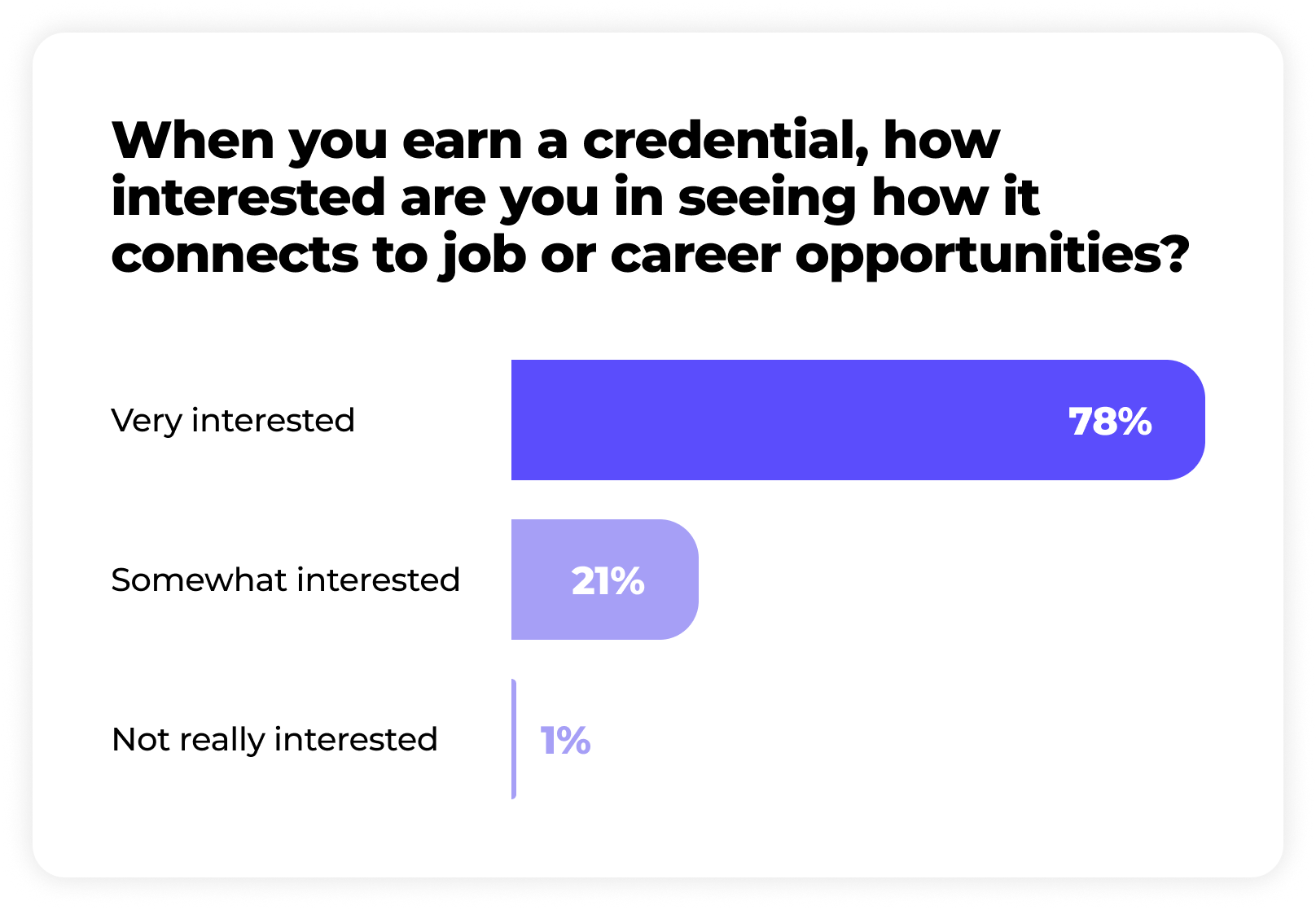
Learners aren't simply looking for career advice. Almost all (99%) want to see how the credential connects to job or career opportunities.
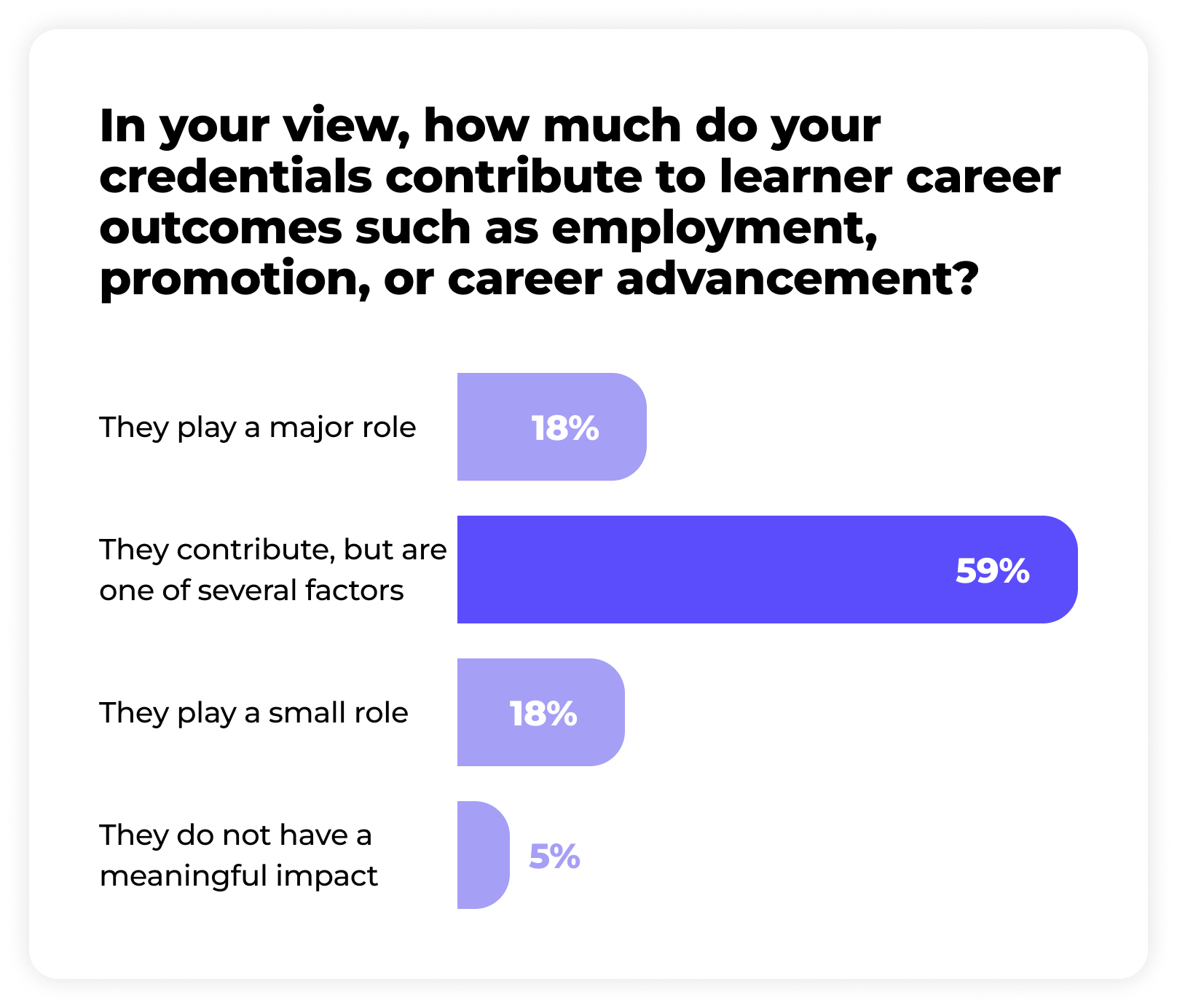
And the majority of issuers recognize the role their credentials play in this. Most issuers (77%) recognize credentials contribute to career outcomes. But, importantly, most also recognize they're rarely the whole story.
Credentials are only one of several factors that influence employment, promotion, and career advancement, so issuers need to think beyond credential issuance if they want their credentials to be as valuable as possible for learners.
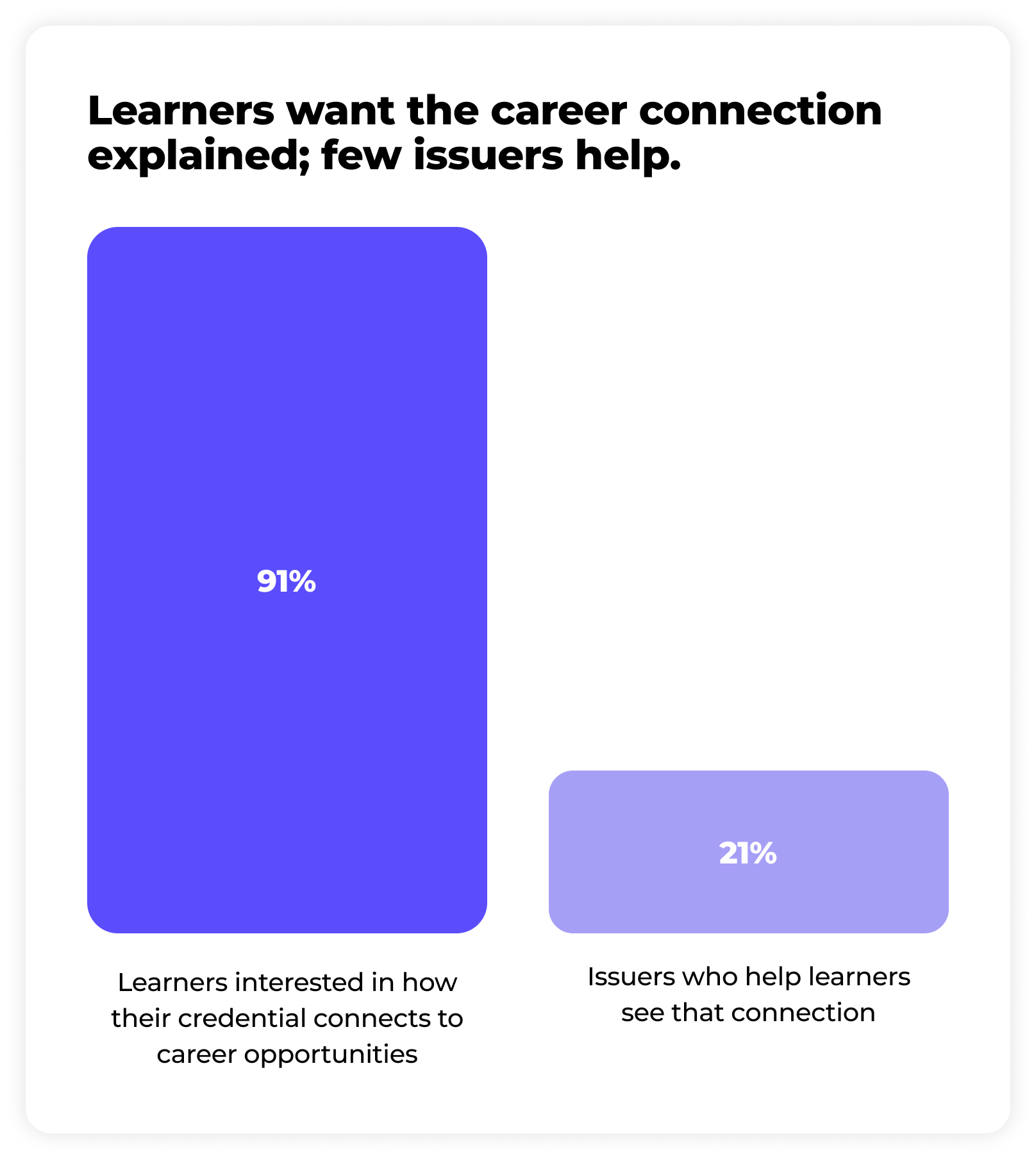
Even though issuers understand the role credentials play in career outcomes, there is a significant gap. Only 21% report that they help learners understand how the credential connects to career opportunities.
Learners want more than a record — they want direction
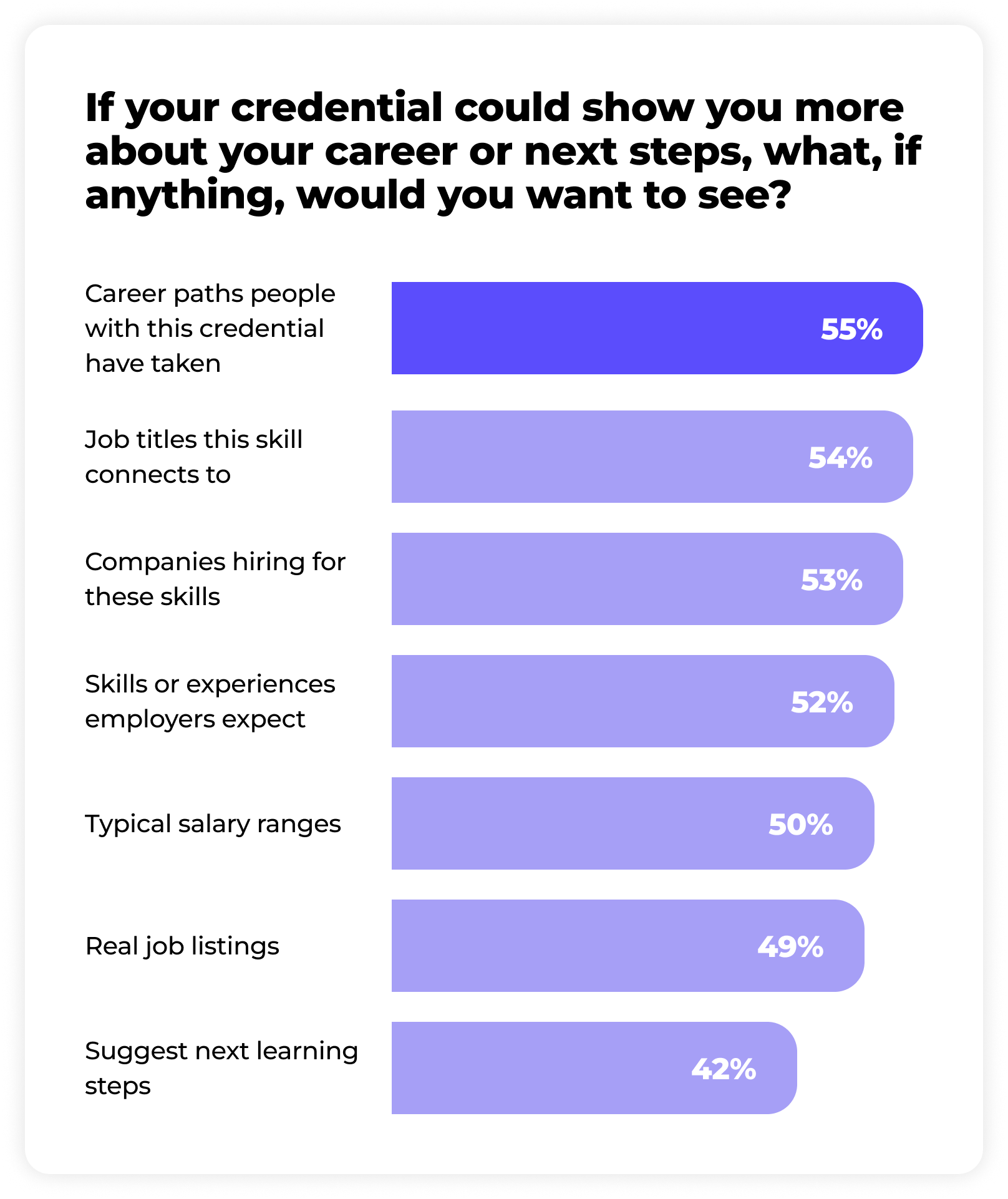
Learners are looking for more than a digital record of achievement. They want credentials that help them understand where they can go next, what opportunities they qualify for, and how their skills translate into the job market.
Introducing Career Journey: What Comes After the Credential
See how Career Journey gives every credential earner free, automatic career guidance — skill translation, role recommendations, and a concrete next step — the moment they view their credential. No setup required.
Show learners what's possible
Beyond career information, many learners want evidence of what others have achieved after earning the same credential. Sharing examples of employment, promotions, or other career outcomes helps learners understand the potential value of their credential while reinforcing program impact, and this is something that 37% of learners would like to see.
However, only 14% of issuers currently provide this type of evidence.
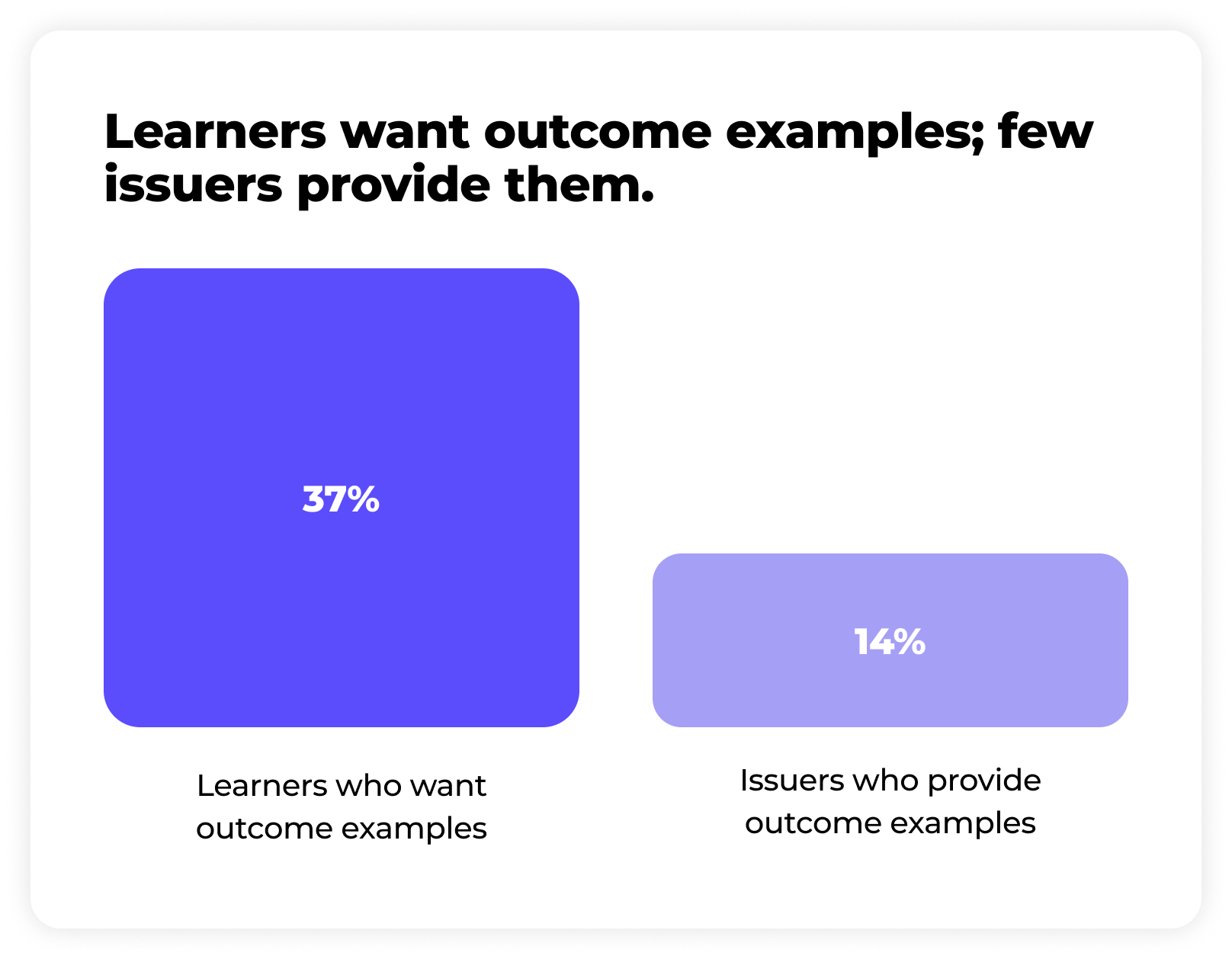
Learners are willing to share career outcomes, but issuers aren’t asking
Organizations often struggle to demonstrate long-term impact because they lack career outcome data. The encouraging news is that this may be easier to solve than many assume. Nearly all learners (93%) say they would be willing to share their career outcomes with the organization that issued their credential, provided basic expectations around privacy and transparency are met.
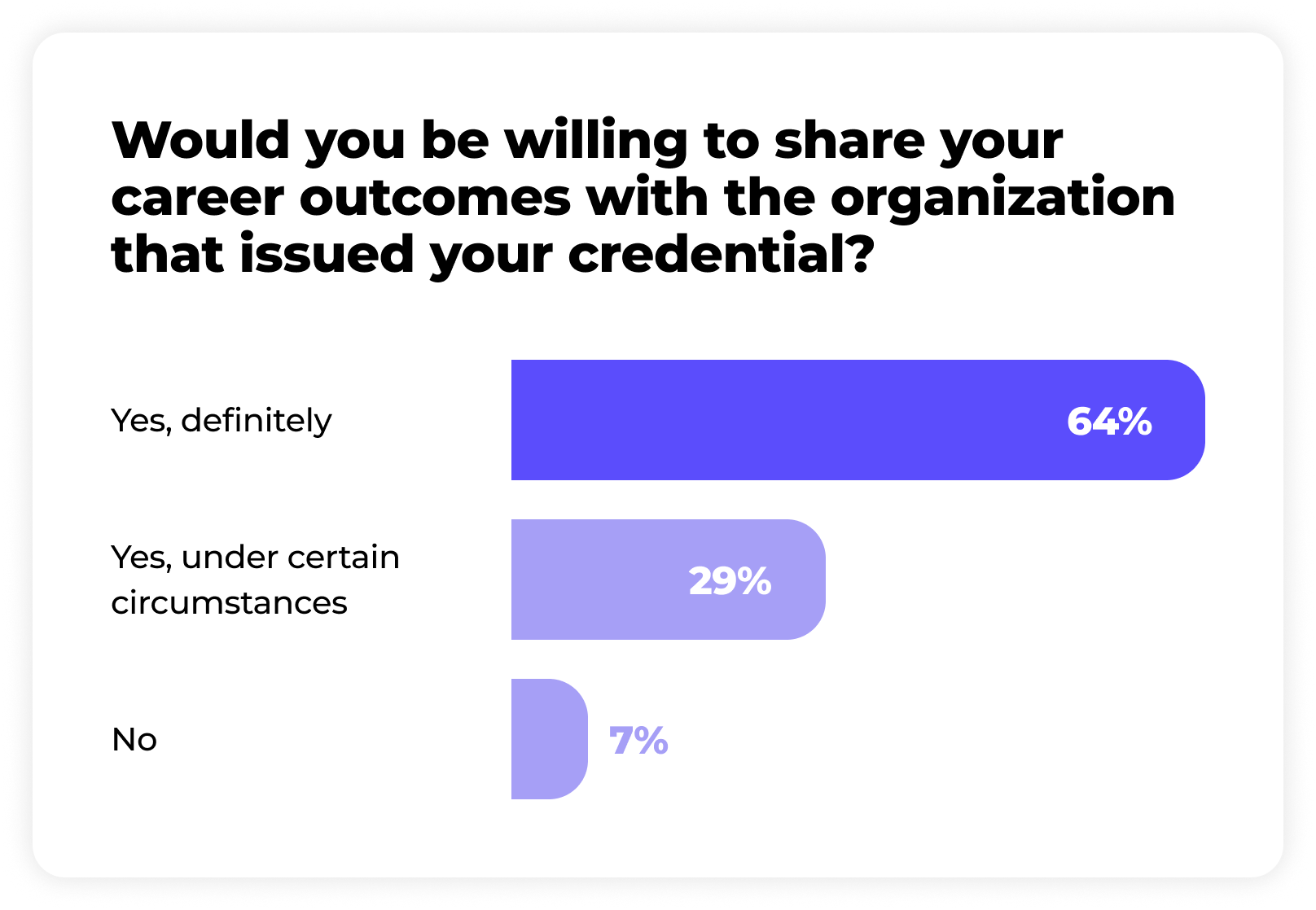
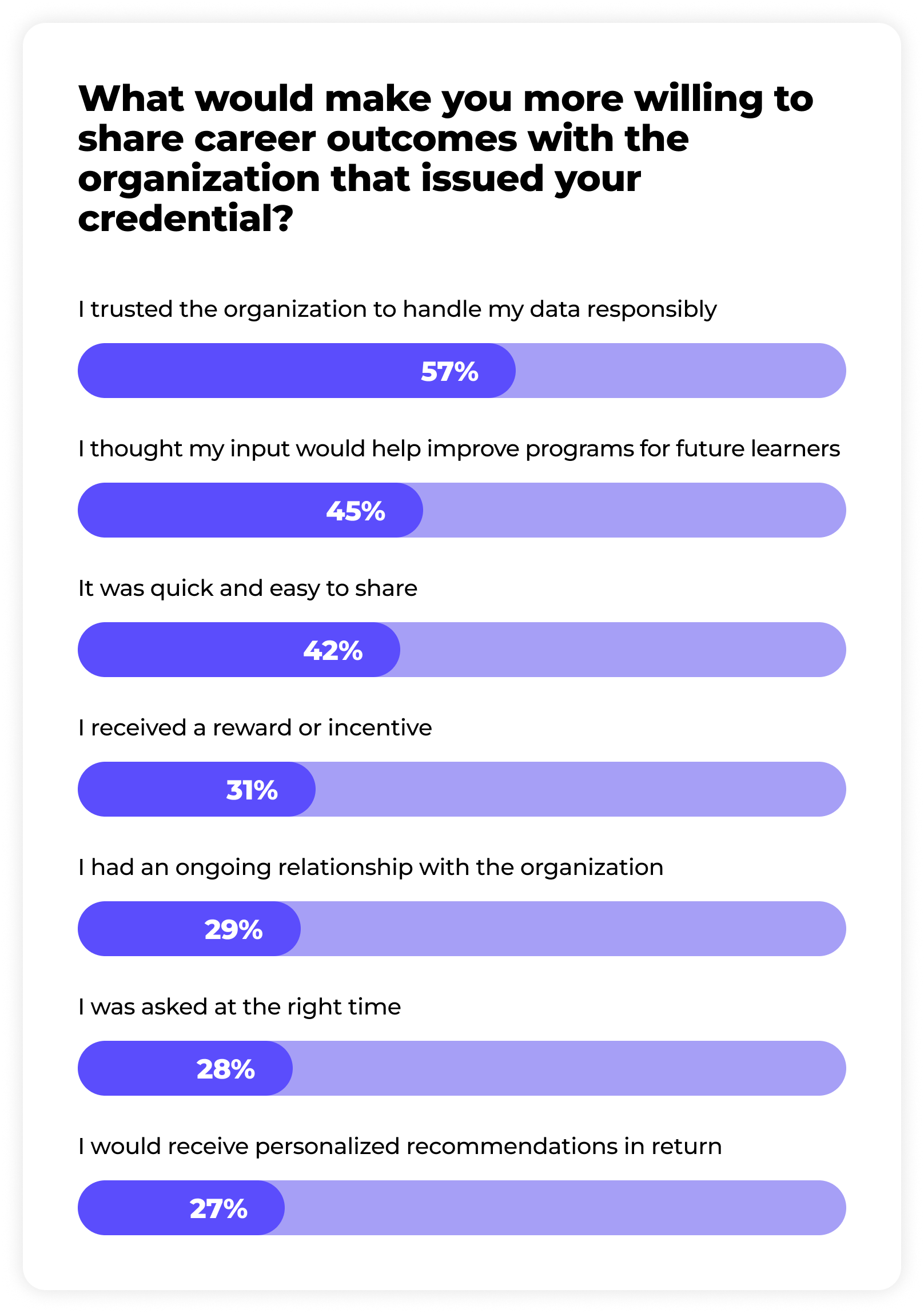
Even though learners are willing to share this information, issuers aren’t asking. Almost half of learners report they have never been asked for this information, and an additional third say they have only been contacted once.
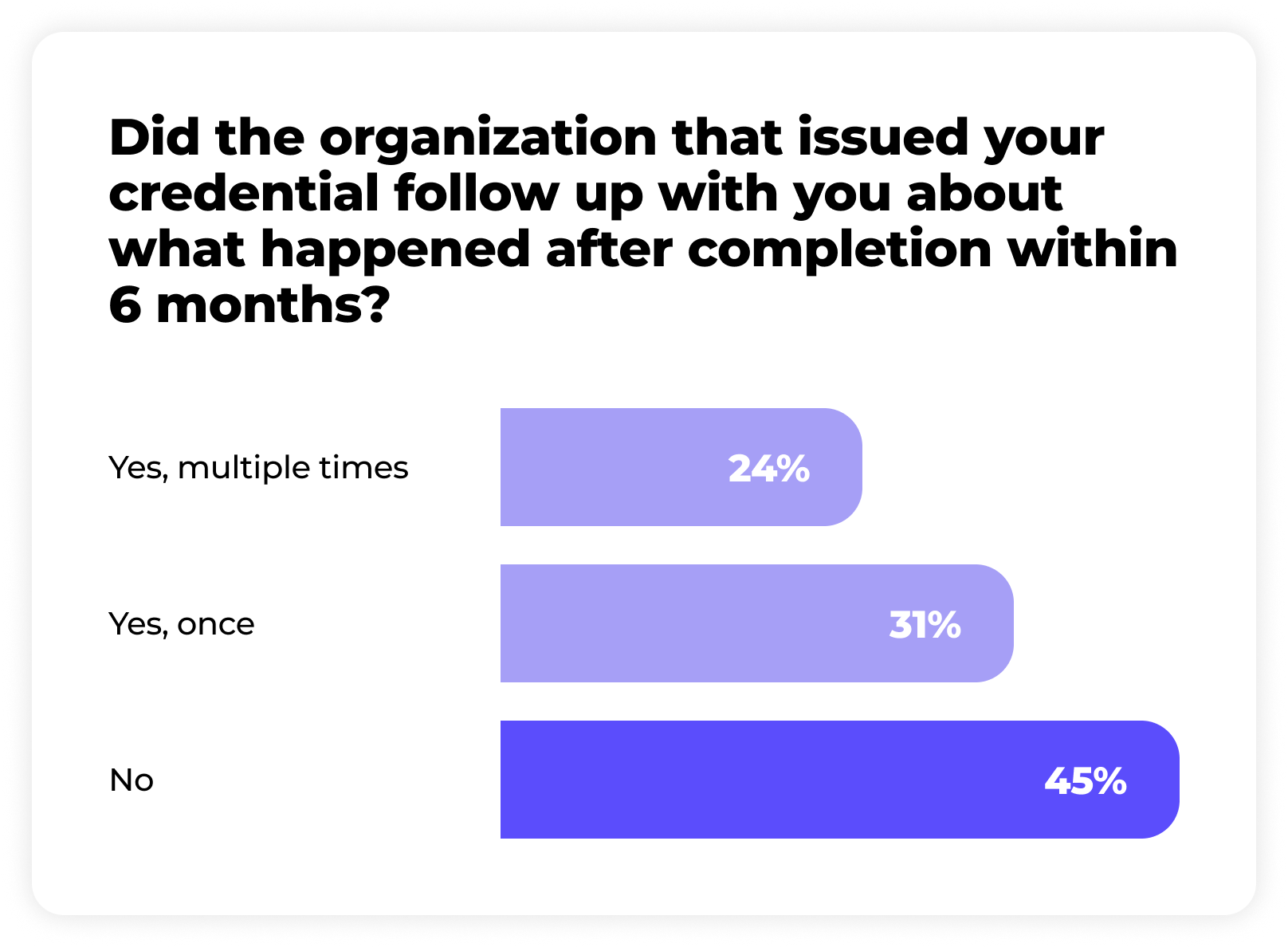
The gap is structural. As Holly Zanville, Founder and Executive Director of the Learn & Work Ecosystem Library, puts it: "We have spent a great deal of time building systems for awarding credentials and much less time building relationships with credential earners that tell us what happened next."
A caveat: closing it may not be as easy as the willingness numbers suggest. Jennifer Fong, Senior Director of Continuing Education and Workforce Development at IEEE, urges realism about that willingness: "I was surprised at the high percentage of learners who were open to the follow-up, and based on our experience with response rates, I'm a bit skeptical that it is as easy as asking."
But the difficulty is not an alibi. Michelle Van Noy, Director of the Education & Employment Research Center at Rutgers University, on issuers who don't track outcomes, is blunt: "That doesn't justify not doing it."
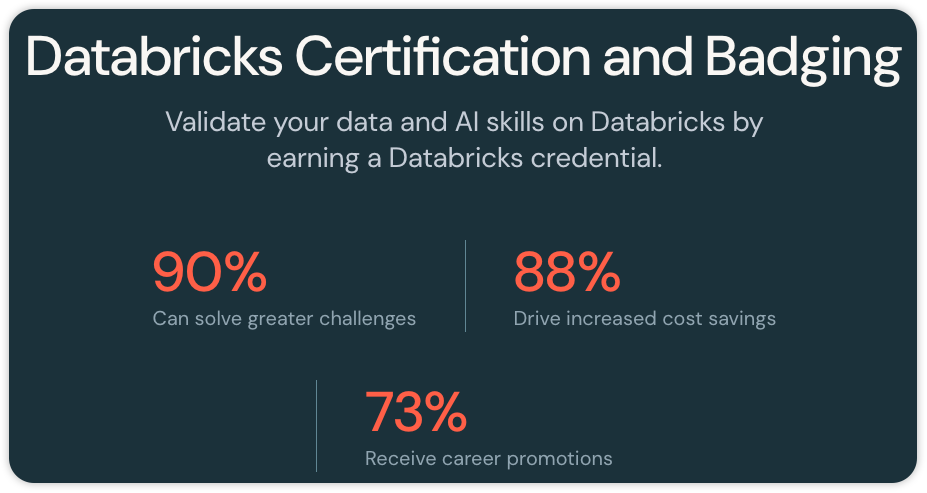
Some issuers are already doing it well. Programs like Maven Analytics, Snowflake, and Databricks share learner testimonials, outcomes, and proof points directly on their program pages. Not buried in a case study, but visible to anyone considering their credentials. Databricks, for example, publishes aggregate outcome data on its certification page: the share of certified professionals who report solving greater challenges (90%), driving cost savings (88%), and receiving career promotions (73%). Data like that only exists because someone followed up.
Helping learners connect credentials to career outcomes creates value on both sides. Learners clearly have a desire for this type of support, and those who receive it will have a better experience. But doing so helps issuers as well. By helping learners navigate what comes next — and by continuing the conversation after completion — issuers can create a stronger learner experience while collecting the outcome data that has become increasingly important to demonstrating program success.
The Guide to Measuring Learner Outcomes That Actually Matter
Use our free post-completion survey template and rollout guide to start capturing career impact at scale — without adding headcount.
Operational practices behind successful programs
Supporting learners is only half the equation. To consistently deliver and demonstrate those outcomes, credentialing programs need the right operational foundations. Next, we examine what the most successful programs do differently.


