

Learners are confident but need more help proving it to employers

Most learners feel confident explaining what they've earned, but confidence alone isn’t enough. The opportunity isn't helping learners earn credentials — it's helping them explain and apply those credentials throughout their careers.
Credential holders are expected to demonstrate their qualifications
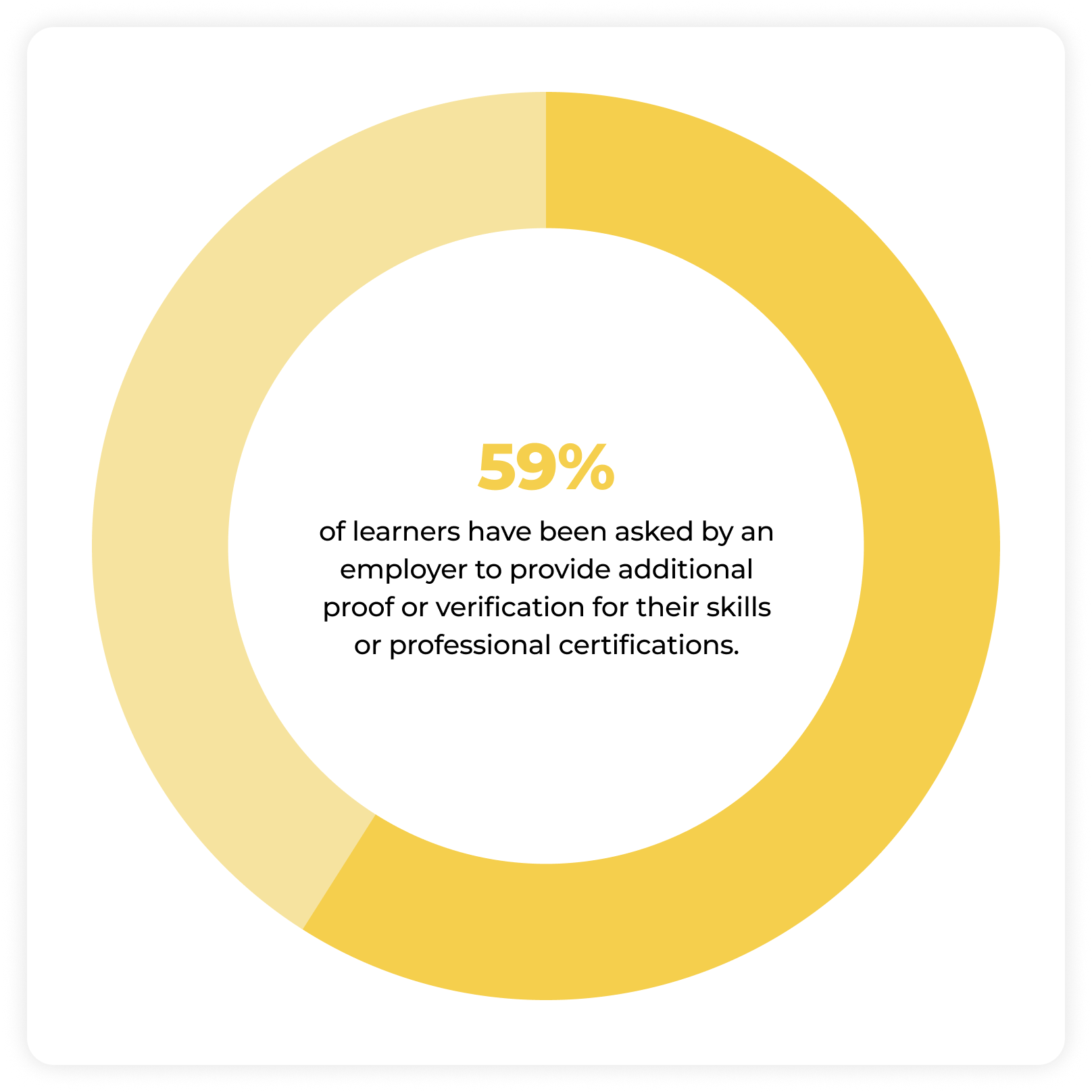
Nearly six in ten learners (59%) have been asked to verify their credentials, showing that credentials are already part of hiring and professional conversations.
Learners want practical support communicating the value of their credentials to employers
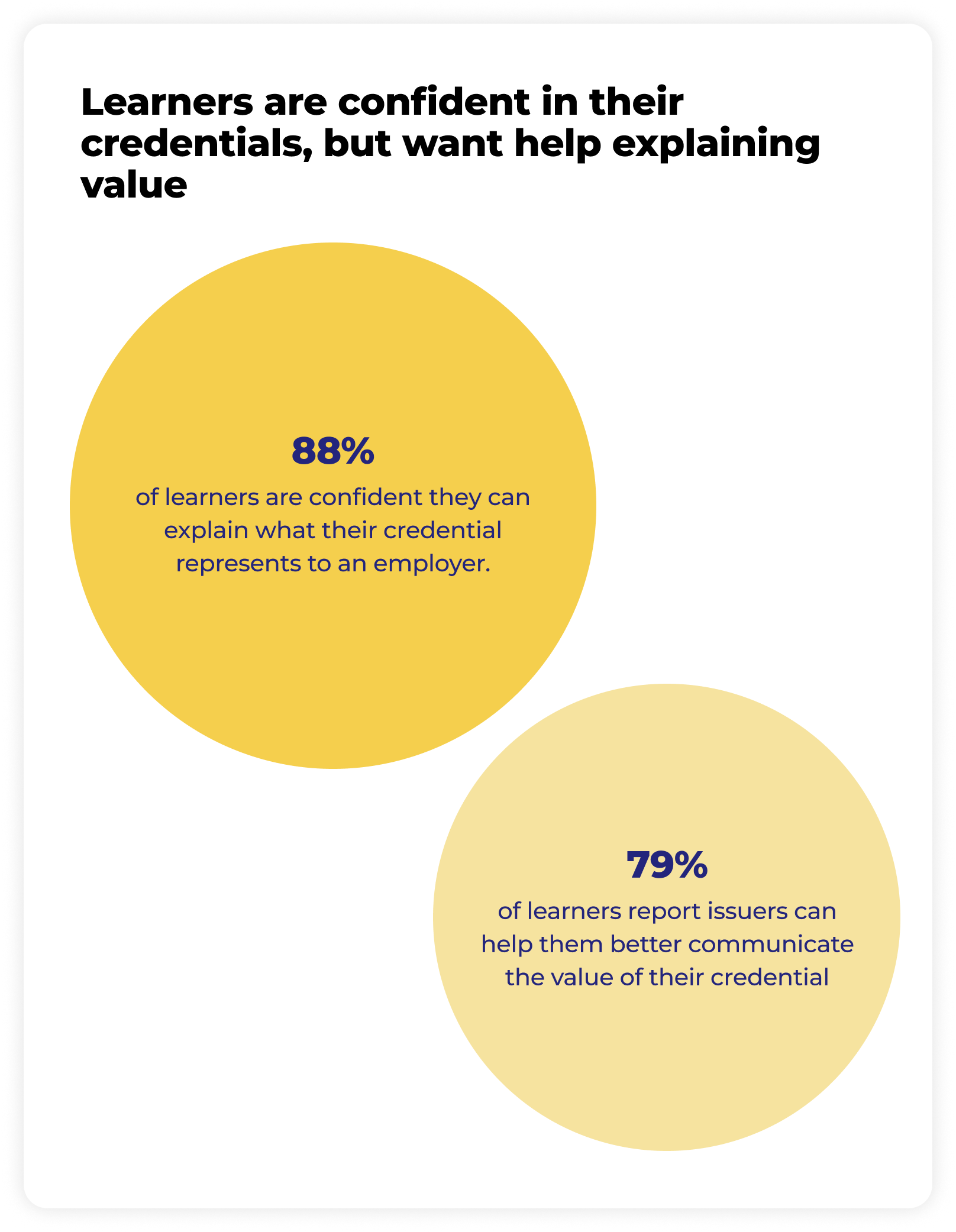
88% of learners understand what they've earned and feel confident explaining it to employers. Even so, nearly eight in ten say additional support from issuers would make it easier to communicate the value of their credential.
The data pinpoints specific opportunities issuers can take.
Opportunity #1: Help learners communicate their skills
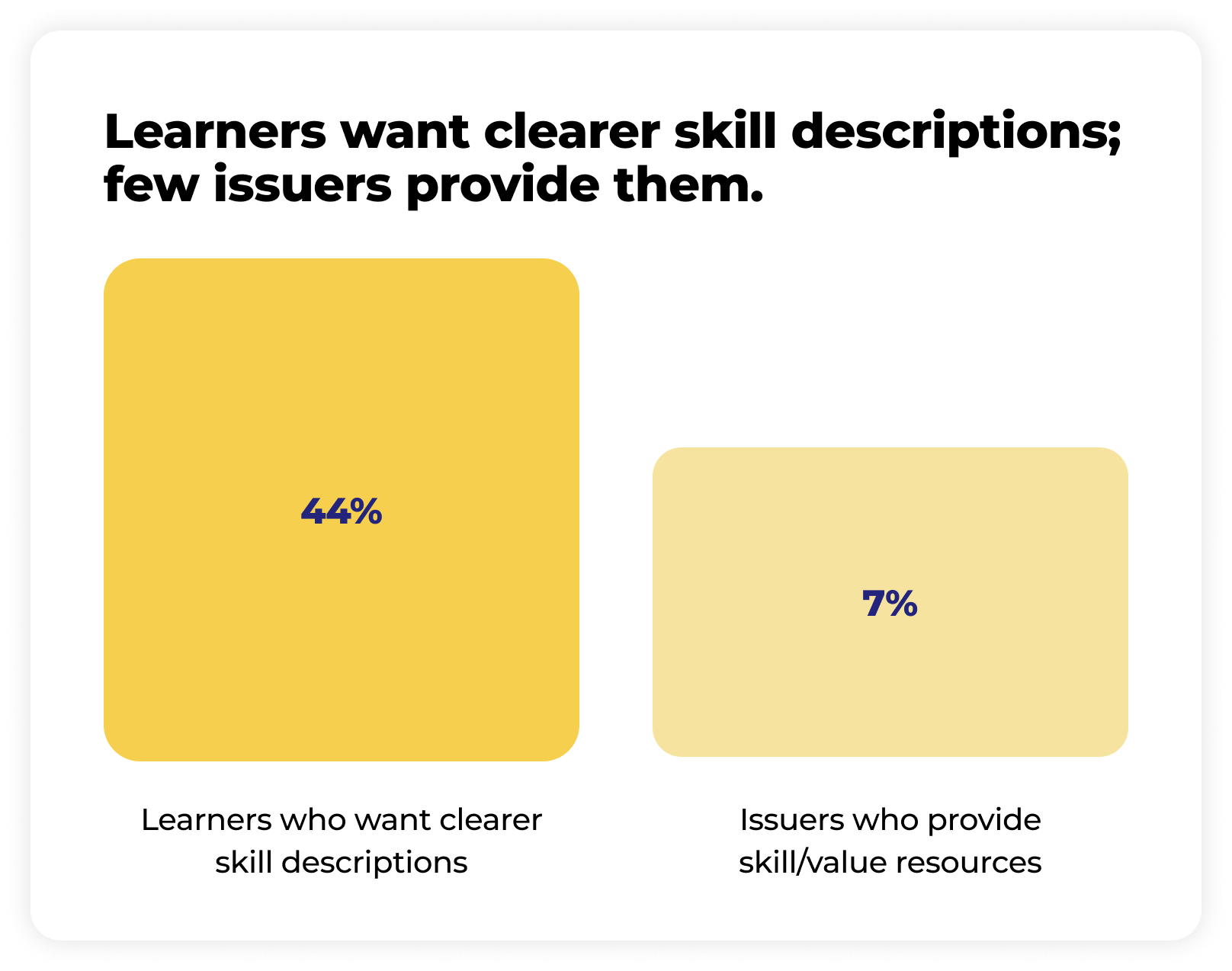
Even though learners are confident they can explain their credential, 44% report it could be easier to communicate the value of their credential if issuers included a clearer description of the skills they learned.
Helping learners understand — and explain — what a credential represents should be a foundational capability of every credentialing program. Yet only 27% of issuers provide resources explaining the skills or value represented by a credential.
Richer skill descriptions and metadata are relatively straightforward improvements that can make credentials easier for both learners and employers to understand.
Wendy Palmer puts the stakes plainly: "I've seen trusted, verifiable badges that are completely useless, because the information written in them doesn't help anyone."
The fix is specificity. Noah Geisel, Micro-Credentials Program Manager at the University of Colorado Boulder, argues that trust with learners and employers is built through "radical transparency into what credentials are credentialing (descriptions, alignments to standards, clear earning criteria that is measurable and assessed) and evidence to demonstrate how earning criteria was met."
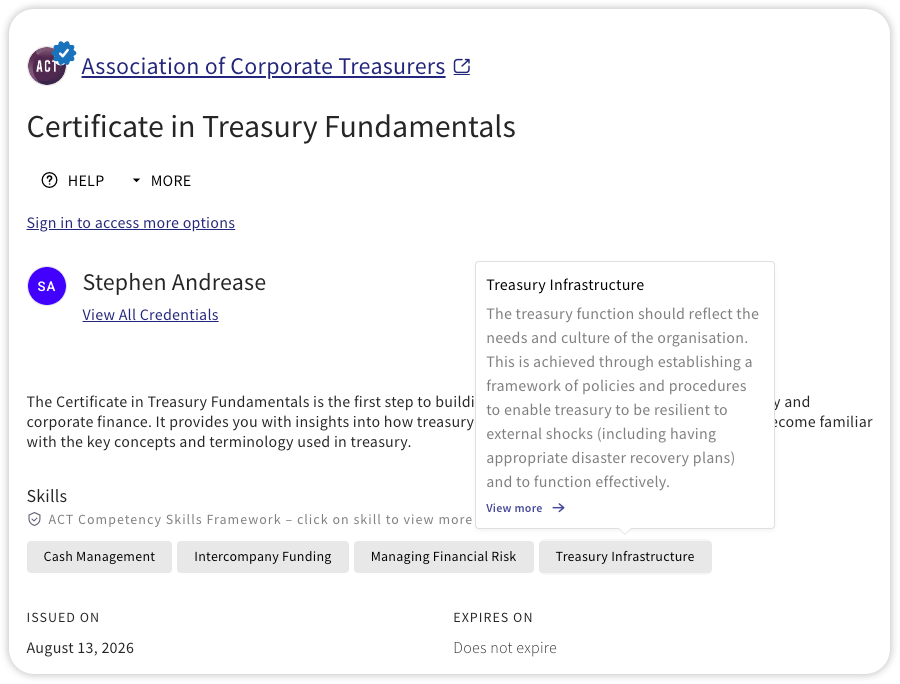
This critical metadata turns a digital badge from a static graphic into a trusted, verifiable signal of capability. The Association of Corporate Treasurers (ACT) puts this into practice by tying every skill on a credential to its own competency framework, so a hiring manager or evaluator who hovers over "Treasury Infrastructure" doesn't just see a tag. They see exactly what it means and why it matters, without needing to already know ACT's programs.
Opportunity #2: Help learners talk about their credentials
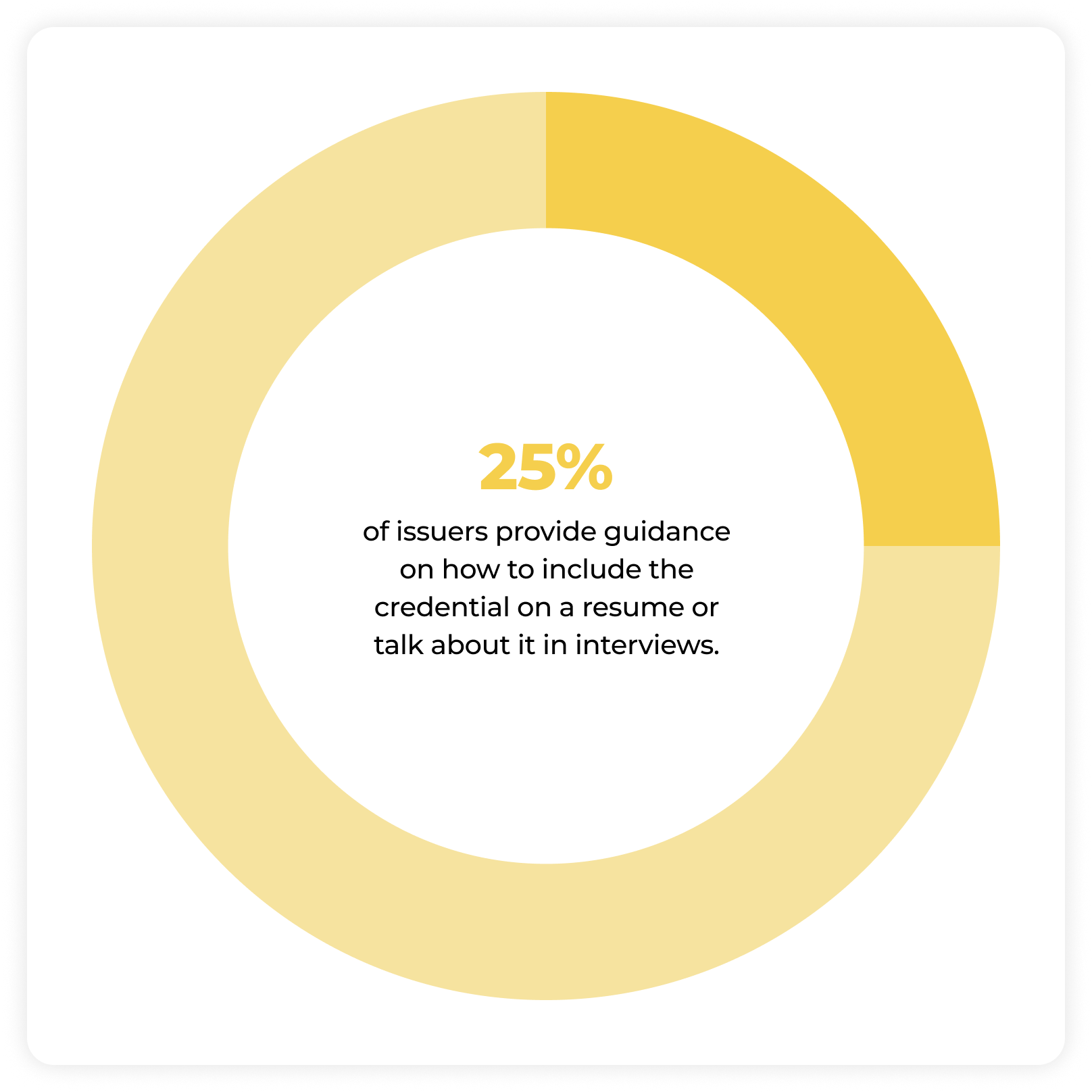
A third of learners are looking for practical guidance on incorporating credentials into their resumes, yet relatively few issuers currently provide it.
For many organizations, this is a relatively low-effort improvement to better support learners. Consider offering simple resources such as resume examples, interview talking points, and guidance on where credentials fit into a job application. These tools can help learners communicate the value of what they've earned more effectively.
Some educators build this into their teaching. Frank Sorokach, Associate Teaching Professor of Business and Economics at Penn State University, encourages his students to put every credential they earn on LinkedIn — offering extra credit to those who do — because, as he puts it, "if they don't signal that they have this skill, they essentially don't have the skill. A person who has a bachelor's degree and doesn't tell anybody they have the degree might as well not have the degree."
The payoff can be immediate: one of his students, with zero work experience to point to, added a rigorous supply-chain credential to his profile and within two weeks heard from three Amazon recruiters — and ultimately landed the role. The credential didn't do the work alone, but it was the signal that got him noticed.
Build Your Learner-Facing Digital Credential Page
Give learners everything they need to understand, share, and maximize the value of their credentials. This guide includes ready-to-use page templates, LinkedIn posting examples, credential delivery email copy, and tips to increase visibility and engagement.
Opportunity #3: Help learners get in front of employers
Searchable online directories give learners another opportunity to showcase their qualifications to prospective employers while making credential verification straightforward. Learner interest is exceptionally strong. 91% say they would opt into a directory if one were available, up from 84% in 2024. Yet only 21% of issuers are currently offering this.
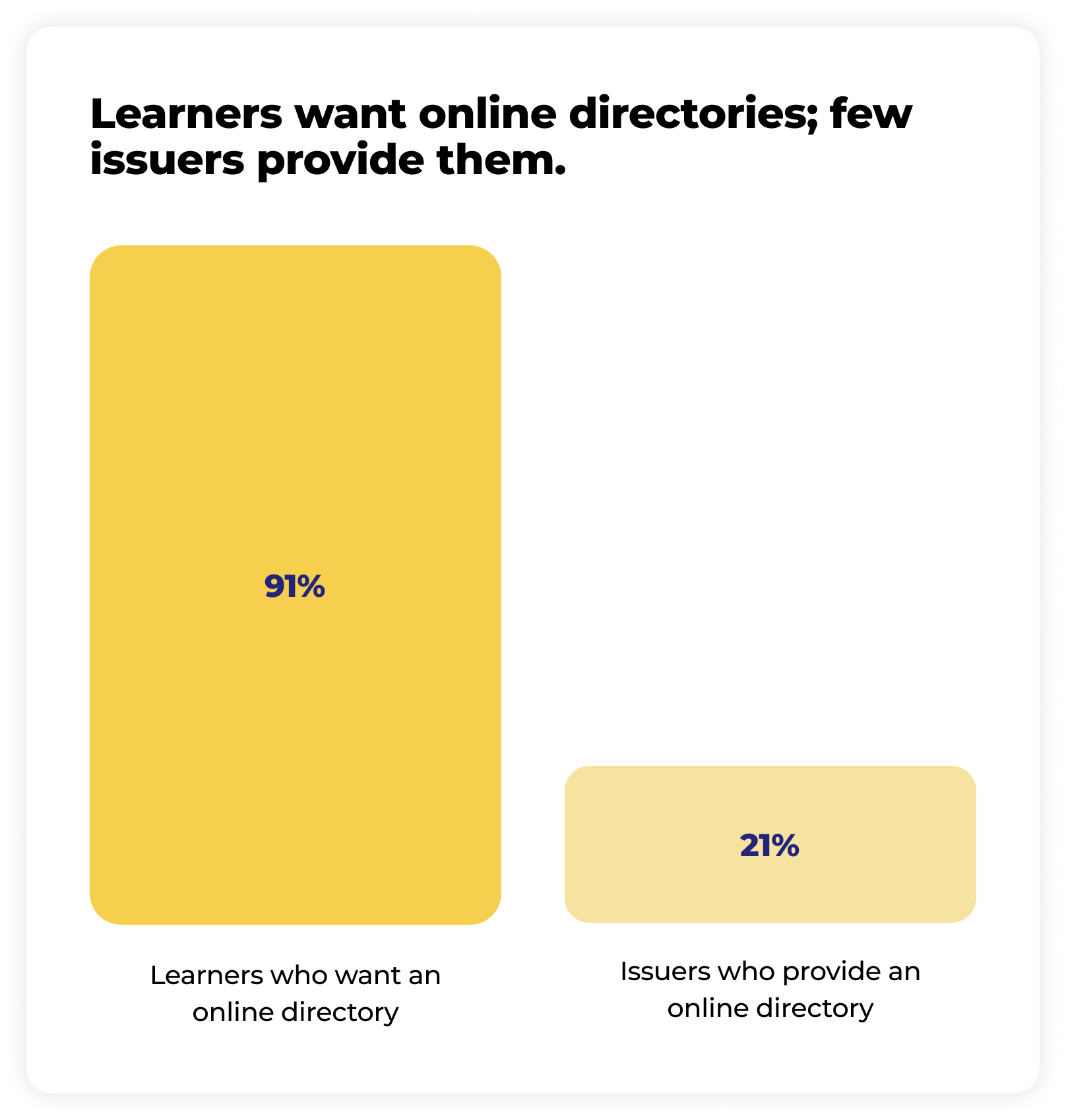
That demand isn't hypothetical. Where directories already exist, both sides of the market are showing up: Learner opt-ins into Spotlight directories grew 167% year over year in 2025, and directory searches from employers and talent sourcers rose more than 5x over the same period.
The North American Veterinary Community (NAVC) saw this demand firsthand. Despite expecting low uptake — many of its learners have been reluctant to publicize their achievements — the opposite happened. "As we rolled out our directory, we expected low opt-in — yet 97% of learners chose to participate. Learners want visibility when it's easy and trusted," says Chanelle Huff, Senior Manager, Certifications & Large Programs. NAVC's directory now includes more than 4,700 members.
Opportunity #4: Close the loop with employers
Expanding recognition of their credentials' value isn't solely the learner's responsibility. Issuers also have a role to play by ensuring credentials reflect the skills and outcomes employers value.
More than a third of learners (38%) say they would like their credential to be better recognized by employers. Many issuers are already taking steps to align credentials with workforce needs, most commonly by mapping them to job roles or industry skills frameworks (47%). But fewer involve employers directly in the design and evolution of their credential programs (21%).
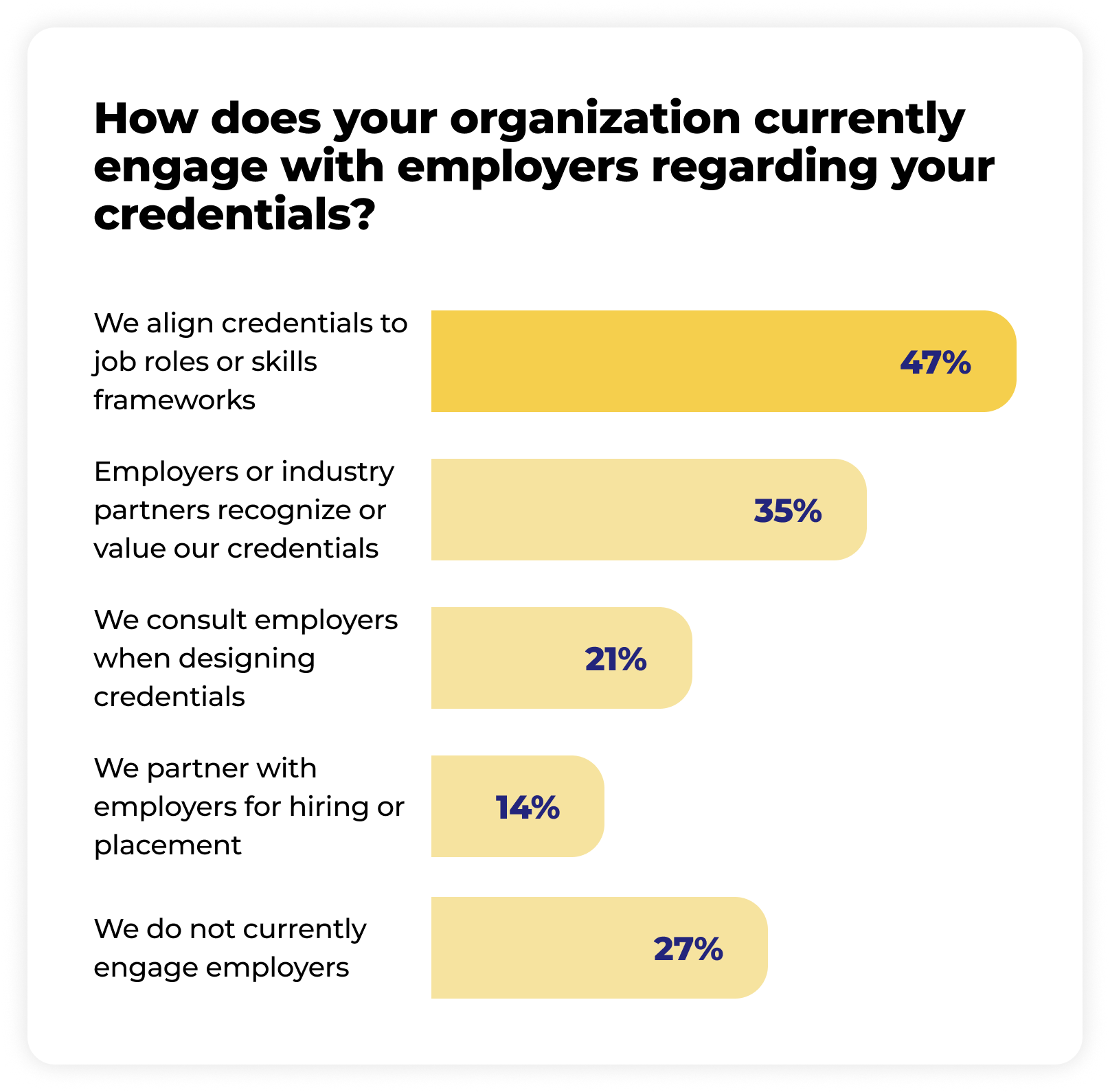
Engaging employers earlier can help issuers understand the skills employers are looking for and design credentials that more clearly signal those skills. It can also create a foundation for an ongoing relationship with employers after credentials are issued.
The highest-leverage move is also the least common: involving employers before the credential exists. As Curtiss Barnes, CEO of the 1EdTech Consortium, advises: "Talk to employers. Make sure you understand what information they actually need and how they describe the skills and competencies they're looking for. Then build that into a digital credential … so it can be understood by both people and systems."
Early engagement also sets up something issuers need after credentials are issued: visibility into whether employers are actually using them. Right now, many issuers don't have that visibility at all. While 51% say their credentials are widely used or used in some cases by employers, admissions bodies, or other organizations in decision-making processes, 33% aren't sure whether their credentials are used at all.
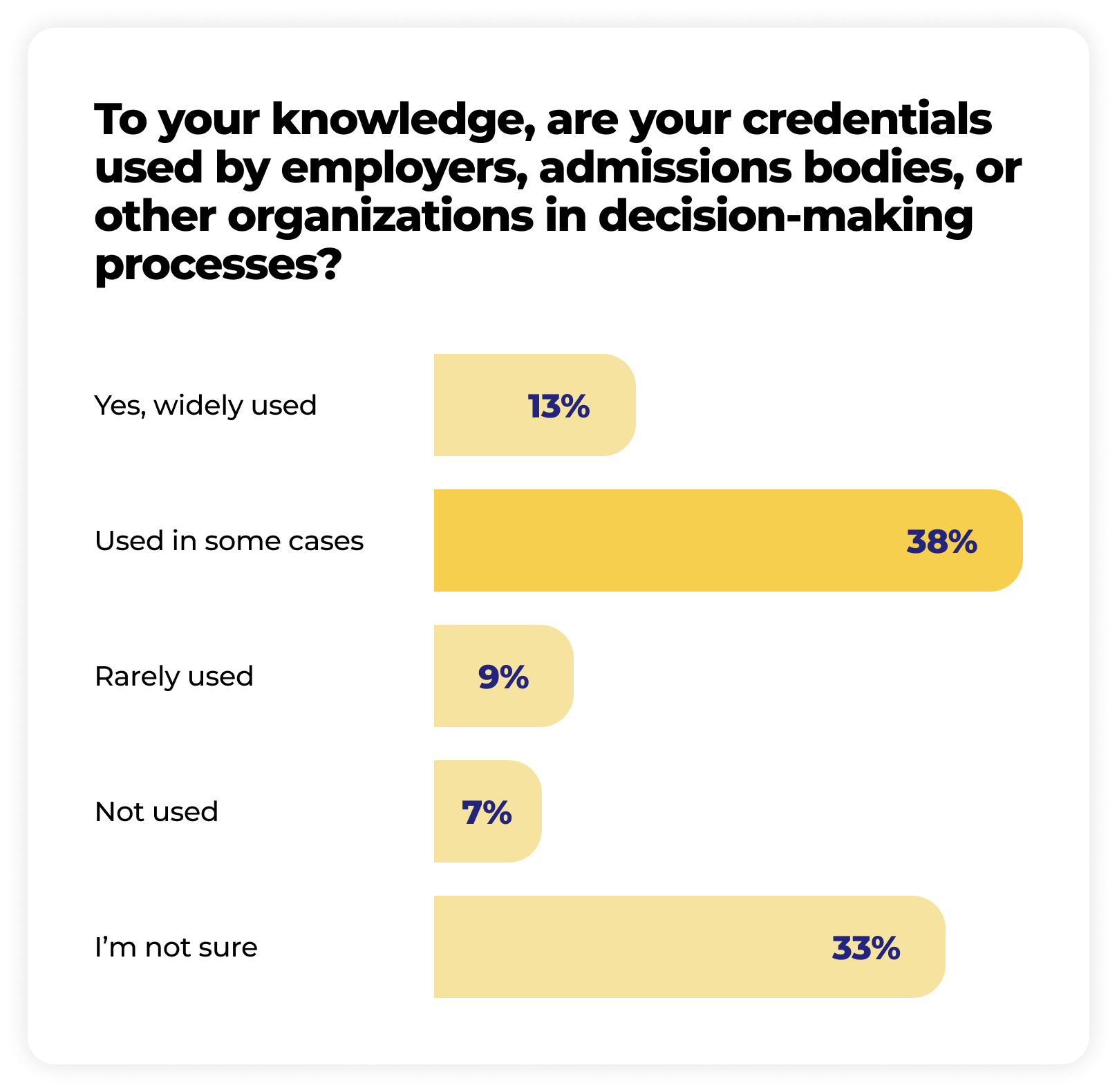
Without that visibility, issuers have a harder time understanding how their credentials translate into real-world opportunities, and where they may need to strengthen employer recognition.
The career connection learners want, and the data issuers don't have
Helping learners explain the value of a credential is important, but many are looking for even more. Next, we explore how issuers can strengthen the connection between credentials and long-term career success.


