

Programs face mounting pressure to prove value

Credentialing programs are entering a new phase. While growth and adoption remain important, organizations are increasingly expected to demonstrate the impact their programs have on learners, employers, and the business. As expectations rise, proving value has become just as important as delivering it.
This shift isn't happening in a vacuum. As Scott Cheney, CEO of Credential Engine, told the House Education & Workforce Committee: "American families, employers, and taxpayers invest over $2.34 trillion annually in education and training programs but still lack reliable information about which programs develop skills that employers actually value and lead to strong employment outcomes."
Credentialing has entered an accountability era
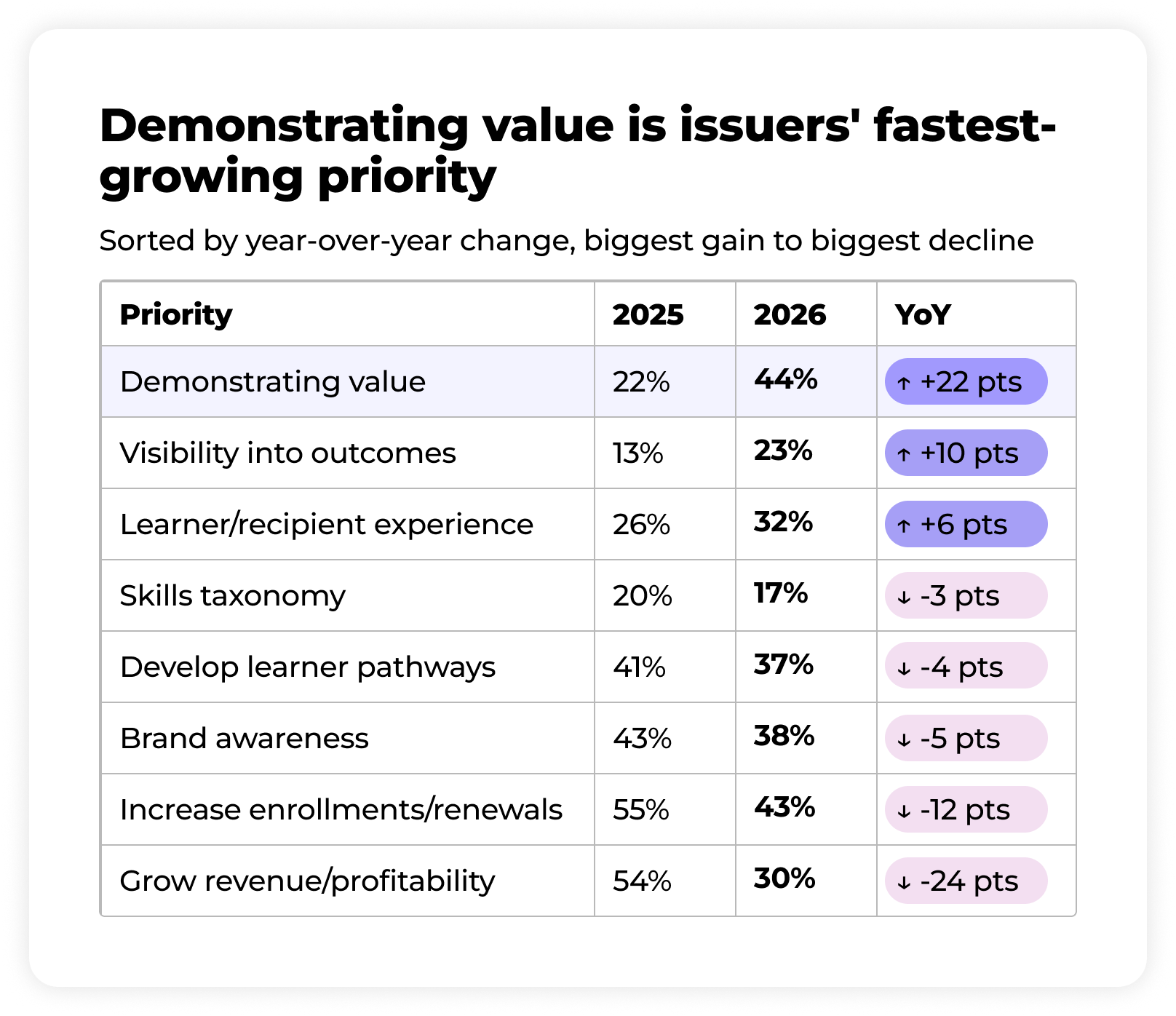
Demonstrating credentialing program value has become a much bigger priority. This year, 44% of organizations identify it as a top priority — twice as many as last year and the largest increase of any priority we measured.
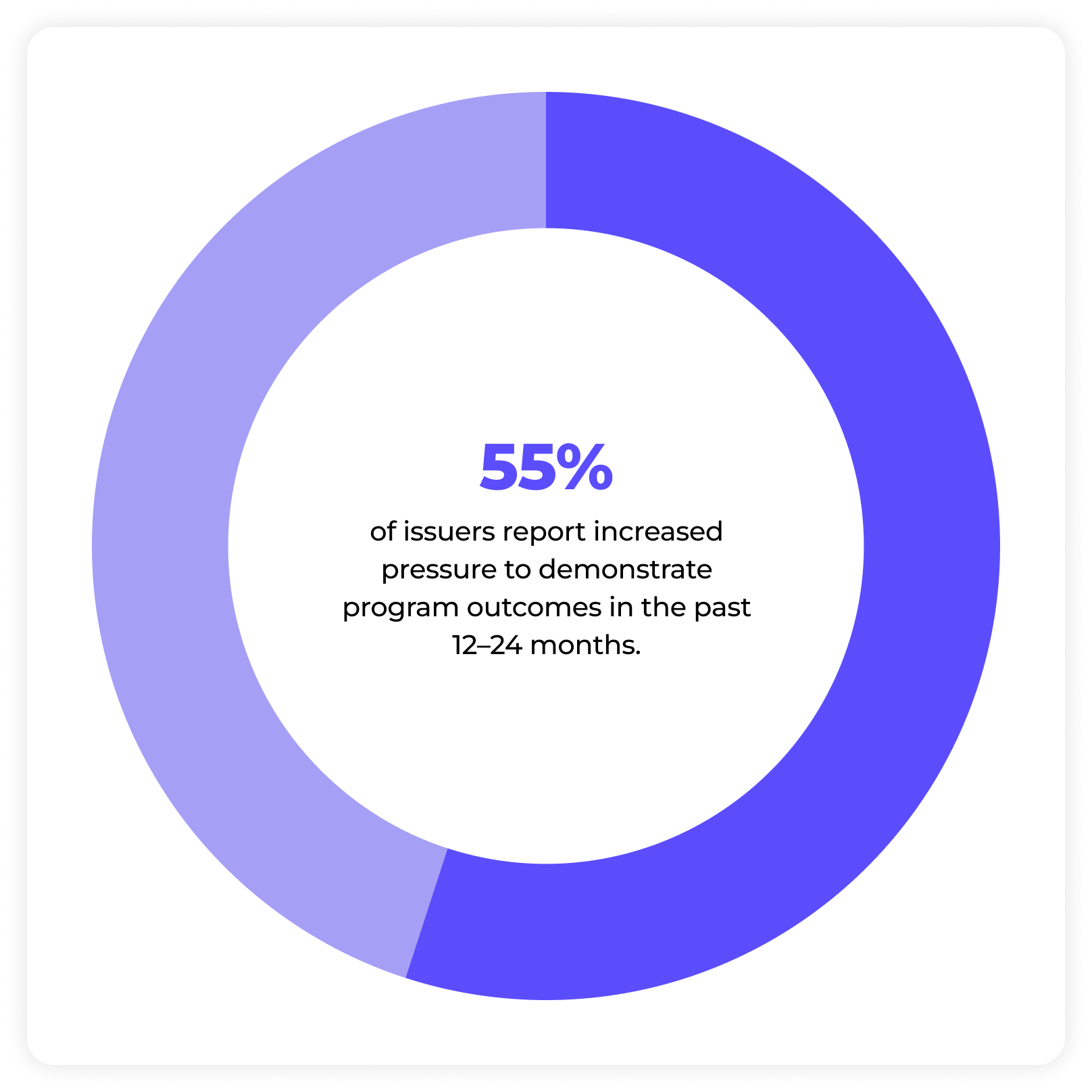
At the same time, 55% of issuers report increased pressure to demonstrate outcomes. Together, these findings suggest credentialing programs are increasingly expected not only to issue credentials, but also to show the impact those credentials create.
This pressure is arriving before many issuers have developed the systems that would respond to it. As Bruce Etter, Senior Director of Research and Consulting at UPCEA, puts it: "Accountability expectations move faster than infrastructure."
Proving value is more complicated than it sounds
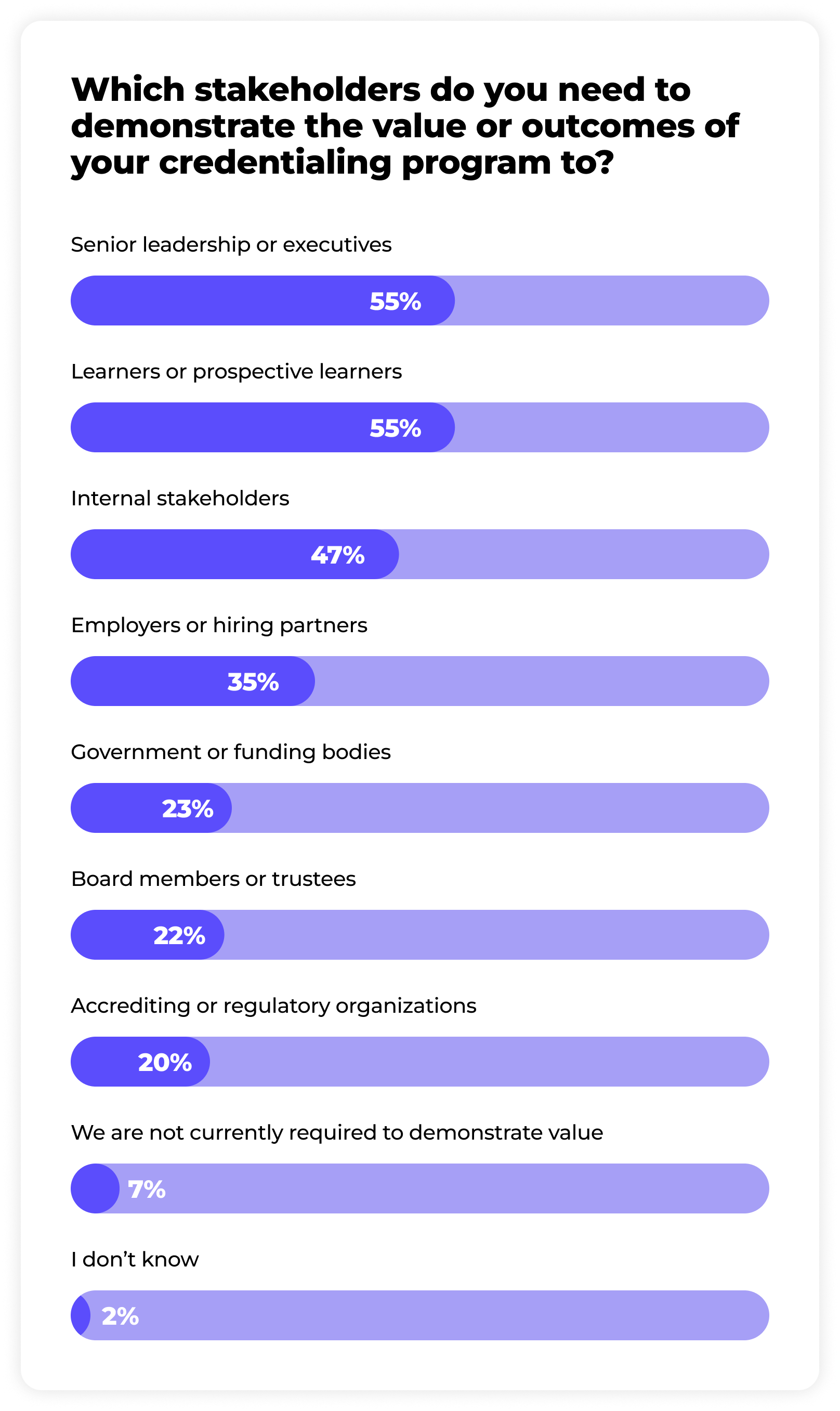
The challenge isn't simply proving value — it's proving value to different audiences. Leaders, learners, employers, boards, and funders often care about different outcomes, making it difficult to rely on a single success metric. Instead, organizations increasingly need multiple forms of evidence that demonstrate value from different perspectives.
Credentialing has moved beyond implementation
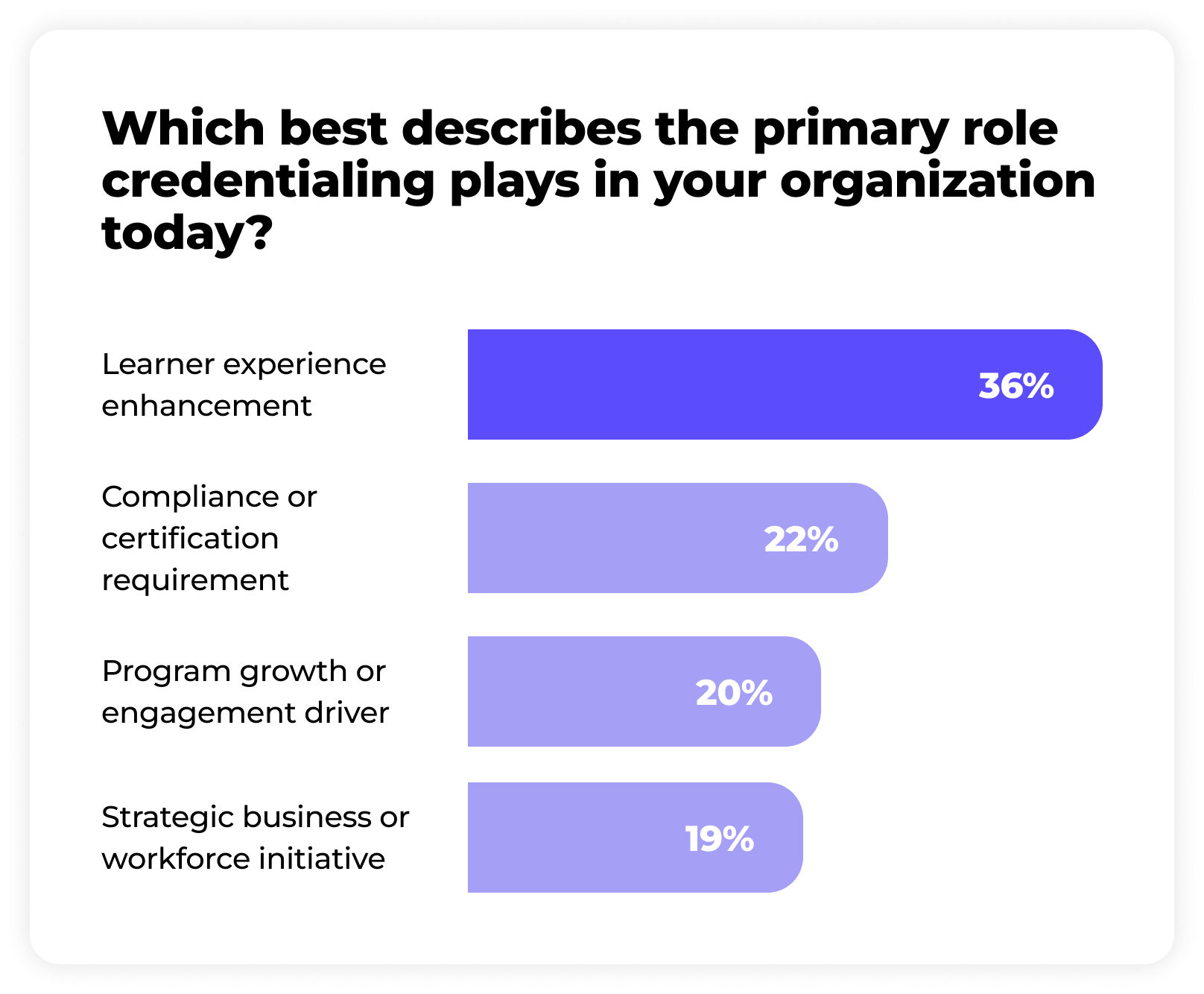
Organizations describe credentialing as serving a variety of strategic purposes, from enhancing learner experiences to supporting workforce development and business objectives. The diversity of responses reflects the expanding role credentialing plays across organizations and reinforces why demonstrating value looks different from one program to the next.
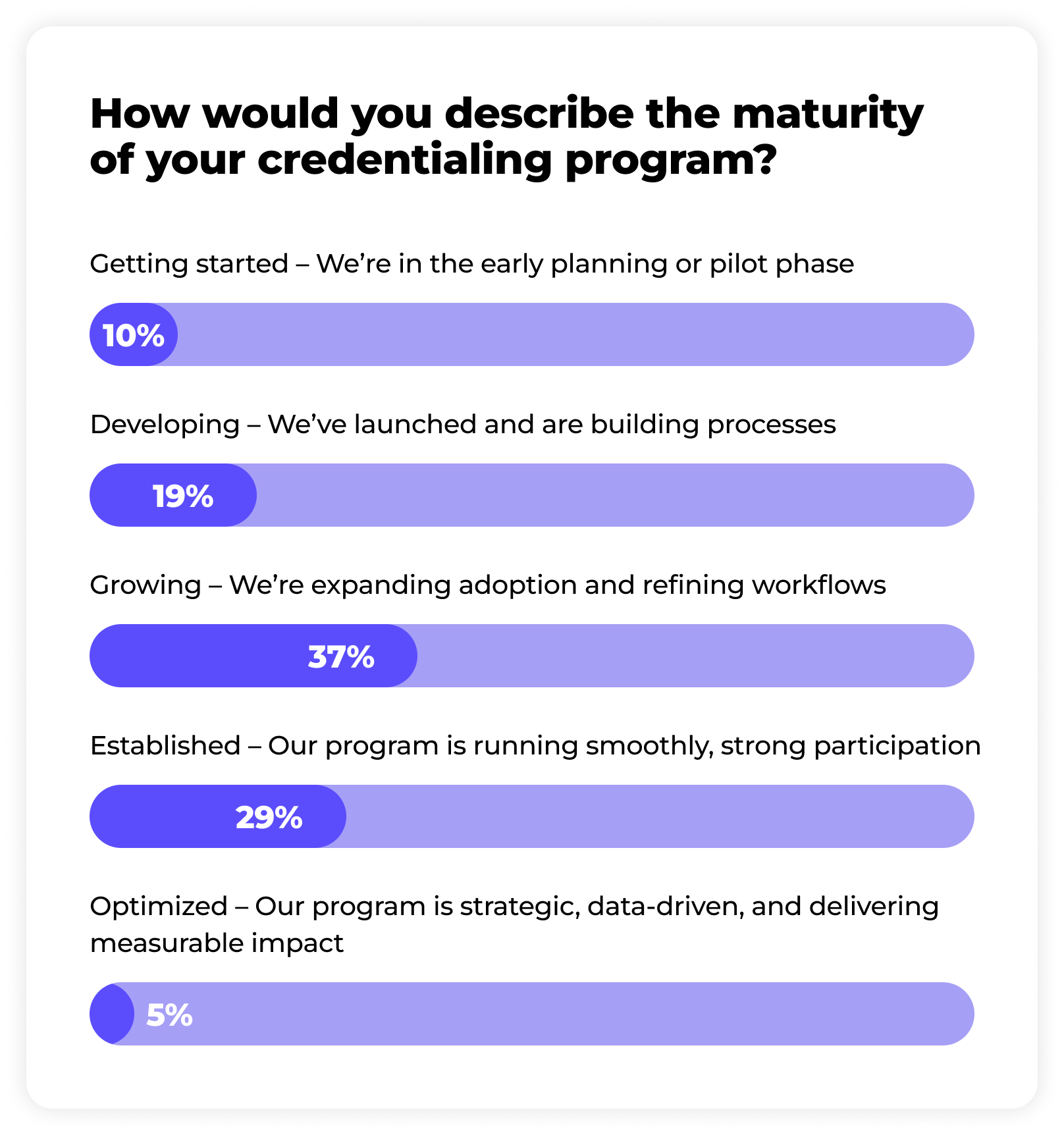
Program maturity has remained relatively stable year over year, with most organizations describing themselves as growing (37%) or established (29%). Rather than being an emerging practice, credentialing is becoming an established organizational capability.
More than half of organizations (54%) use a dedicated, purpose-built digital credentialing platform. The rest rely on their Learning Management System (LMS), an in-house build, or another general-purpose tool.
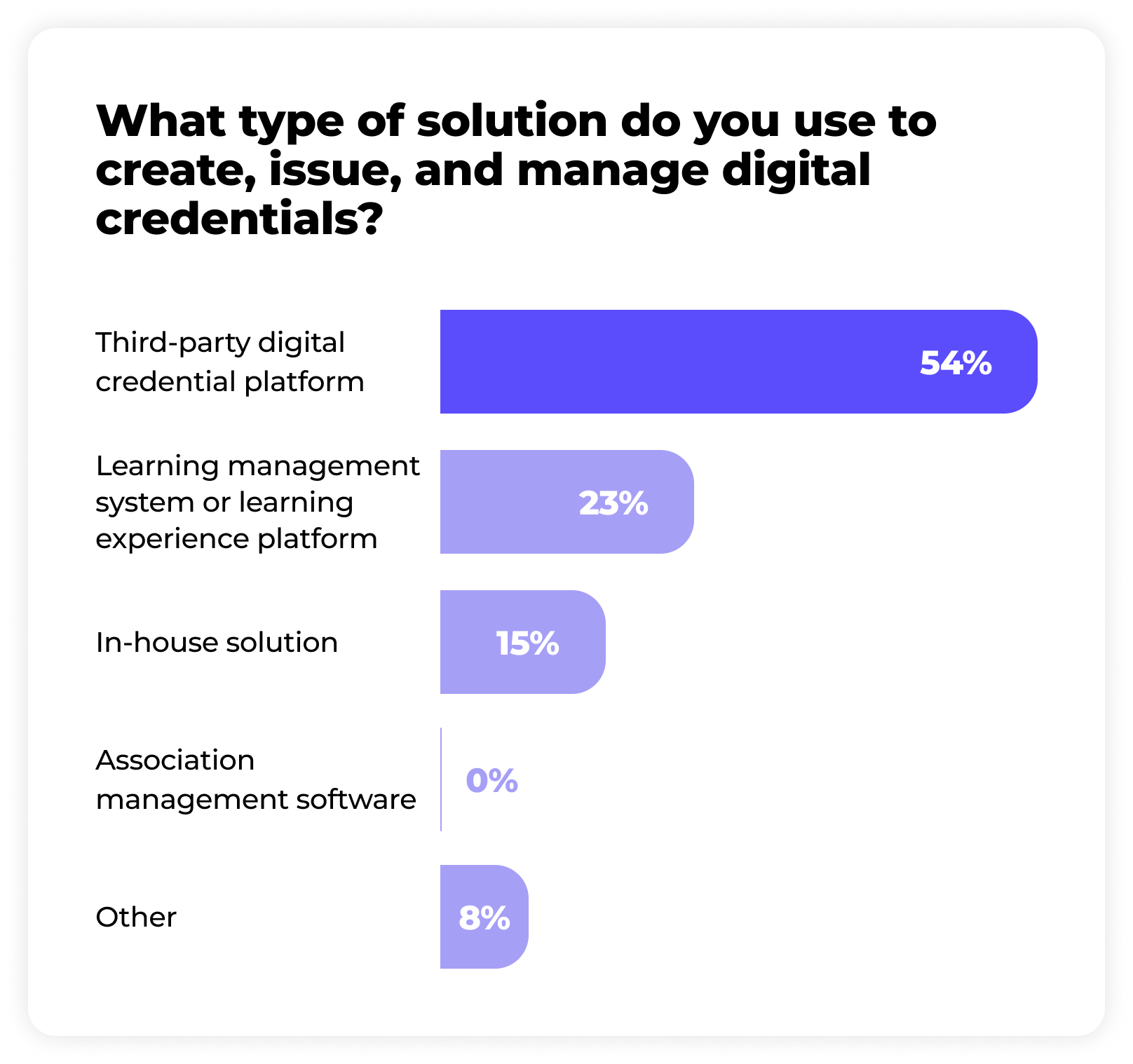
That distinction is worth pausing on: Proving value to the range of stakeholders described above requires tracking, reporting, and credential metadata that general learning tools weren't built to produce. So the opportunity isn't simply adopting new technology across the board. It's making sure the technology in place can actually generate the evidence organizations are increasingly being asked for. For some, that means using a dedicated platform more fully. For others, it may mean recognizing that the tool itself is the constraint.
The challenge isn't launching credentialing programs anymore. It's scaling them and proving they work. That starts with understanding whether credentials are delivering the outcomes stakeholders expect — beginning with the learners who earn them.
Credentials deliver, but the career payoff still lags
Pressure to demonstrate value is growing. But the good news is that learners already see the value in credentials. The next question is where programs can do even more to turn that value into meaningful outcomes.


