

Credentials deliver, but the career payoff still lags

Credentials are delivering meaningful value for learners. Most begin their credential journey with a clear understanding of what they hope to achieve, use their credentials after earning them, and say those credentials have benefited their careers. At the same time, learners increasingly recognize the importance of credentials in today's workforce. Yet earning a credential is only one step in the journey. Turning that credential into career advancement often requires additional support.
Learners see real value in credentials
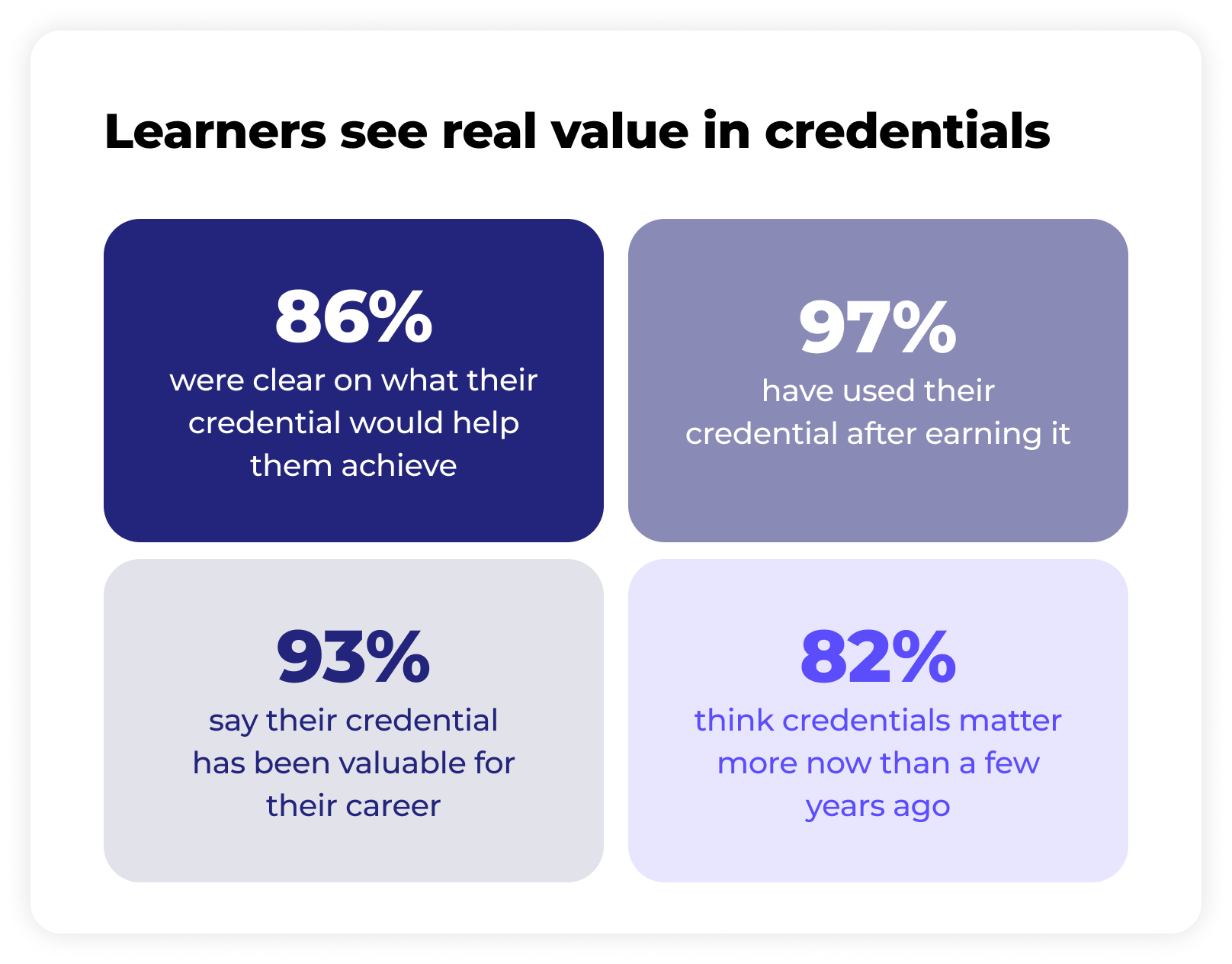
Learners enter credentialing programs with clear goals, and for most, those credentials deliver meaningful value. Nearly all learners (97%) use their credentials after earning them; the vast majority (93%) say their credentials have been valuable for their careers; and most (82%) believe credentials have become even more important for demonstrating skills and qualifications than they were just a few years ago.
As Stephen Buckley, Consultant at Digital Credentials Ltd and former leader of IBM's Open Badges program, puts it: "When we first started the Open Badge Program at IBM, we researched the value of credentials. It showed that learning programs with credentials attracted more learners — learners who were more likely to finish the program, come back for more, and download an associated product… Credentials make a real difference to learners' careers."
Together, these findings reinforce that credentials are making an impact. But they also raise an important question: If credentials are valuable, what could help more learners use them to achieve the outcomes they hope for?
Career outcomes don't happen automatically
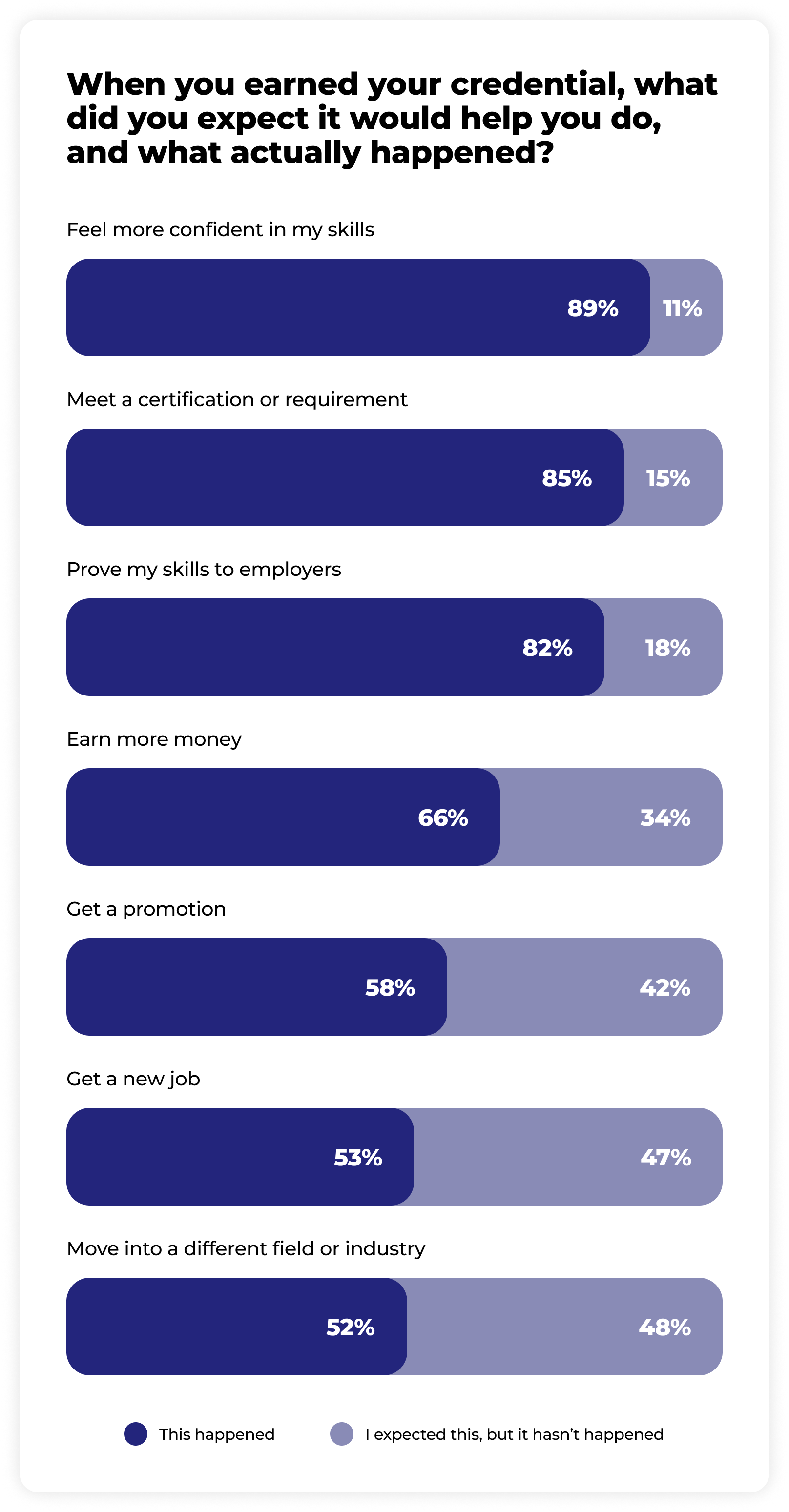
Credentials contribute to a wide range of learner outcomes, but not all outcomes are equally likely. Learners most consistently report outcomes that credentials can influence directly, such as feeling more confident in their skills (89%) or proving their expertise to employers (82%).
Career outcomes — including earning more money (66%), receiving a promotion (58%), changing jobs (53%), or moving into a new field (52%) — are also common, but they take more time to materialize. While credentials clearly create value, translating that value into measurable career advancement is still unfolding for many.
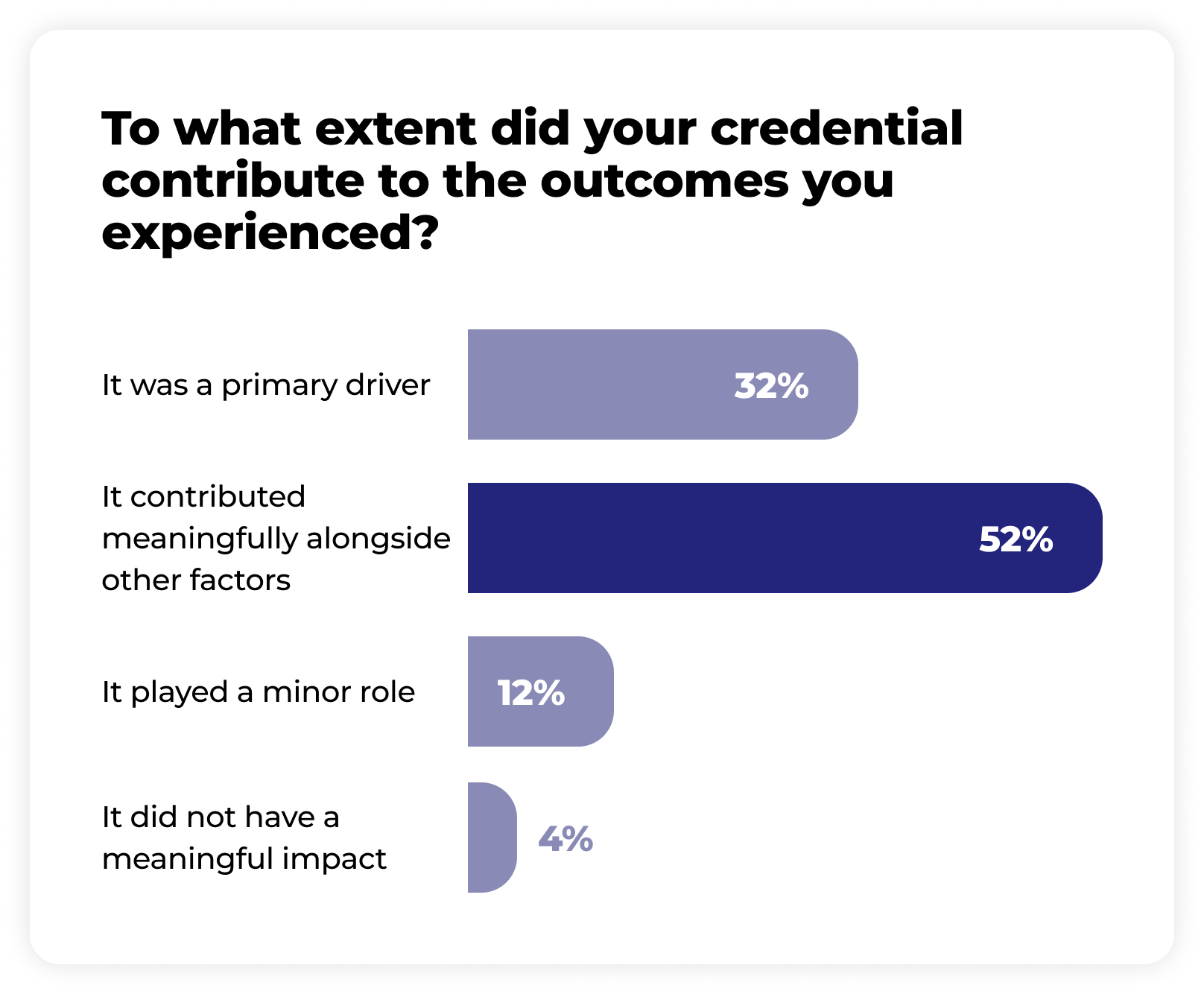
This complexity represents an opportunity for issuers. Most learners (84%) describe their credential as either the primary driver or a significant contributor to the outcomes they experienced — not the entire reason those outcomes occurred. That suggests learners already recognize credentials as one part of a broader career journey.
Programs can extend their impact by helping learners bridge the gap between demonstrating their capabilities and translating those capabilities into career opportunities through employer engagement, guidance, and continued support.
Learners still need support after earning a credential
Issuers recognize that earning a credential is not the end of the learner journey. They identify several common challenges learners face after completion, from communicating the value of their credentials to employers to understanding what to do next.
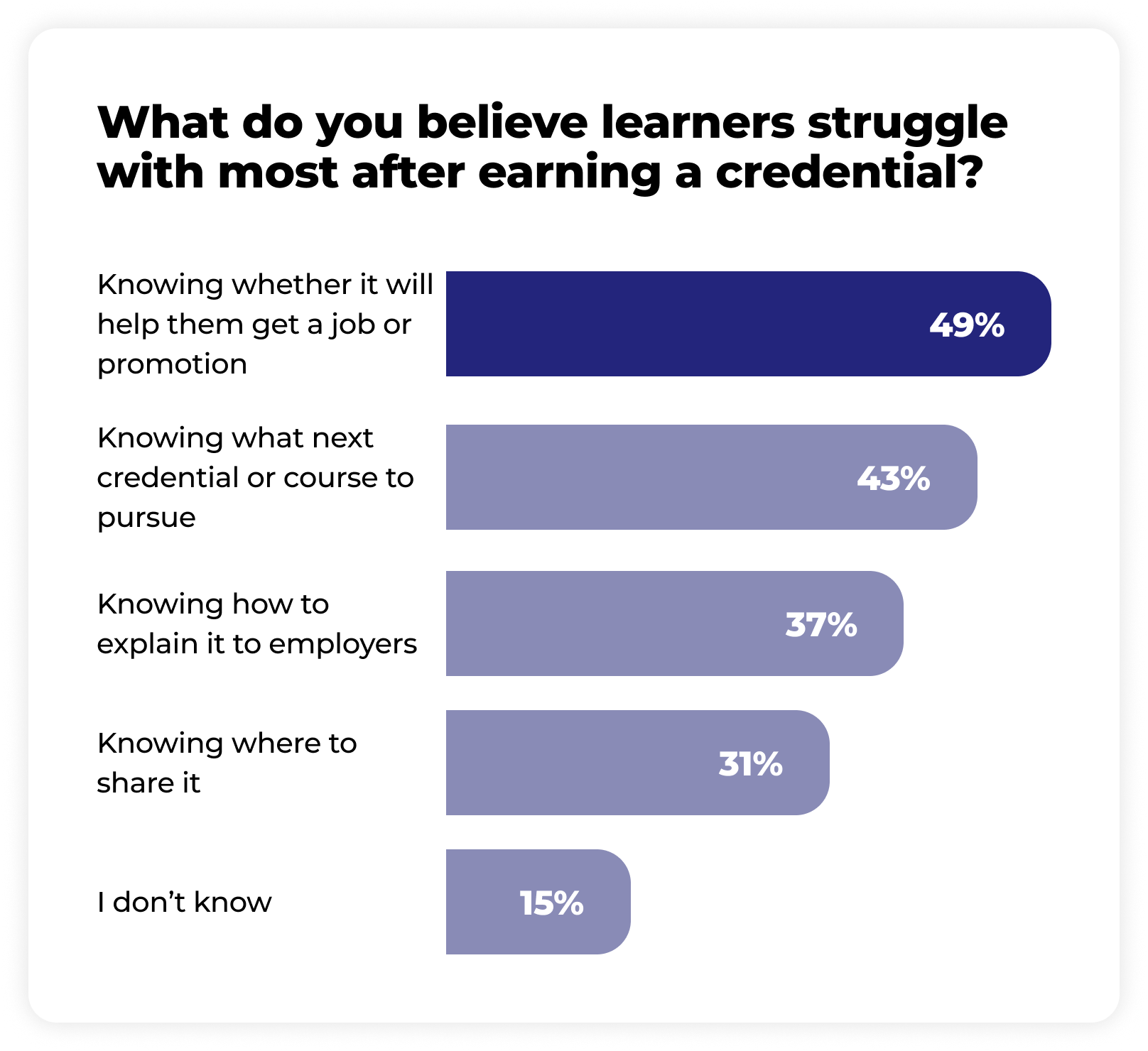
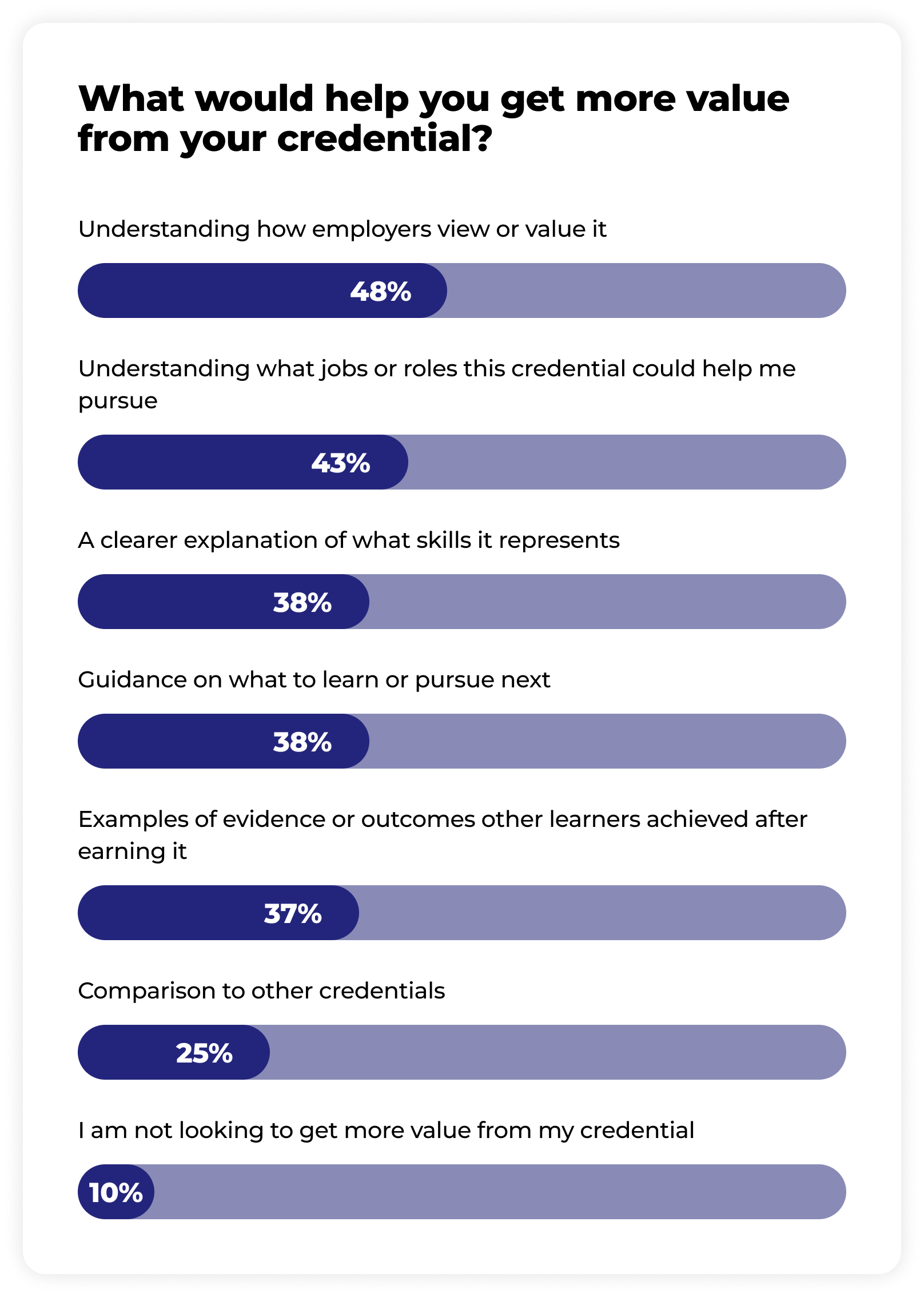
Learners echo this need, identifying additional guidance, employer recognition, and clearer next steps as ways credentialing programs could deliver even greater value.
The biggest opportunity begins after issuance
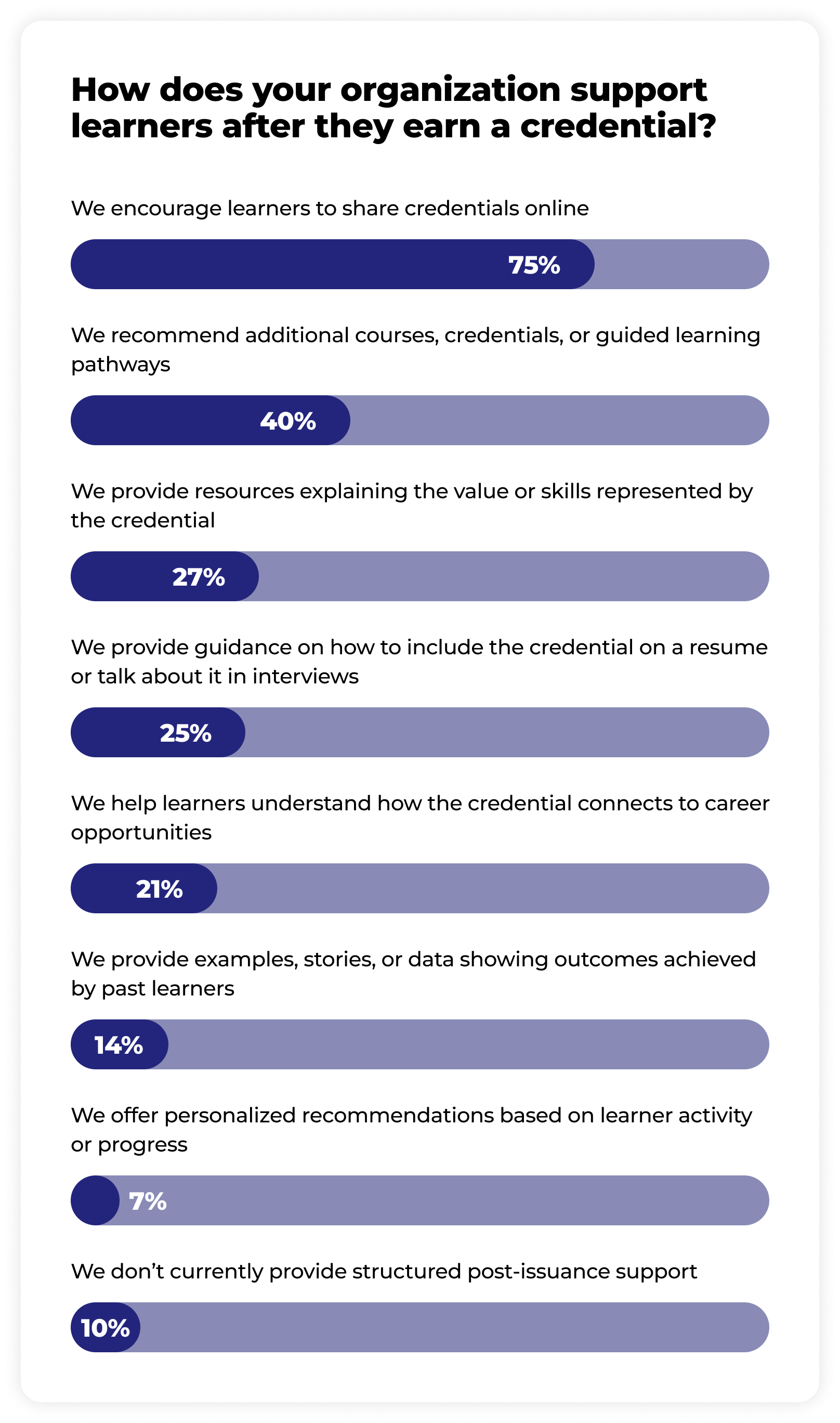
Most organizations provide some level of support after learners earn a credential, but that support varies considerably. Encouraging learners to share their credentials is common (75%), while personalized guidance and recommendations (7%) are far less prevalent.
The learner perspective is encouraging: Credentials are valued, widely used, and increasingly important in today's workforce. But the data also shows that issuing a credential is not the finish line. Learners see credentials as an important part of their career journey, not the entire journey.
That creates an opportunity for issuers to extend their impact beyond issuance by helping learners share their credentials, connect with employers, navigate what's next, and ultimately translate credentials into stronger career outcomes. We’ll cover each of these in more detail in the upcoming sections.
Sharing is working; guiding what's next isn't
The biggest opportunities don't end once a credential is earned. Next, we explore how issuers can continue supporting learners by helping them share their credentials and guiding what comes next.


