

2026
State of
Credentialing
Report

Introduction
A word from our CEO
Over the past several years, we've watched the conversation around digital credentials evolve. In 2024, we asked whether learners valued their credentials. They did, overwhelmingly, and kept using them long after they were issued. In 2025, we asked whether employers were paying attention. They were, factoring credentials into real hiring decisions.
While we still have a way to go with both of those credentialing stakeholder audiences (as you’ll see in this year’s report), today's challenge is different. Credentialing leaders are under growing pressure to demonstrate the impact of their programs. Credentials issued and completion rates are no longer enough when executives, boards, and other stakeholders expect evidence of learner, career, and organizational outcomes.
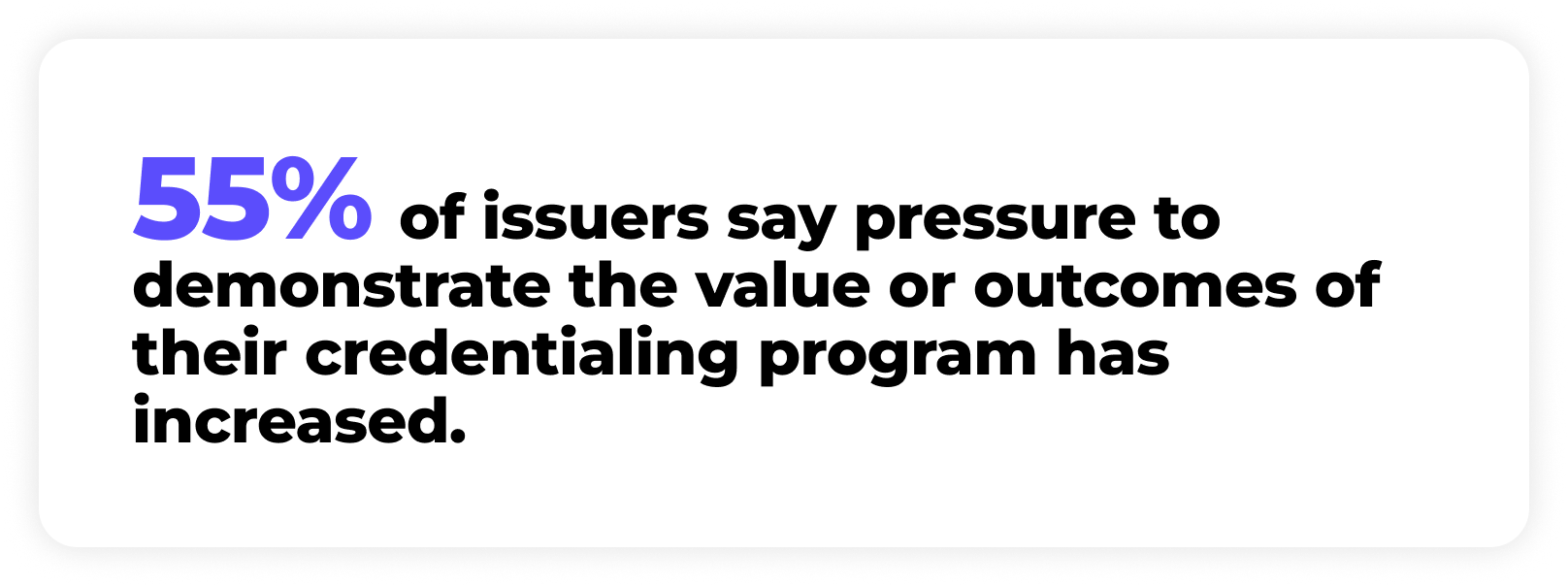
In fact, the share of issuers who report demonstrating program value as a top strategic priority doubled year over year — jumping from 22% in 2025 to 44% in 2026 — making it both the #1 and fastest-growing priority in our research.
So the question becomes: How can credentialing programs create more value — and demonstrate it?
This year's report explores this question from two perspectives.
First, we examine the learner journey after a credential is issued, identifying practical opportunities for issuers to extend the value of their programs — from helping learners communicate their skills to employers, to connecting credentials with long-term career outcomes.
Second, we examine the operational practices that distinguish the most successful credentialing programs. By understanding how these organizations define success, measure outcomes, and communicate impact, issuers can build programs that are better equipped to demonstrate value to learners, leadership, employers, and other stakeholders.
Our hope is that this report helps you build programs that not only create meaningful outcomes for learners, but also generate the evidence needed to demonstrate that impact across your organization.

Danny King
Accredible
Introduction
A word from our CEO
Over the past several years, we've watched the conversation around digital credentials evolve. In 2024, we asked whether learners valued their credentials. They did, overwhelmingly, and kept using them long after they were issued. In 2025, we asked whether employers were paying attention. They were, factoring credentials into real hiring decisions.
While we still have a way to go with both of those credentialing stakeholder audiences (as you’ll see in this year’s report), today's challenge is different. Credentialing leaders are under growing pressure to demonstrate the impact of their programs. Credentials issued and completion rates are no longer enough when executives, boards, and other stakeholders expect evidence of learner, career, and organizational outcomes.
In fact, the share of issuers who report demonstrating program value as a top strategic priority doubled year over year, jumping from 22% in 2025 to 44% in 2026, making it both the #1 and fastest-growing priority in our research.
So the question becomes: How can credentialing programs create and demonstrate more value?
This year's report explores this question from two perspectives.
First, we examine the learner journey after a credential is issued, identifying practical opportunities for issuers to extend the value of their programs, from helping learners communicate their skills to employers, to connecting credentials with long-term career outcomes.
Second, we examine the operational practices that distinguish the most successful credentialing programs. By understanding how these organizations define success, measure outcomes, and communicate impact, issuers can build programs that are better equipped to demonstrate value to learners, leadership, employers, and other stakeholders.
Our hope is that this report helps you build programs that not only create meaningful outcomes for learners, but also generate the evidence needed to demonstrate that impact across your organization.
— Danny King, CEO and co-founder, Accredible
Methodology
The “2026 State of Credentialing” report is based on two surveys conducted in the spring of 2026: one survey of 1,000 learners who participated in a course, certification program, or continuing education opportunity that awarded a credential within the past two years that helped them learn new skills to launch and/or help them with their career, and a second survey of 194 education and training leaders who work for organizations that issue credentials (i.e., certificates and/or badges) as part of their learning programs.

To view a detailed breakdown of both survey groups, see the Appendix.
Executive Summary
Programs face mounting pressure to prove value
Credentialing programs have entered an accountability era. As expectations rise, organizations are increasingly expected to demonstrate the impact of their programs — not just issue credentials.
Credentials deliver, but the career payoff still lags
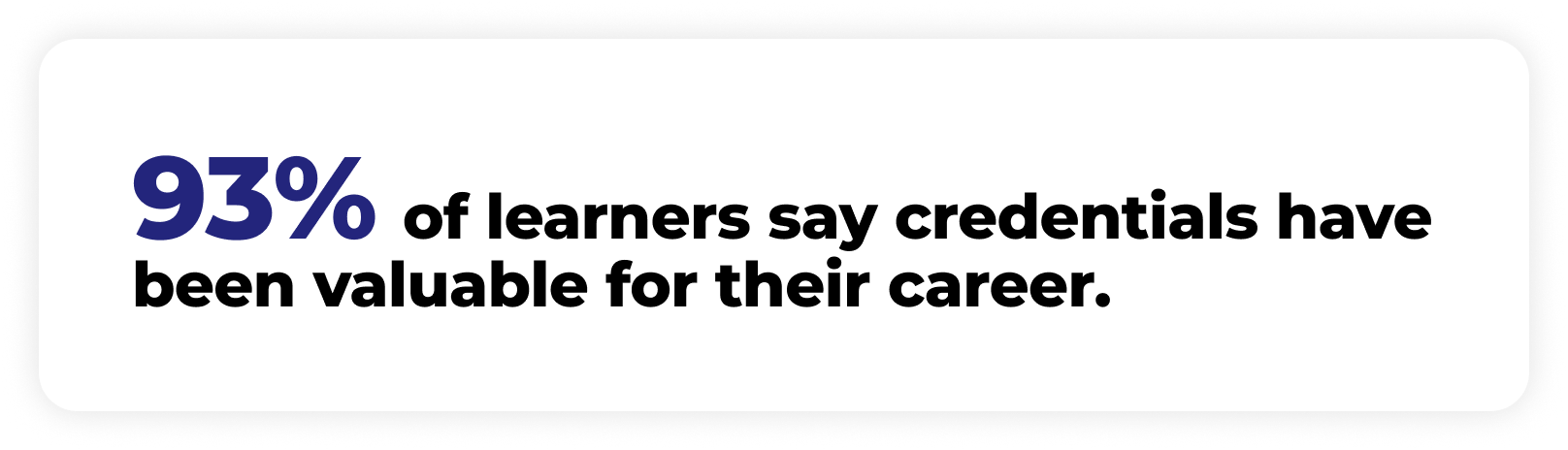
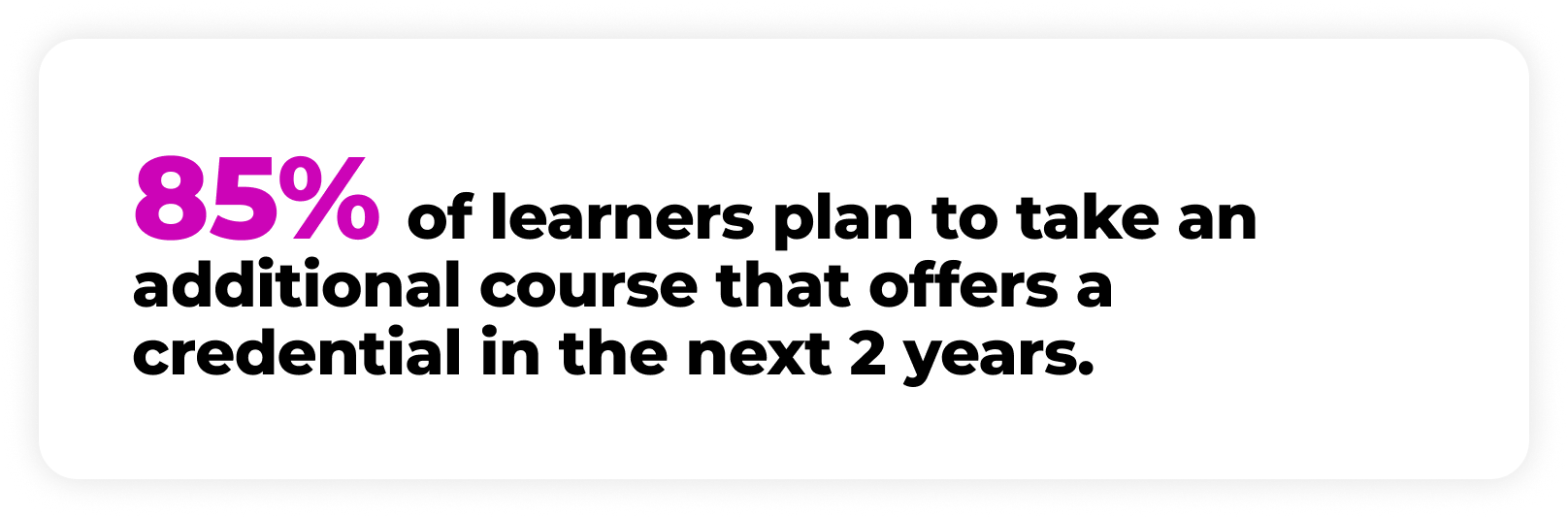
Learners clearly value their credentials, but career outcomes don't happen automatically. The greatest opportunity begins after a credential is issued.
Sharing is working; guiding what's next isn't
Organizations have made progress helping learners share their credentials. The next opportunity is helping them navigate what comes next.
Learners are confident but need more help proving it to employers
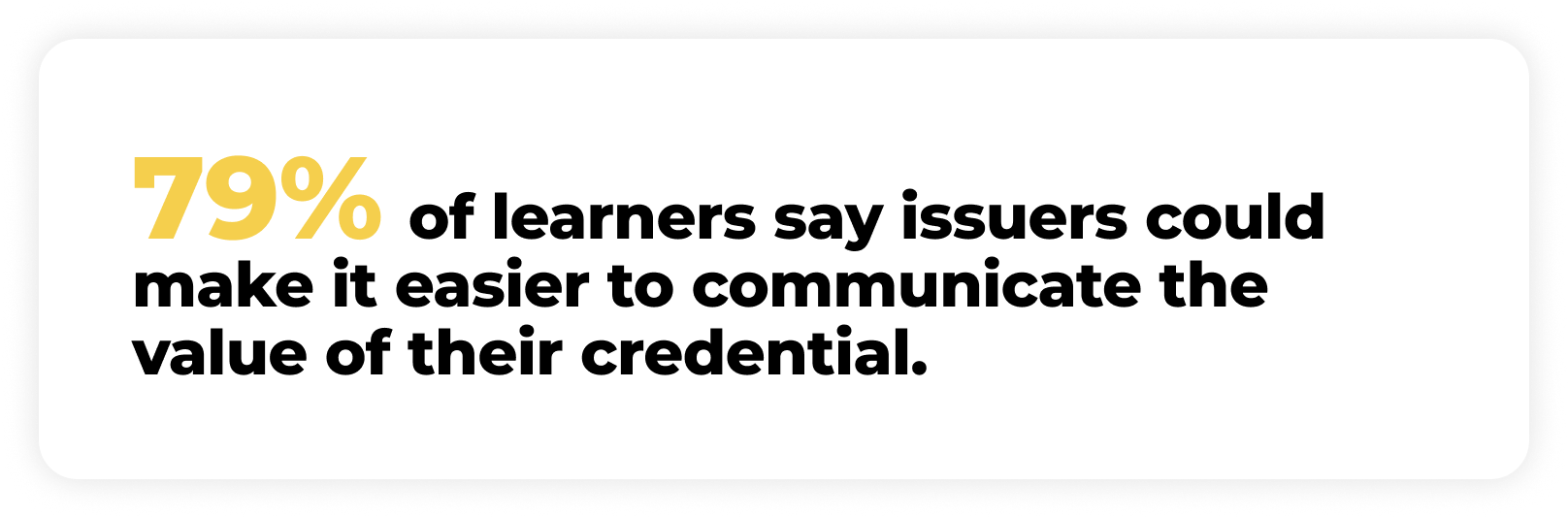
Learners are confident explaining their credentials, but many still need practical tools to communicate the credentials’ value to employers.
The career connection learners want, and the data issuers don't have
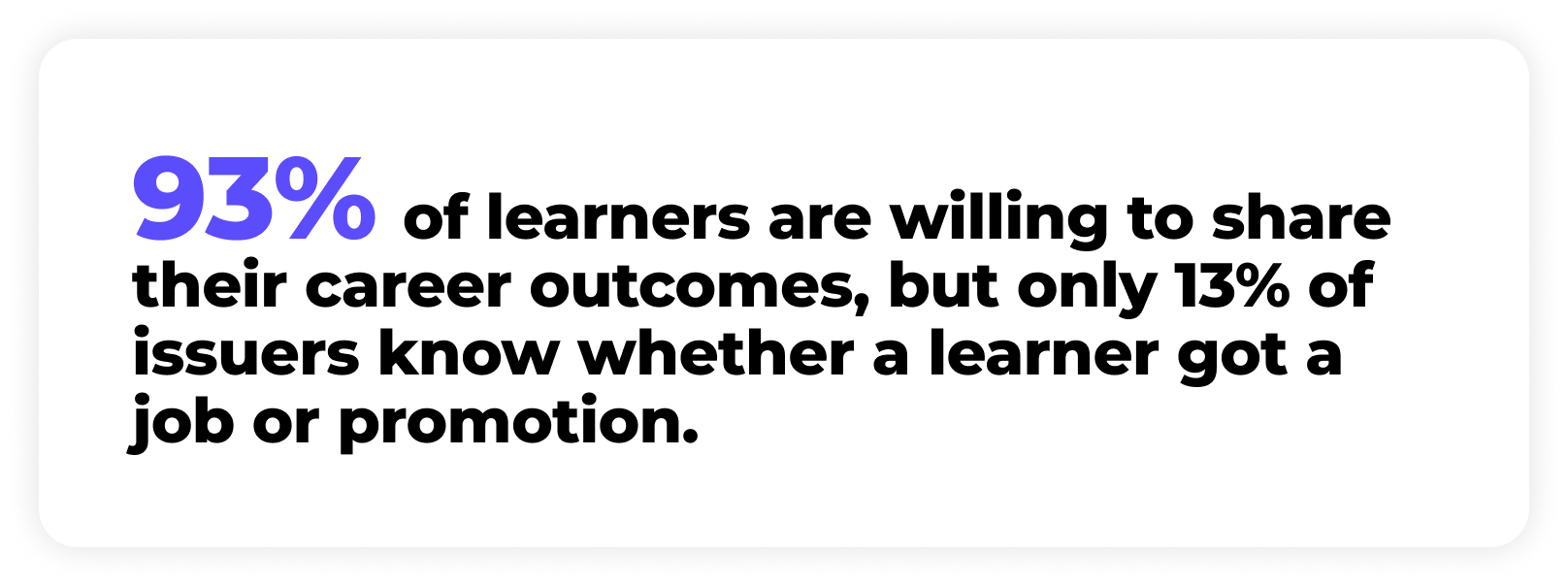
Learners want a stronger connection from their credentials to their careers, and they're willing to share career outcomes with issuers. The missing piece is a systematic way to collect and use that information.
Operational practices behind successful programs
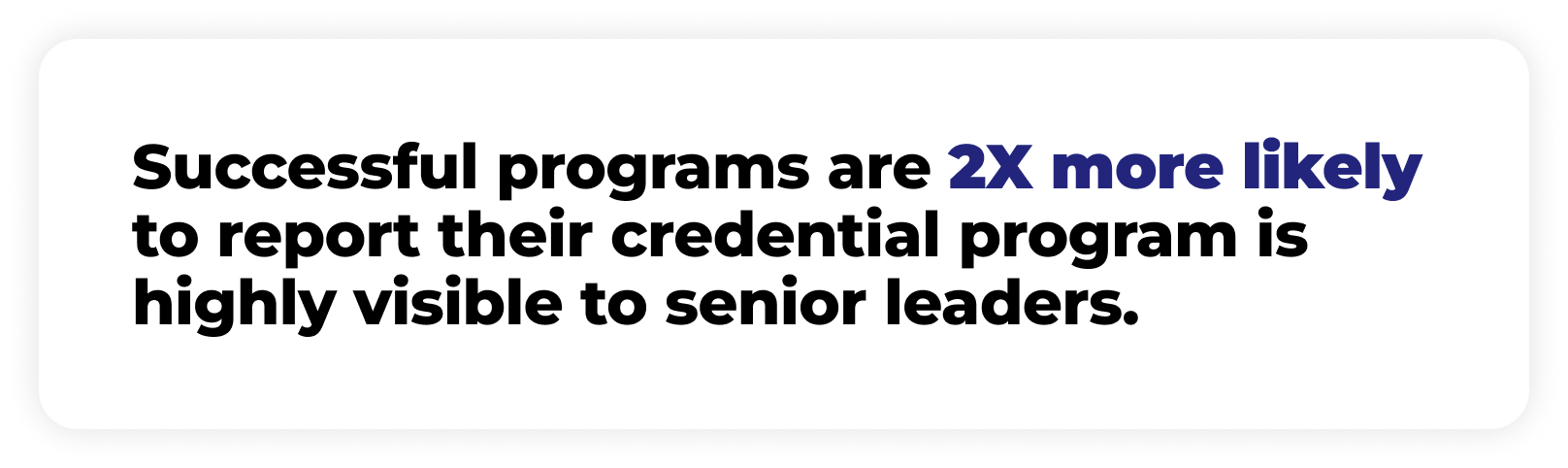
The most successful credentialing programs distinguish themselves through a set of operational practices that help them measure, improve, and communicate impact.
Programs face mounting pressure to prove value
A look at the growing pressure credentialing programs face to demonstrate value and outcomes.


