

Operational practices behind successful programs

Throughout this report, we've explored opportunities to help learners get more value from their credentials. But delivering those outcomes consistently requires more than learner-facing initiatives. It requires building a credentialing program that is designed to measure, learn, and improve over time.
That's becoming increasingly important. Earlier in this report, we noted that 55% of issuers face growing pressure to demonstrate program value. Yet fewer than half now track learner outcomes after credential completion (a decline from last year), and only 12% can confidently demonstrate professional advancement with data.
In other words, expectations are rising while many organizations still lack the operational systems needed to prove impact.
Two ways to identify opportunities for improvement
Some opportunities are clear from the data: Issuers broadly aren't doing certain things that could strengthen their programs. Others become clearer when we look at what successful issuers do differently.
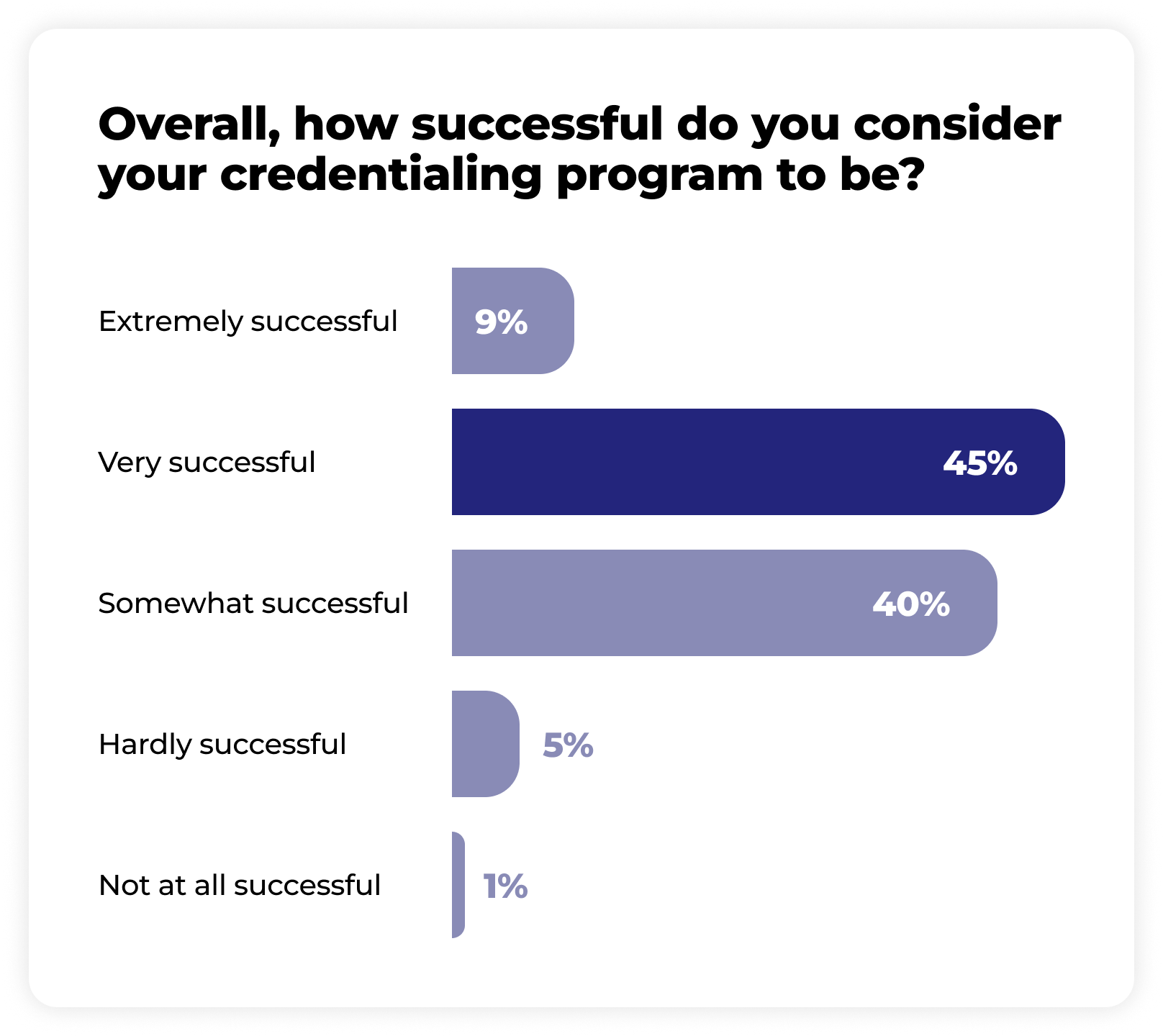
For that second lens, we asked issuers to rate the overall success of their credentialing program. This year, 54% rated their program as very or extremely successful, consistent with last year's findings.
Throughout this section, we'll draw on both perspectives — highlighting widespread gaps as well as practices that distinguish successful issuers from their peers. While program success is self-reported rather than an objective measure, it gives us a useful way to explore how operational practices differ across programs.
Success factor: Define and document your credential framework
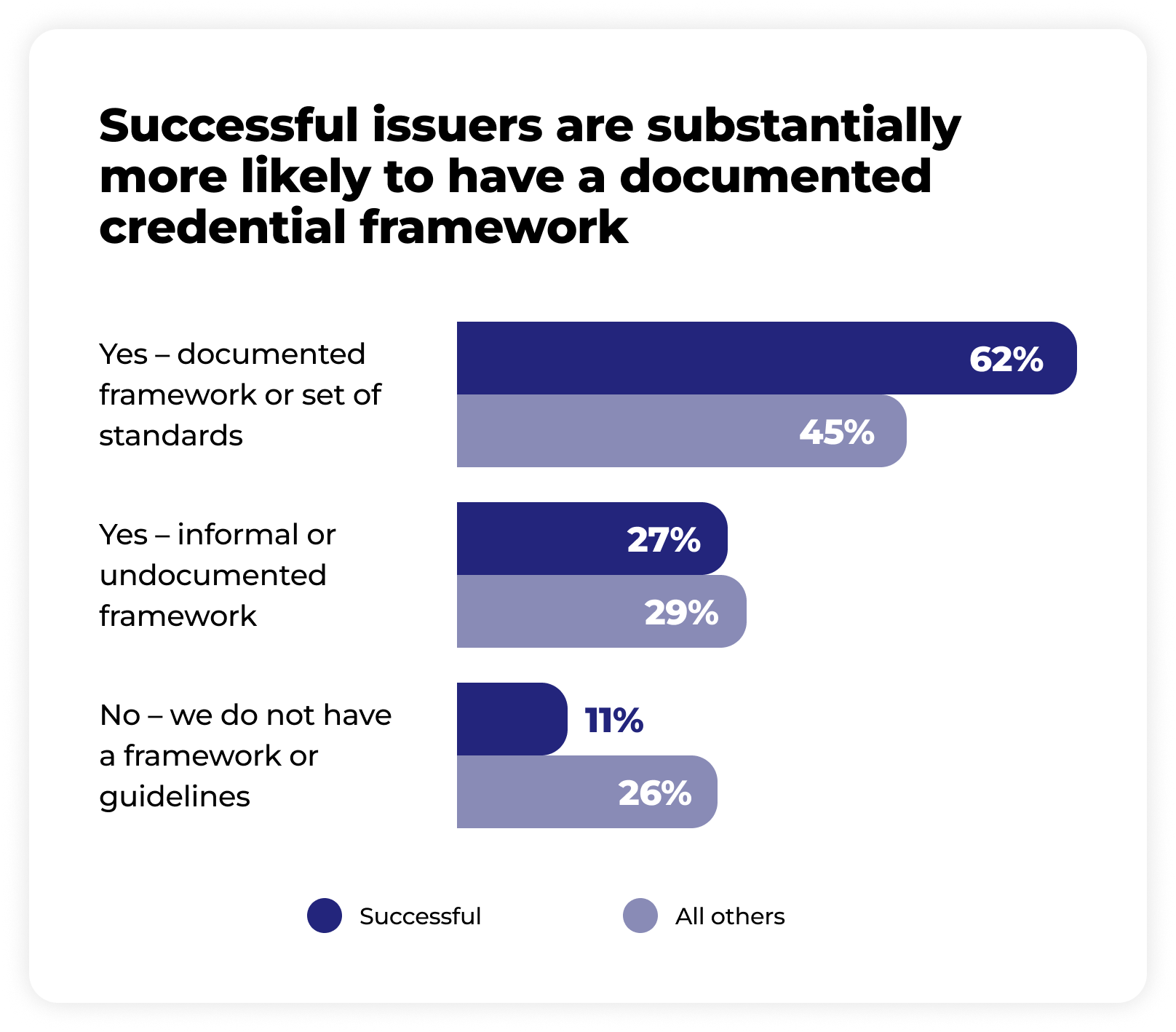
A credential program is only as consistent as the rules that govern it. A documented credential framework — covering how credentials are designed, issued, and evaluated — is what keeps that consistency intact as a program scales beyond a handful of badges. More than half of issuers (55%) have formalized one. But that discipline isn't evenly distributed: Successful issuers are far more likely to have a documented framework in place — 62%, compared to 45% of other issuers.
Without that discipline, a credential can mean almost anything. Meghan Turjanica, Senior Director of Credentialing at McGraw Hill, doesn't soften it: "A badge that simply recognizes participation or time spent is very different from one that proves capability… credentials should be proof of skill, not a marketing asset. Employers and HR systems don't just need to know whether someone 'has a skill'; they need to know they 'have a skill at what level.'"
Syracuse University put that consistency into practice by establishing a Digital Badging Council of leaders from across the institution to govern new badge launches. The council's output was a 24-page governance document covering formats, taxonomy, and procedures, still used today to onboard new departments as Syracuse has scaled past 27,000 issued credentials. As Arthur Thomas, former Executive Director of the Office of Microcredentials, explains, “Taking the time to ensure consensus, support executive leadership, and consider how badging aligns with the academic mission has paved the way for Syracuse’s success.”
By investing in a documented framework with clear governance, issuers create the consistency, scalability, and credibility that learners and employers value most.
Why Your Credentialing Program Needs a Framework (Not Just Badges)
Learn how to design a credential framework and governance model that scales — with practical steps, examples from Syracuse University and Junior Achievement USA, and a proven 8-step process to keep credentials consistent, credible, and aligned to your goals.
Success factor: Define success beyond credential completion
Organizations can't measure or improve outcomes without first agreeing on what a successful learner outcome looks like.
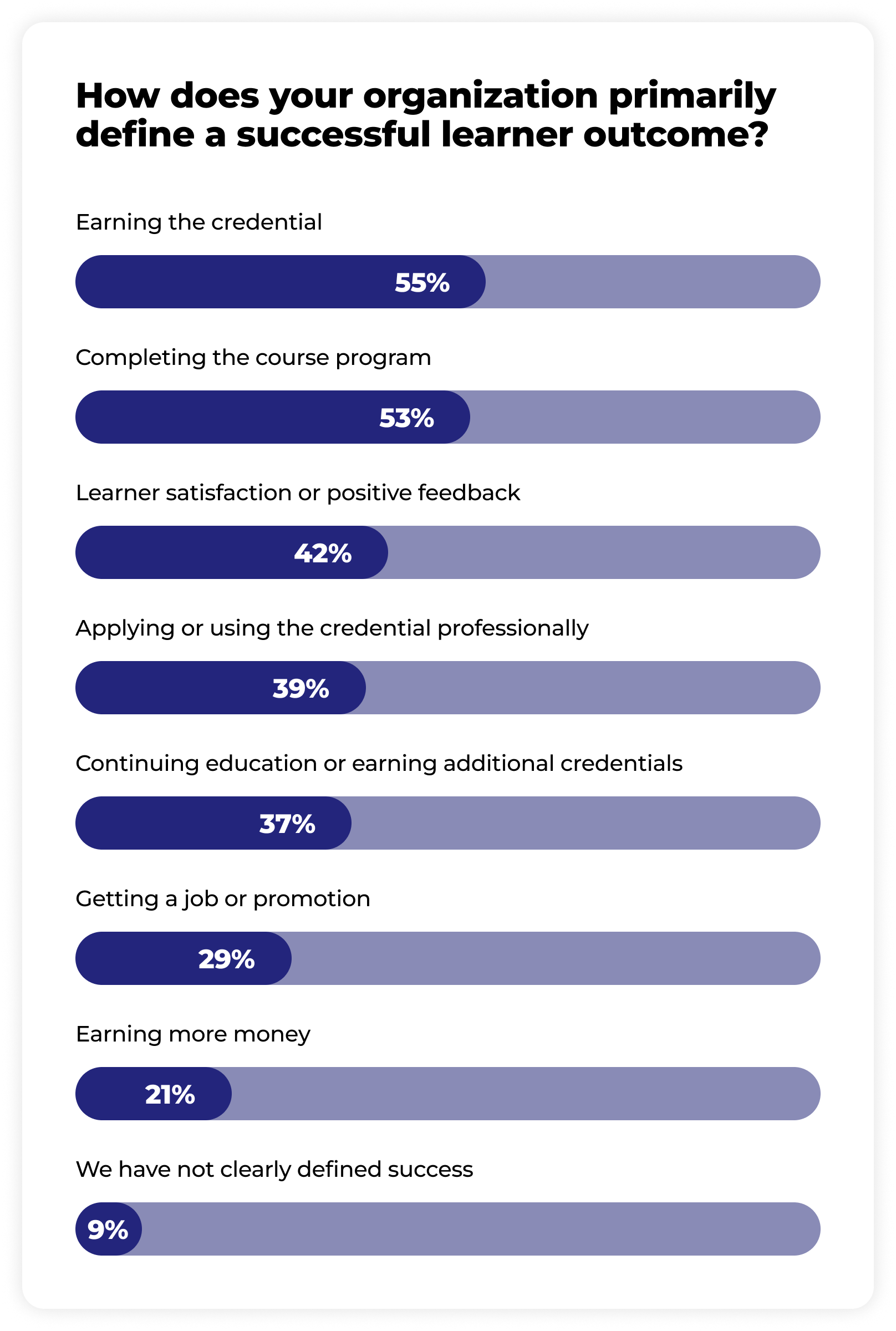
Most issuers define success around earning a credential or completing a course. Those milestones matter because they represent key moments in the learner journey.
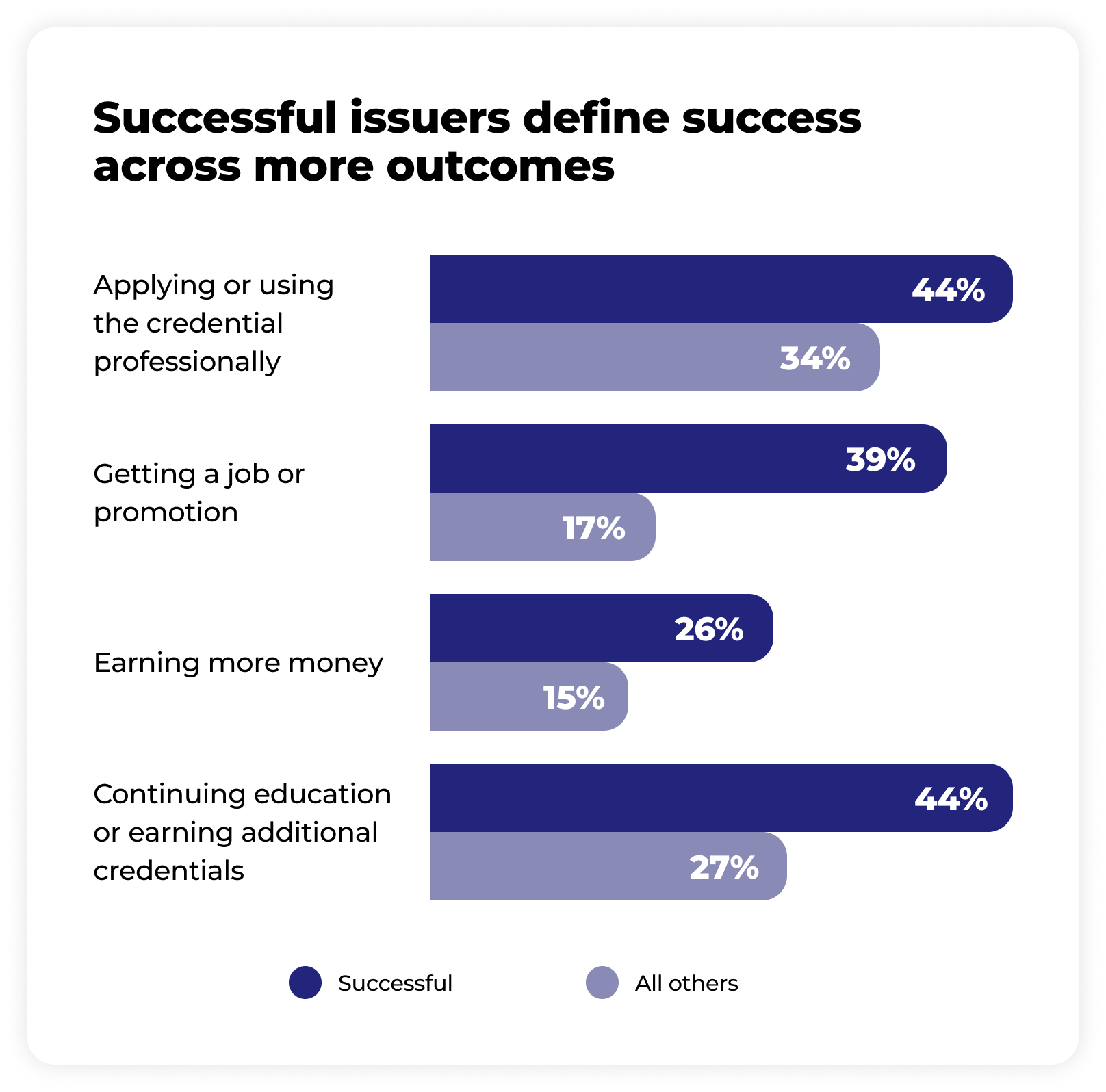
However, successful credentialing programs don't define success narrowly around completion — they define it more expansively. They're more likely to say success includes applying skills professionally, getting a job or promotion, earning more money, and continuing education, in addition to completing the credential itself.
For instance, successful issuers are more than 2x more likely to report they use getting a job or promotion as a successful learner outcome (39% vs. 17%).
Defining success more expansively also means defining it appropriately. What counts as a good outcome depends on what a given credential was designed to do. As Michelle Van Noy cautions, a single yardstick flattens that: "We lose accuracy if we start to lump them all together, because then you start making generalizations that aren't correct."
Success factor: Build systems to measure outcomes
Defining success creates direction. Measuring it creates accountability.
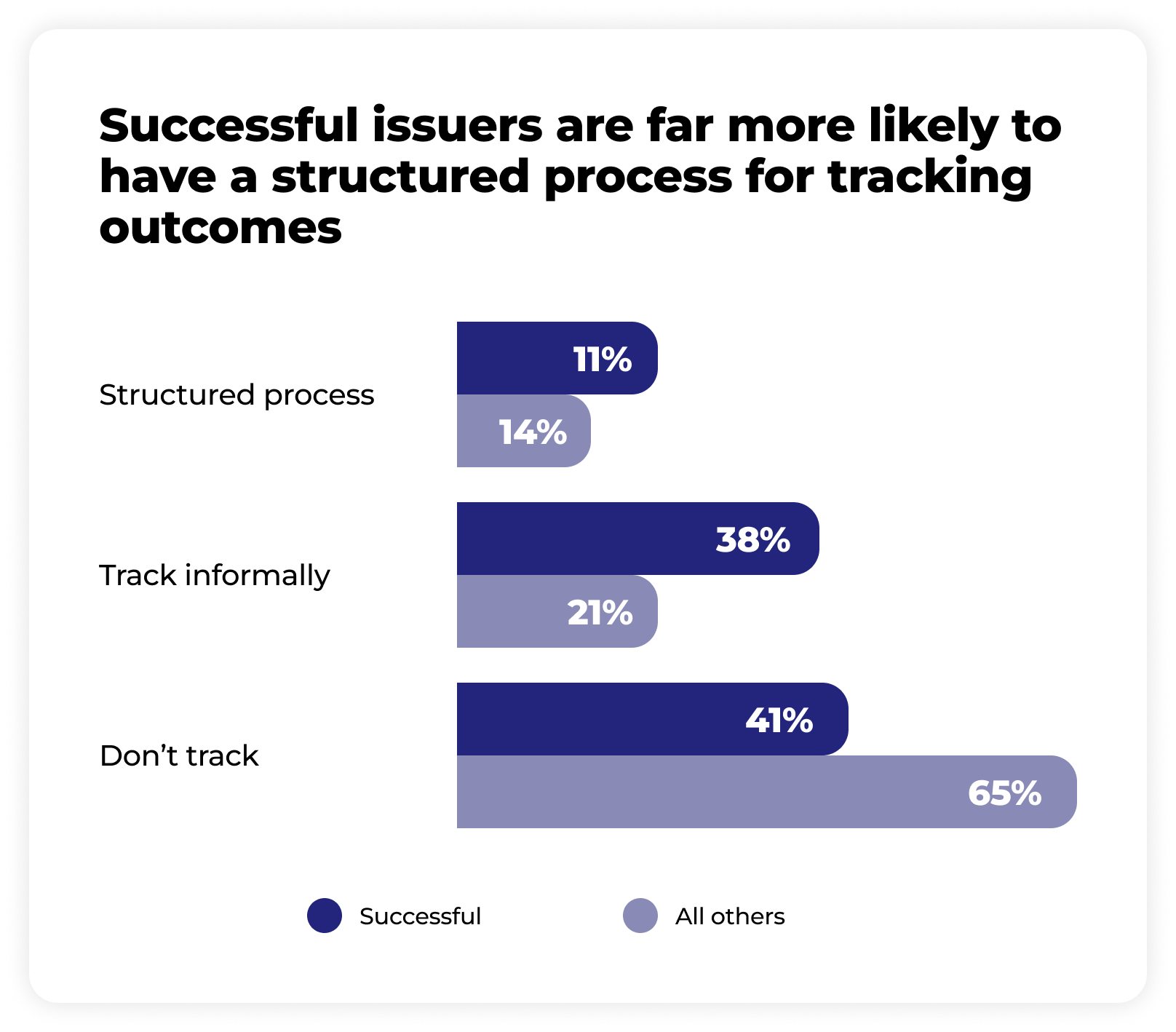
Yet, one of the biggest operational gaps revealed in this research is that the share of issuers with a structured process for tracking learner outcomes has nearly been cut in half (from 33% in 2025 to just 17% this year). Tracking of any kind, structured or informal, also declined overall, from 61% to 48%, despite growing pressure to demonstrate impact.
That decline reflects an operational reality, not indifference. It's what happens when teams are asked for more evidence as the hours to gather it get thinner. Noah Geisel hears that reasoning across the industry: "I'm not resourced to gather it. Why should I take it on to go and do it?"
That gap widens further once you separate successful issuers from the rest.
Measurement remains a work in progress across credentialing programs. While the majority of issuers want to measure whether learners continue their education, find their credential valuable, use it professionally, or advance in their careers, far fewer can confidently demonstrate those outcomes with data. The gap is especially pronounced for longer-term career outcomes: Just 12% can demonstrate professional advancement with data, even though 67% want to measure it.
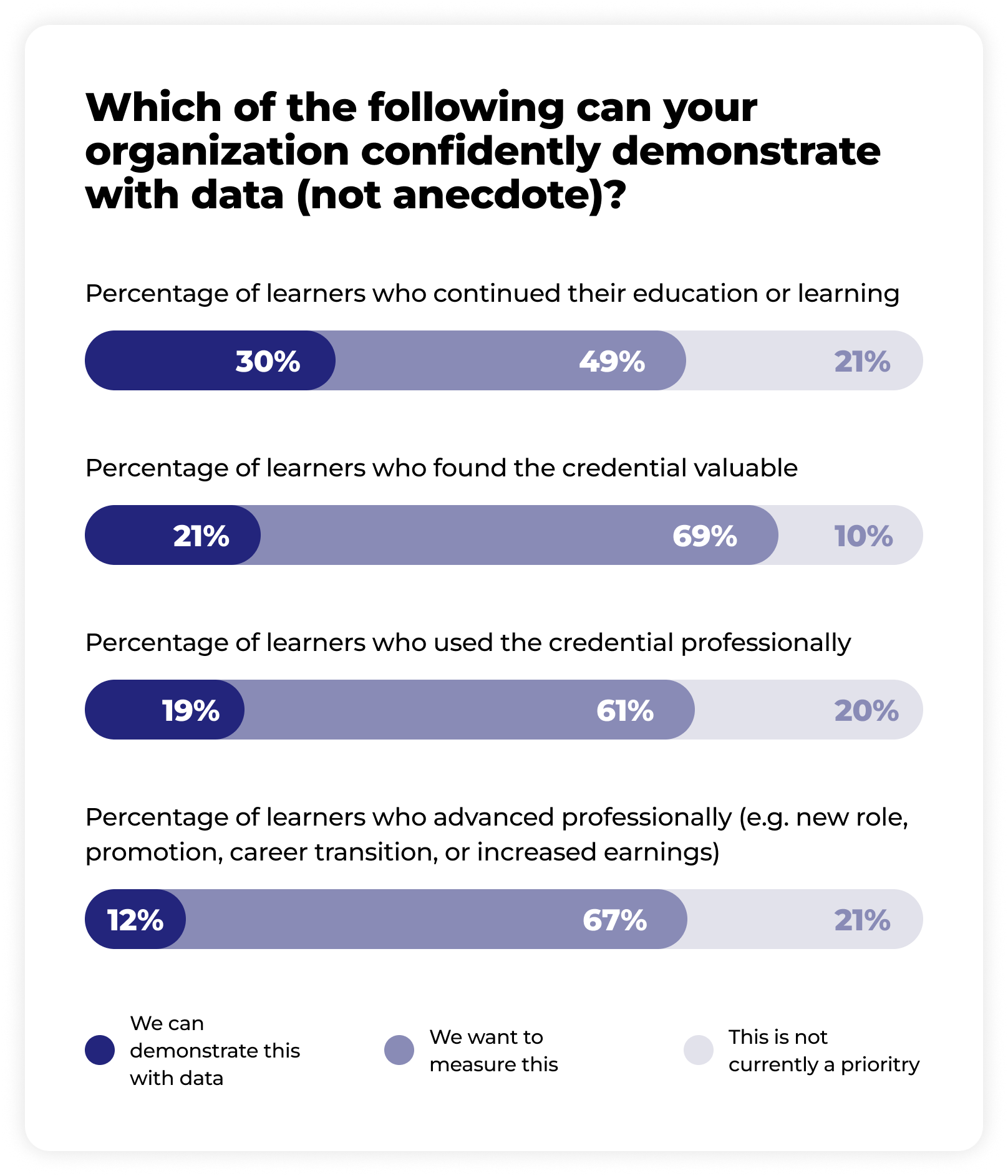
Successful issuers show some signs of progress here too. They're more likely than other issuers to be able to demonstrate that learners continued their learning (37% vs. 21%) and used their credential professionally (23% vs. 14%).
That same pattern holds when we ask a more specific version of the question: What do issuers actually know about a given learner six months after they earn a credential? Visibility is still limited, and skewed toward whatever's easiest to track passively. Issuers are far more likely to know whether a learner viewed or shared their credential (49%) than whether it led to professional use or a job or promotion, outcomes that require actually asking. 32% report they know nothing at all.
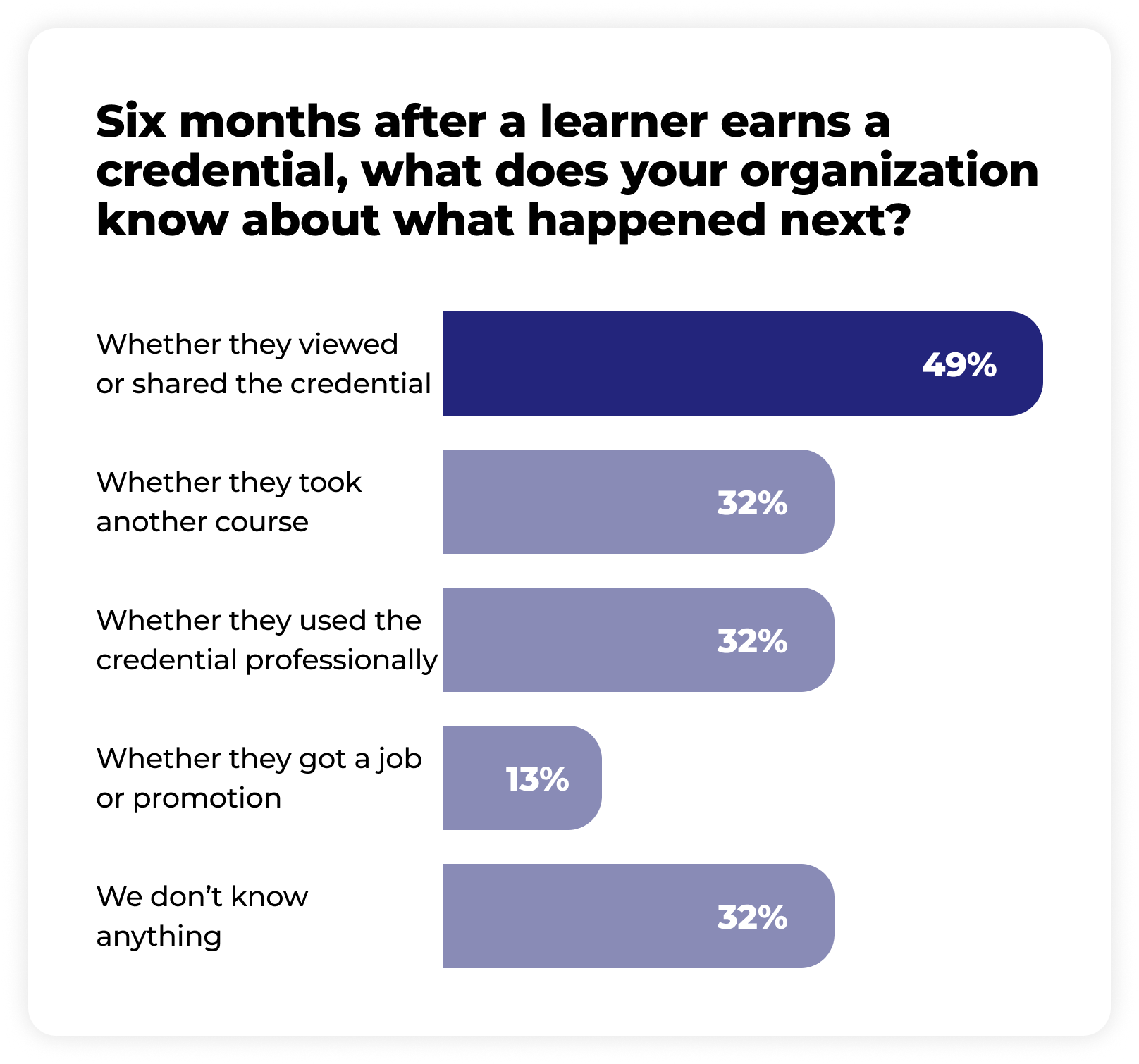
One issuer survey respondent described what closing that gap looks like in practice: "Establishing defined touchpoints — 6 months, 12 months, 2 years — to ask the same questions and rate how they attribute their credential to outcomes." That's the difference between hoping a credential mattered and actually asking.
Success factor: Communicate impact, not just activity
Demonstrating program value requires more than a single measure. Different types of data tell different parts of the story, making it important for issuers to build a more diverse evidence base.
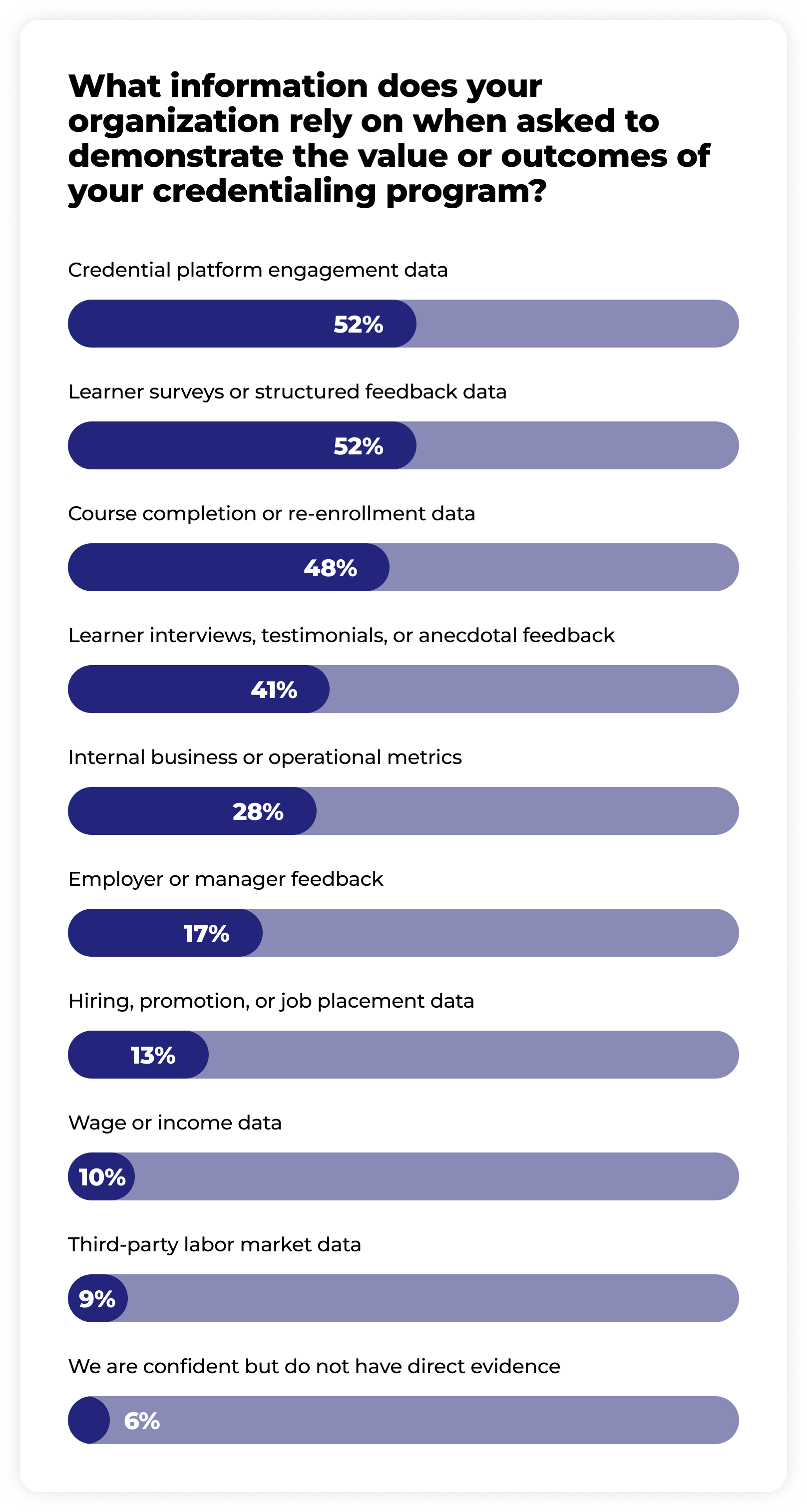
Today, issuers most commonly rely on credential platform engagement data (52%), learner surveys or structured feedback (52%), and course completion or re-enrollment data (48%) when asked to demonstrate program value. Far fewer incorporate employer feedback (17%), hiring or job placement data (13%), wage or income data (10%), or third-party labor market data (9%).
Each of these measures provides a different view of impact. Completion and engagement data can show what learners do, while learner feedback, career outcomes, employer input, and business metrics can provide evidence of what happens as a result. Building a stronger case for credential value means diversifying the evidence rather than relying too heavily on any one source.
Part of why that evidence is so hard to assemble is that the pieces live in different places — engagement and completion data in the credentialing platform, business results tracked elsewhere in the organization. As Julie Uranis, Senior Vice President of Online and Strategic Initiatives at UPCEA, puts it: “We're rich with data but lack the ability to truly derive meaning and take action from it because it sits in siloed systems.”
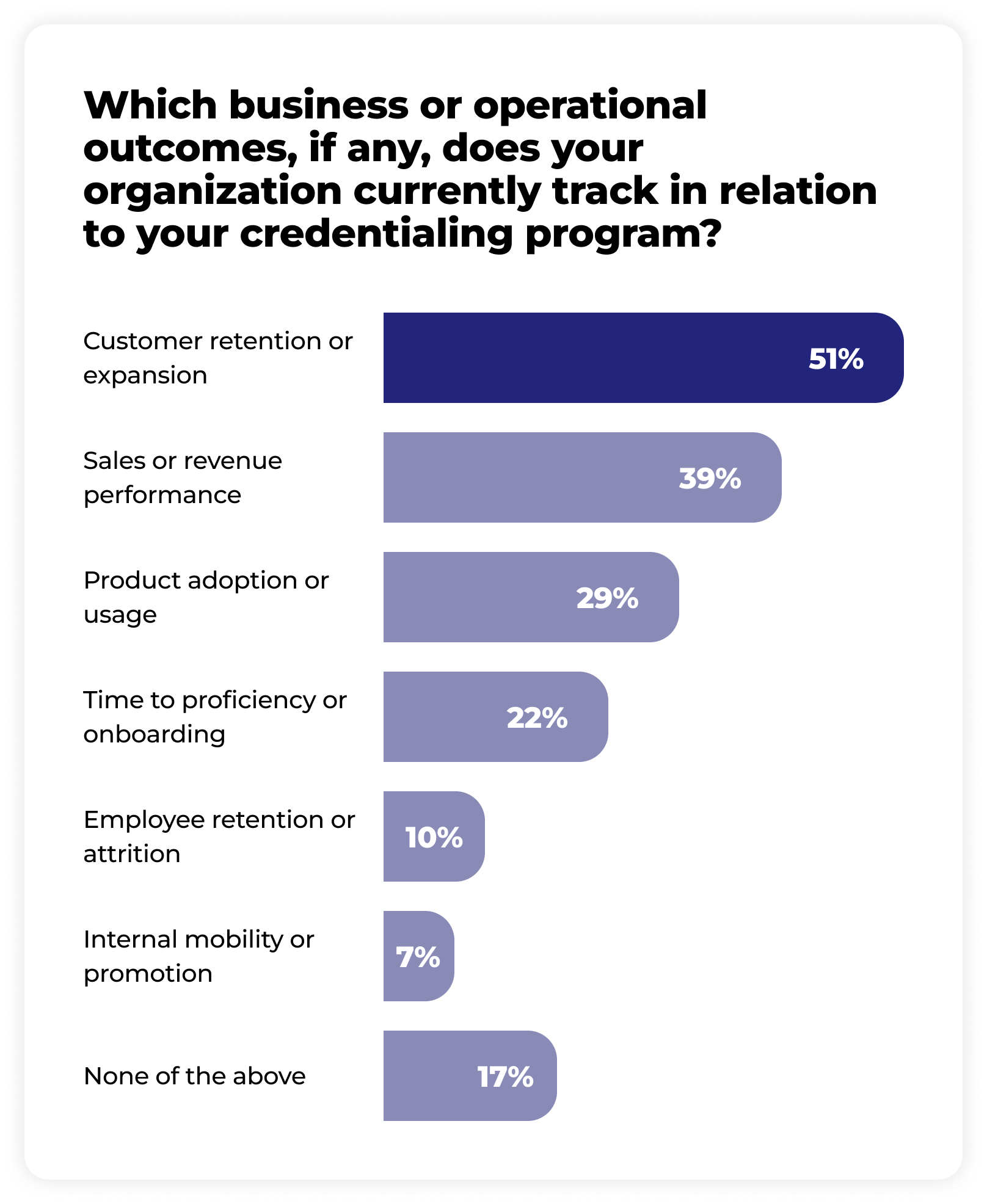
Among the smaller group of issuers who do tie credentialing to internal business metrics, the most common connections are customer retention or expansion (51%) and sales or revenue performance (39%), followed by product adoption (29%) and time to proficiency (22%). Fewer connect it to employee retention (10%) or internal mobility and promotion (7%). These figures point to where the most advanced programs focus already: correlating credential data with the same metrics the rest of the business already tracks.
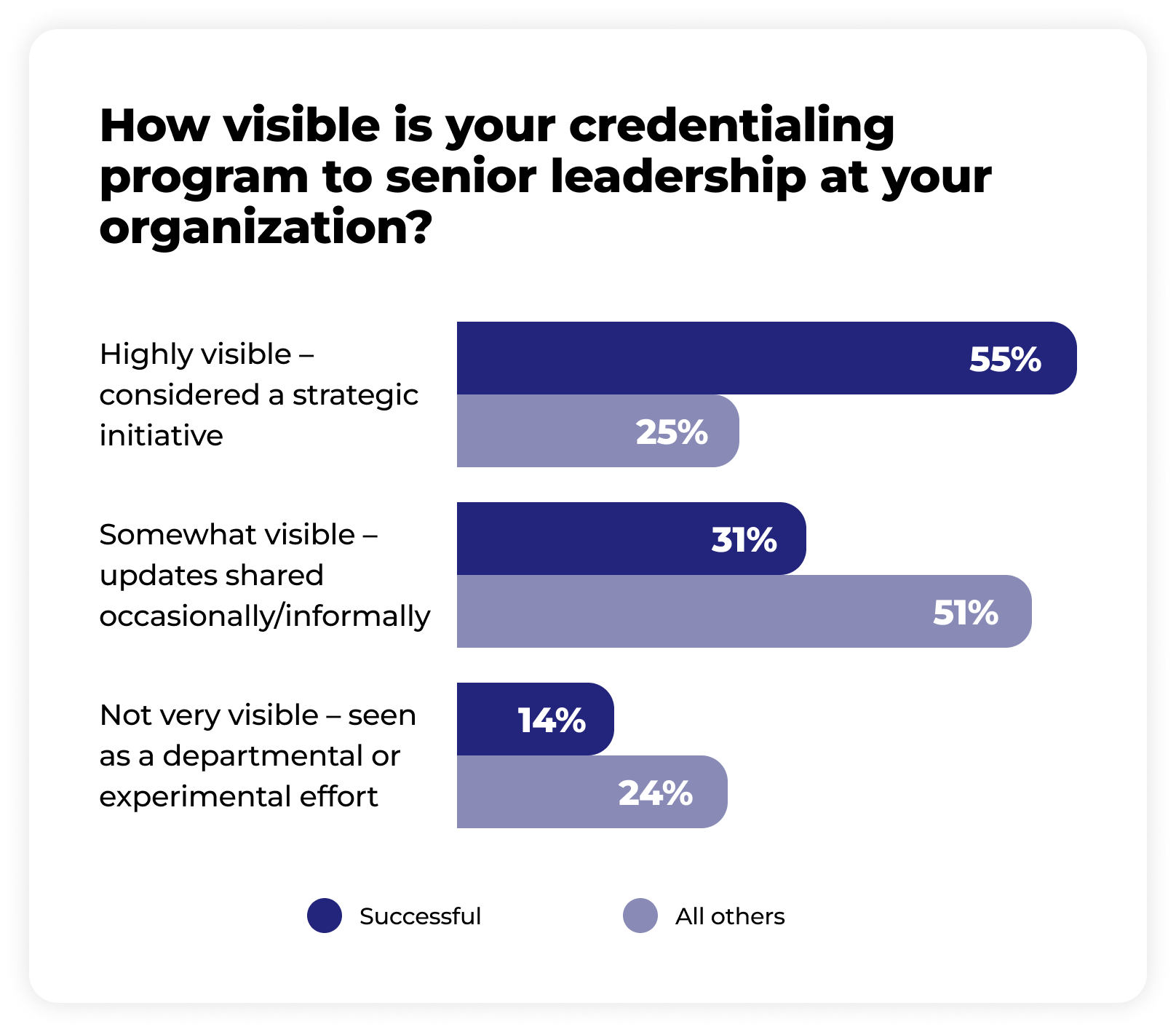
Organizations with the strongest credentialing programs are also much more likely to report that credentialing is highly visible to senior leadership. Rather than remaining a departmental initiative, credentialing becomes a strategic capability supported by evidence and connected to broader organizational goals.
The strongest credentialing programs aren't defined by a single initiative or technology. They're distinguished by the operational systems they build around their programs.
They define and document a credential framework, define success beyond credential completion, build systems to measure outcomes, and communicate impact — not just activity — across their organization. Together, these practices create a stronger foundation for continuously improving learner outcomes while helping organizations meet the growing expectation to prove program value.
Databricks shows what this looks like in practice. Its framework and governance were built before a single new badge launched. "Start the framework and governance before you issue a single badge," says Rachel Canetta, Senior Manager of Certification.
That structure now supports a program that issues more than 50,000 credentials a month and recently crossed one million lifetime credentials issued. It isn't treated as a side project, either: Active, non-expired credentials are a formal OKR for the entire organization, not just its learning and development team, tracked in the same monthly business review deck as every other business metric — credential open rate, share rate, and referral clicks, all pulled straight from platform analytics. "They're not just badges; they're metrics," Canetta says. Databricks is currently 95% of the way to its 602,000-active-badge target, tracked with the same rigor leadership applies to any other growth number.
From Credentials to Consequence: How Leading Programs Tie Learning to Business Impact
Learn how leading programs like Toast, Elastic, and Asana connect credential data to the business metrics your leadership already tracks.
The path ahead
The strongest credentialing programs don't succeed by chance. They intentionally build systems that create value, measure impact, and communicate results. We close with practical recommendations for putting these insights into action.


