

Learner's aren't the problem —guidance is
As we learned in the previous section, the vast majority of HR and talent leaders are actively looking for digital credentials in applications — and many candidates already have them.
The gap isn’t credential ownership — it’s visibility. Too few learners are making their achievements visible where it matters. For issuers, the mandate is clear: Equip learners to understand the value of their digital credentials and share them effectively.
Most issuers recognize the need for learner education, but execution varies
The encouraging news is that 85% of issuers recognize the importance of educating learners about credential value and are taking steps to do so.
However, our research shows that the depth of execution differs significantly. Some issuers limit their efforts to a single message at the point of issuance, while others build education into an ongoing learner experience. The chart below shows what successful issuers are doing differently from their peers. (Learn more about how we define “successful issuers” in Successful issuers play differently.)
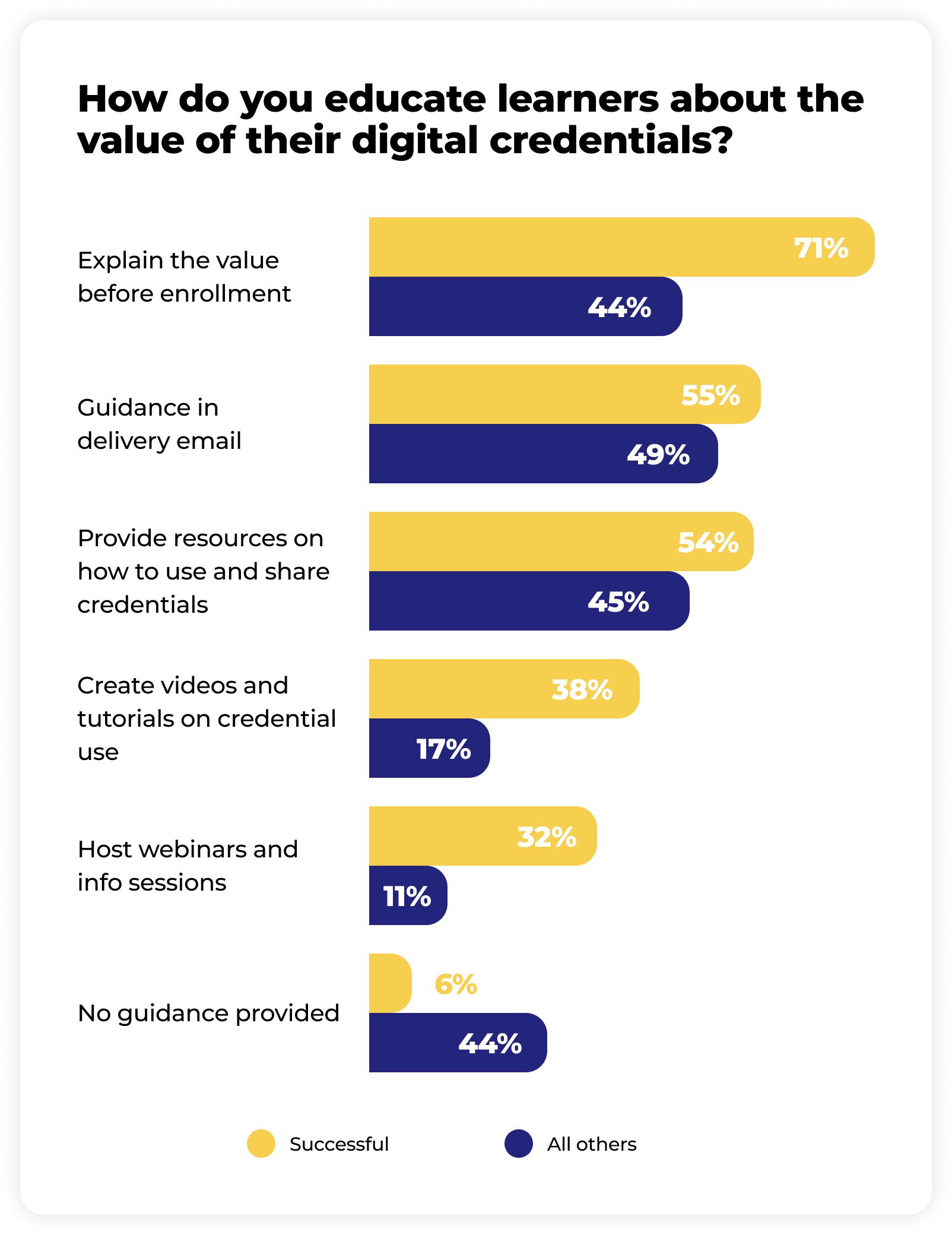
Successful issuers understand that effective education doesn't happen at one point in the process — it requires consistent reinforcement throughout the learner journey. They are more likely to use multiple touchpoints and formats rather than relying on a single method.
At the Gies College of Business at the University of Illinois, for example, this approach is built into the credentialing process itself — from embedding credential value into coursework to providing post-completion follow-ups. As Amanda Brantner, Senior Director of Content and Educational Portfolio Strategy, explains,
“We get questions from learners like, ‘How do I share this?’ or ‘What should I do with it?’ Helping them understand not just what a credential is, but how to use it, is critical.”
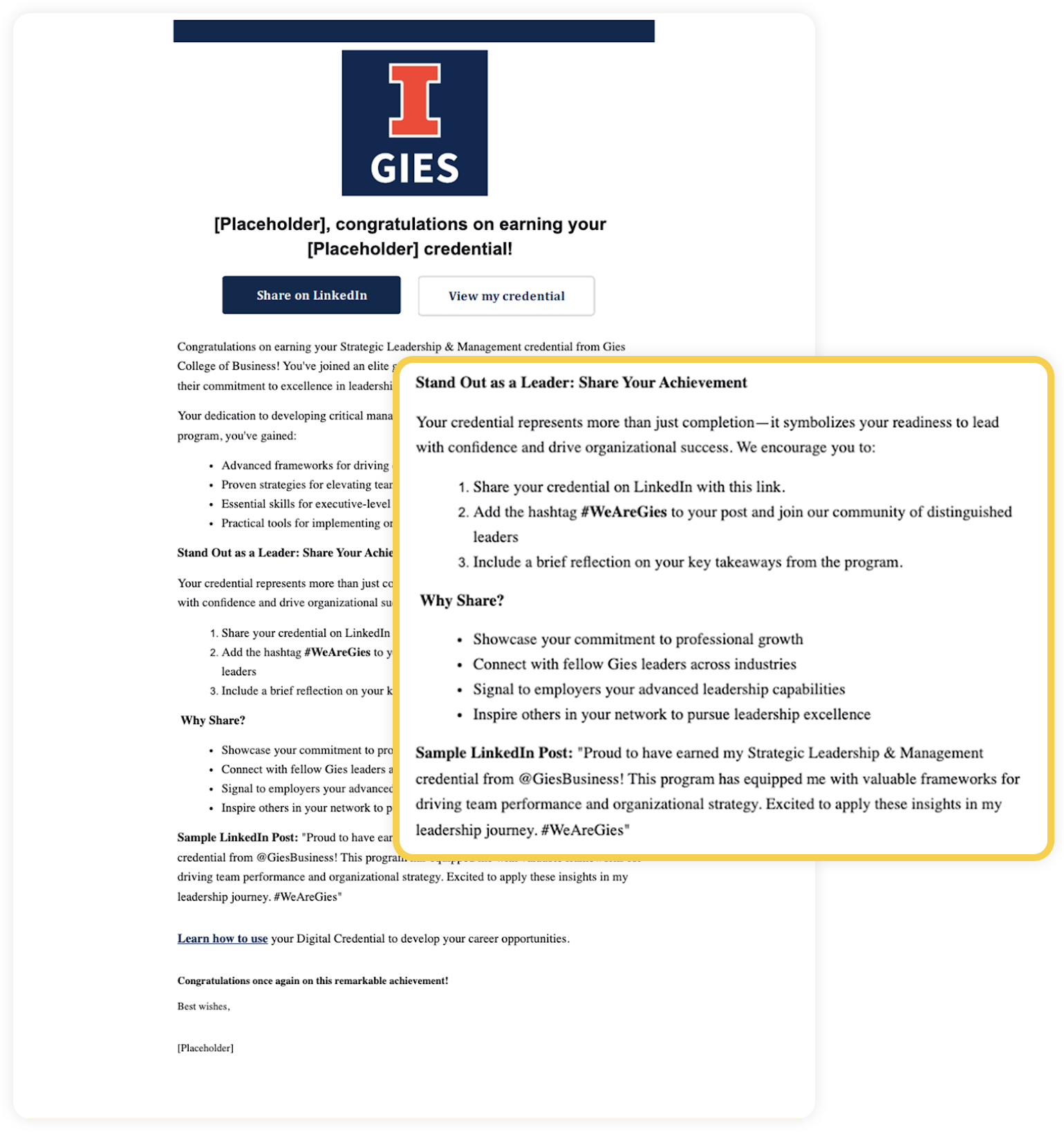
This investment in learner guidance has paid off: Gies Business has issued over 48,000 digital credentials since 2020, with learners earning an average of three each. More than 78% share them on LinkedIn, turning personal achievements into powerful program marketing.
What learners need to know: The hiring impact
Learners need to understand that credentials aren't just learning achievements — they're career accelerators. To communicate this message, issuers can share the data from this report using the messages and data points shown below.
Lifelong Learning Practice’s founder and principal consultant Wendy Palmer recommends, “frame credentialing as the start of a story, not the end. For example, ‘This badge marks the beginning of your journey into project leadership.’”


Where employers are finding credentials
Once learners understand the value of their credentials, they also need to know where employers are most likely to encounter them.
Our employer research shows that while resumes and LinkedIn profiles remain the primary touchpoints, hiring decision-makers also encounter credentials in places many learners overlook — from professional association websites and online job boards to public directories and portfolios. Helping learners place their credentials across multiple channels increases the odds they’ll be seen by the right employers.
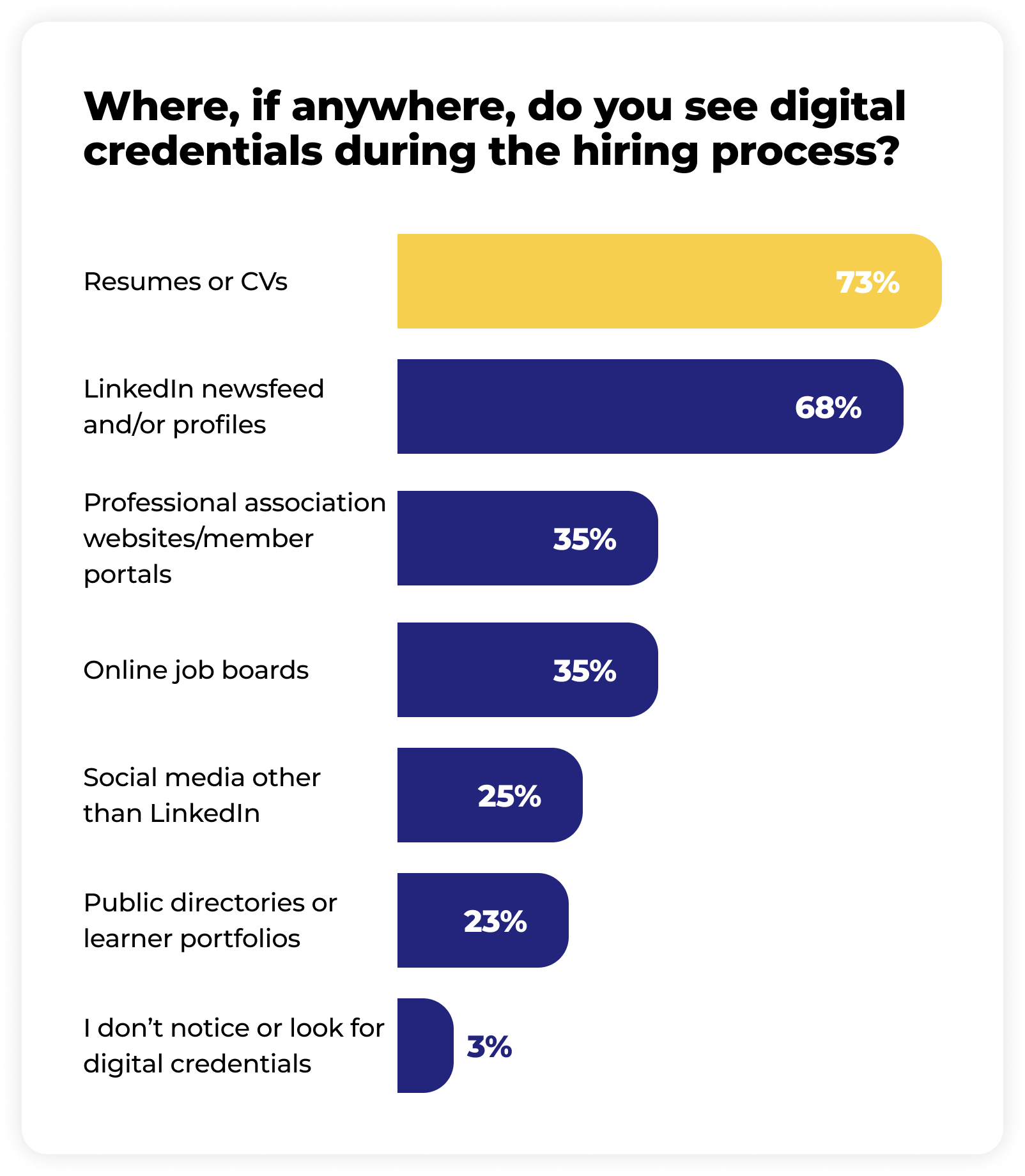
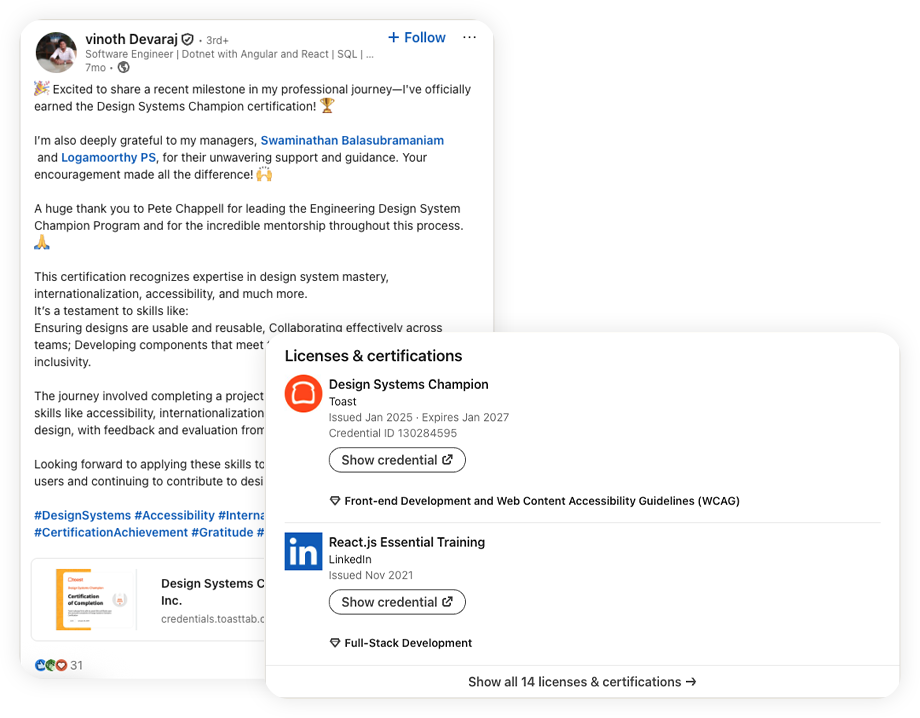
LinkedIn merits focused attention because it’s where employers most frequently encounter digital credentials. HR and recruiting leaders actively look and act there: 52% search the “Licenses & certifications” section to find candidates, 46% review that section to check a candidate’s earned credentials, and 46% reach out when a relevant credential appears in the newsfeed.
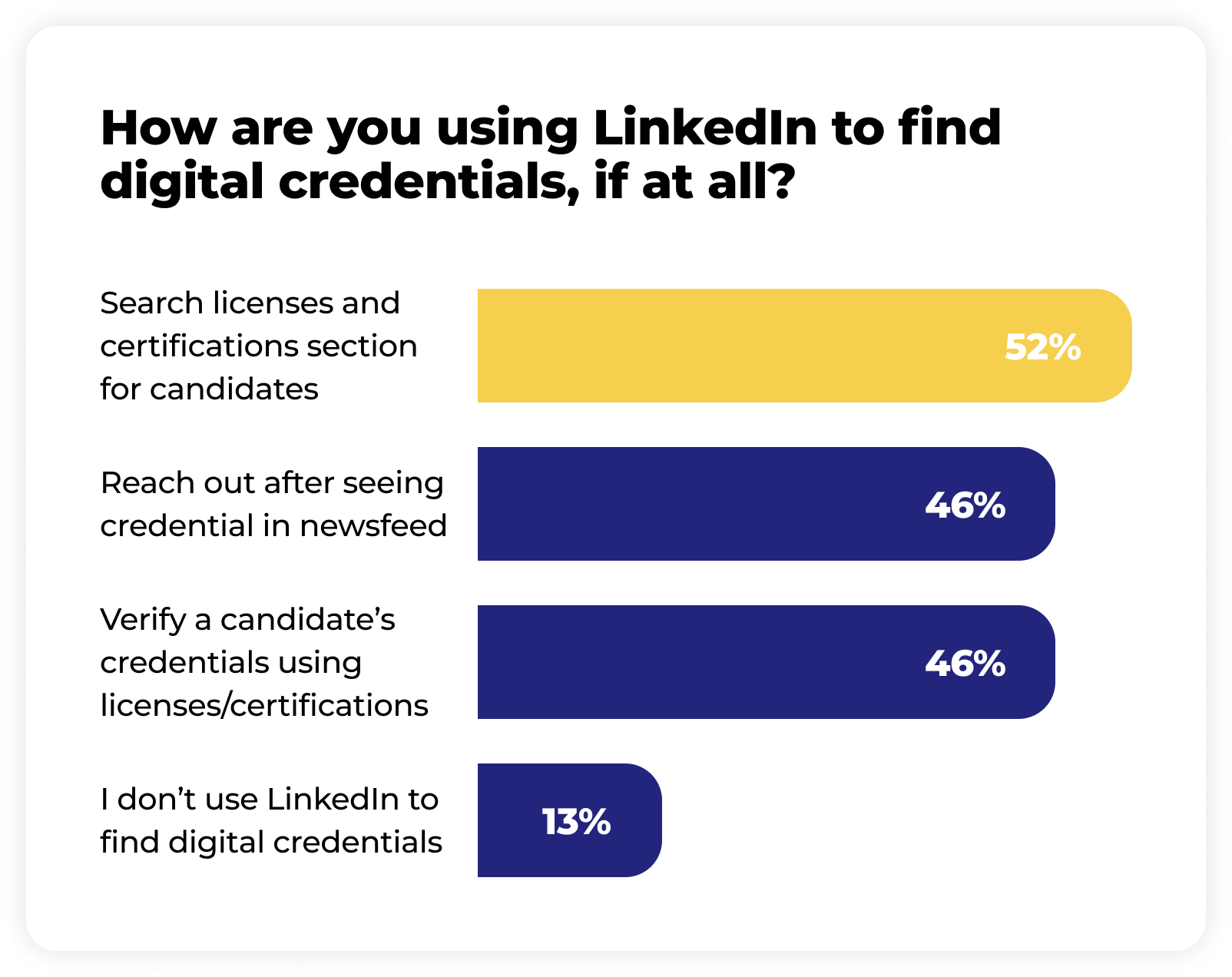
What this means for issuers and learners: Use both sections on LinkedIn.
- Persistent proof: Add the credential to the “Licenses & certifications” section so it’s searchable, verifiable, and always on the profile.
- Distribution spike: Share the credential to the newsfeed to drive immediate visibility (and referrals) the week it’s earned.
Learners feel the impact of this visibility firsthand. Michael DeWolfe, a Penn State University student who earned multiple McGraw Hill SIMnet badges, shared:
“I have all my SIMnet badges on LinkedIn and my resume. In almost every interview, someone says, ‘Oh, I see these credentials on your resume. Can you talk a little bit more about that?’ I’m not just saying that I have Excel skills — I’m proving them through the badges.”
Issuers should provide step‑by‑step guidance and ready‑to‑use templates so learners can do both in minutes.
Recognize and celebrate your learners
Recognition fuels visibility. When learners feel acknowledged for sharing their credentials, they’re more likely to post them in the very places employers are already searching — from LinkedIn to association sites. Simple actions like commenting on posts, amplifying learner stories, or partnering with high-engagement “influencer” alumni can extend the reach and credibility of your program.
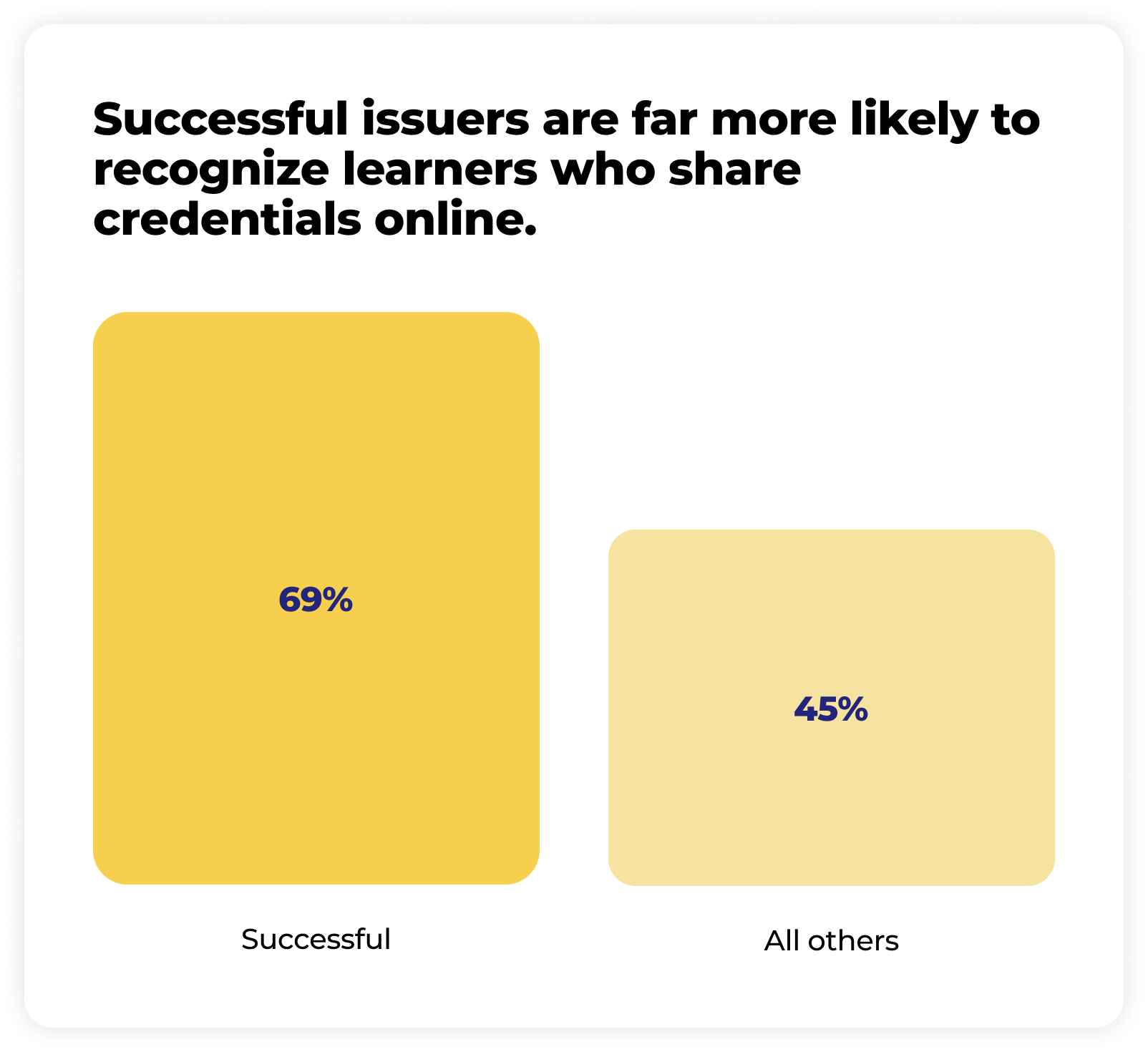
Successful issuers don’t leave this to chance: 69% actively recognize learners who share credentials, compared to 45% of others.
Not only will these steps improve individual career prospects, but they’ll also help issuers with their goals of increasing visibility and revenue, as other potential learners will see these credentials.
Embed education at every stage
For top issuers, learner education is built into the entire credential lifecycle — ensuring graduates know exactly how to share and leverage their achievement for career growth. This isn’t a one-off email; it’s a sustained effort:
- During the program: Build credential value into course content and completion communications.
- At award: Celebrate and provide immediate, actionable guidance on sharing and showcasing achievements.
- Post-completion: Follow up with success stories, resources, and opportunities to keep the credential visible.
This continuous approach not only boosts learner outcomes but also drives issuers’ progress toward their goals — including greater program visibility and increased enrollments.
Give learners everything they need to understand, share, and maximize the value of their credentials. This guide includes ready-to-use page templates, LinkedIn posting examples, credential delivery email copy, and tips to increase visibility and engagement.
What’s inside the credential matters
Even when learners do share their credentials, success isn't guaranteed. Our research reveals that employers often struggle to interpret credential information.


