

Hiring needs verifiable proof
Our research reveals a critical challenge: Candidate qualifications — the foundation of hiring decisions — can’t always be trusted.
Job candidates commonly misrepresent skills
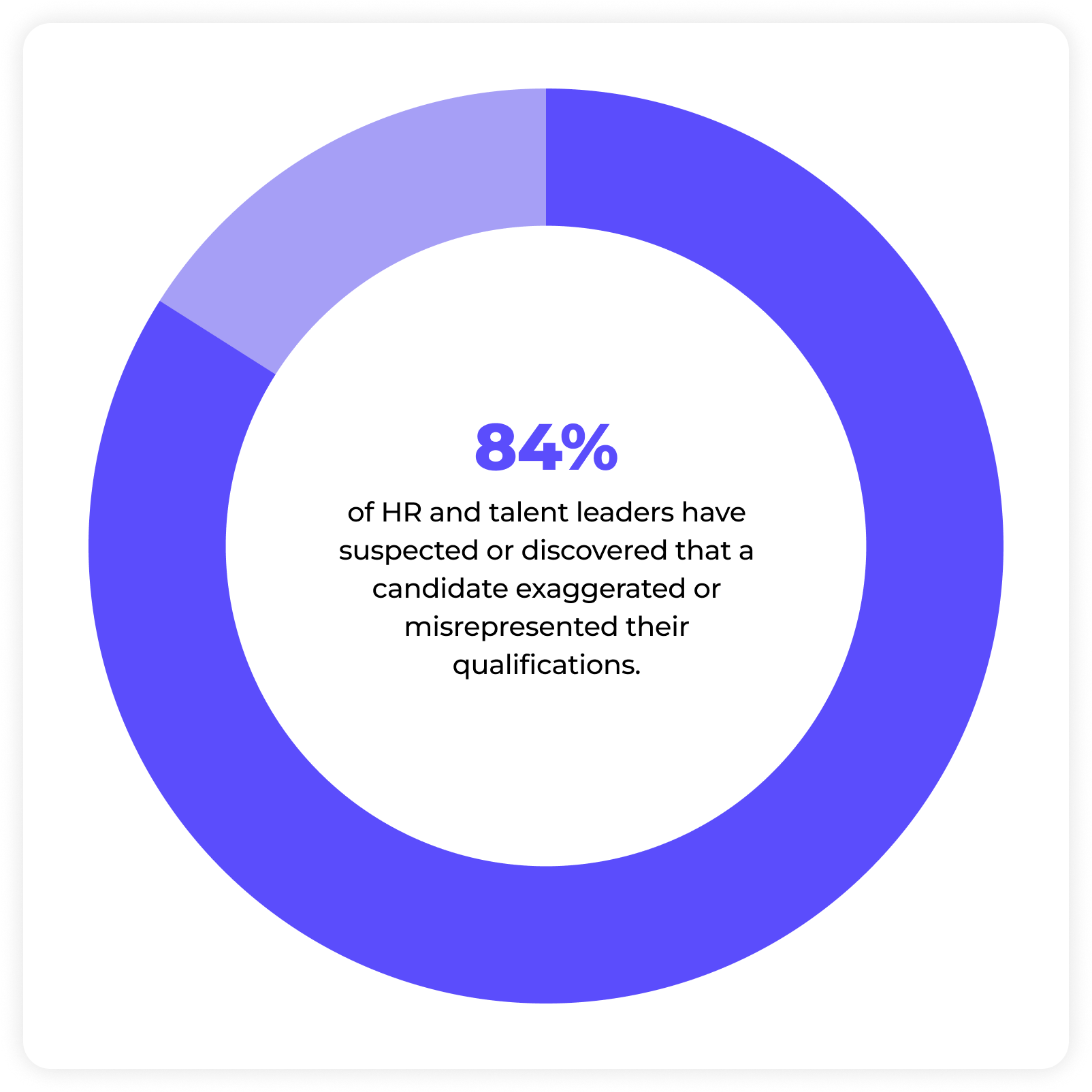
The reality is that it’s not easy to evaluate job candidates. Our survey reveals that the vast majority (84%) of HR and talent leaders have suspected or discovered that a job candidate exaggerated or misrepresented their qualifications. This is a widespread challenge that undermines confidence in all job candidates.
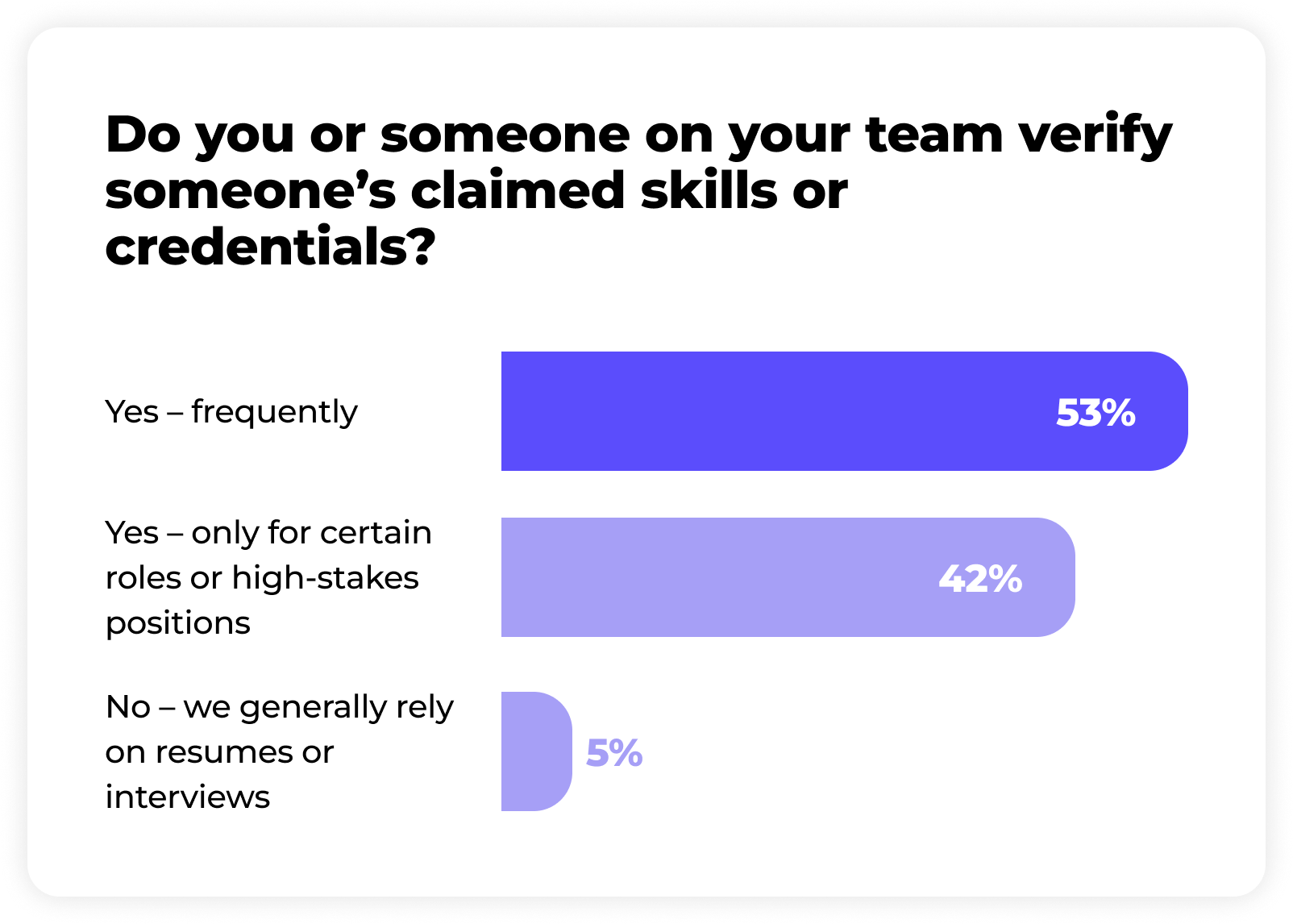
Because of this, it’s no surprise HR and talent leaders report it’s common for them to verify candidates' claimed skills or credentials, which can be a time-intensive and complex process.
Look for this symbol throughout the report to learn what successful issuers are doing differently.
These are data-driven signals of things you can experiment with to improve your program.
Employers want proof of skills
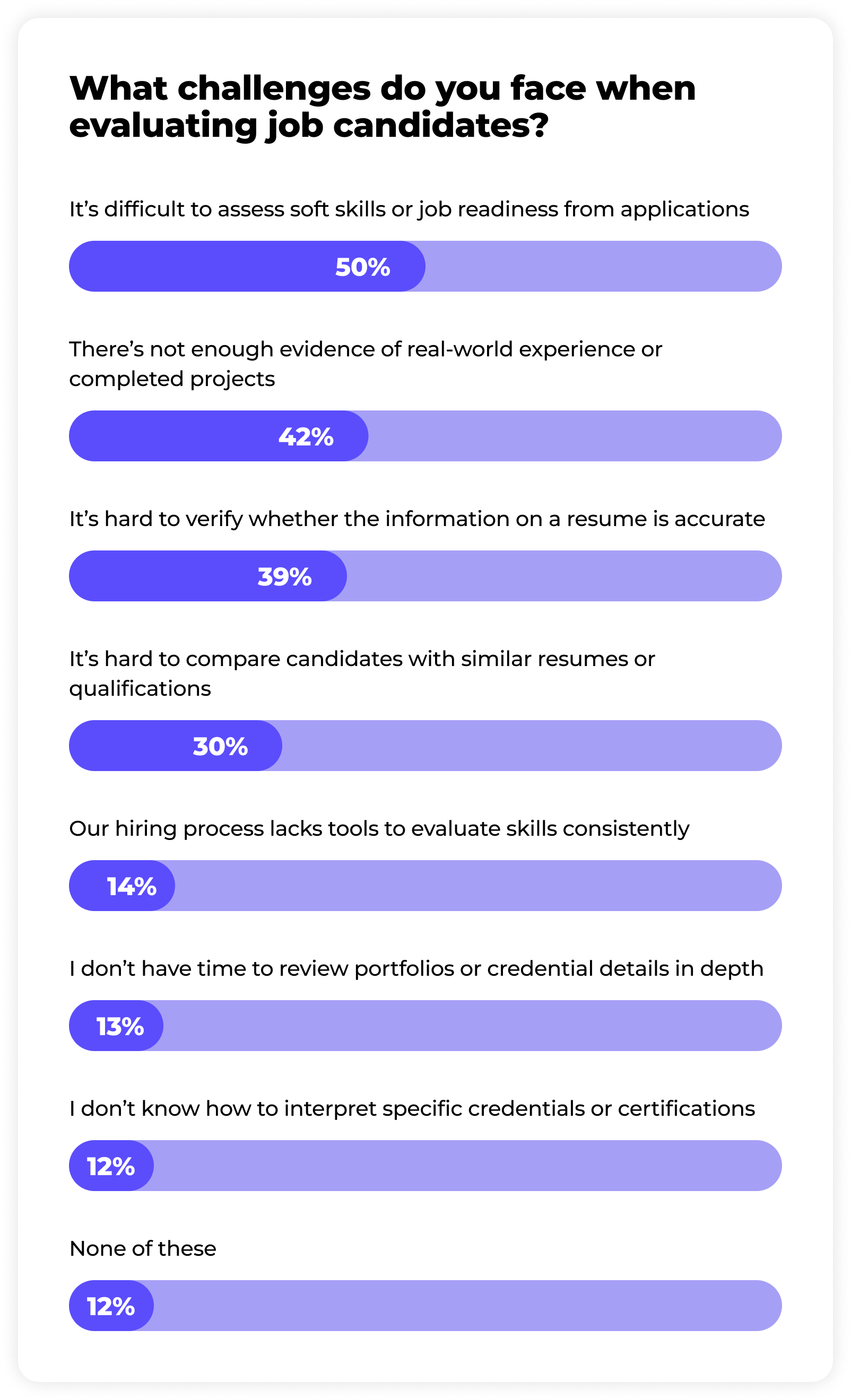
When asked what challenges they have with hiring, HR and recruiting leaders continue the theme. They report difficulties in two critical areas: assessing actual skill levels and determining if resume information is accurate. These pain points create bottlenecks in the hiring process.
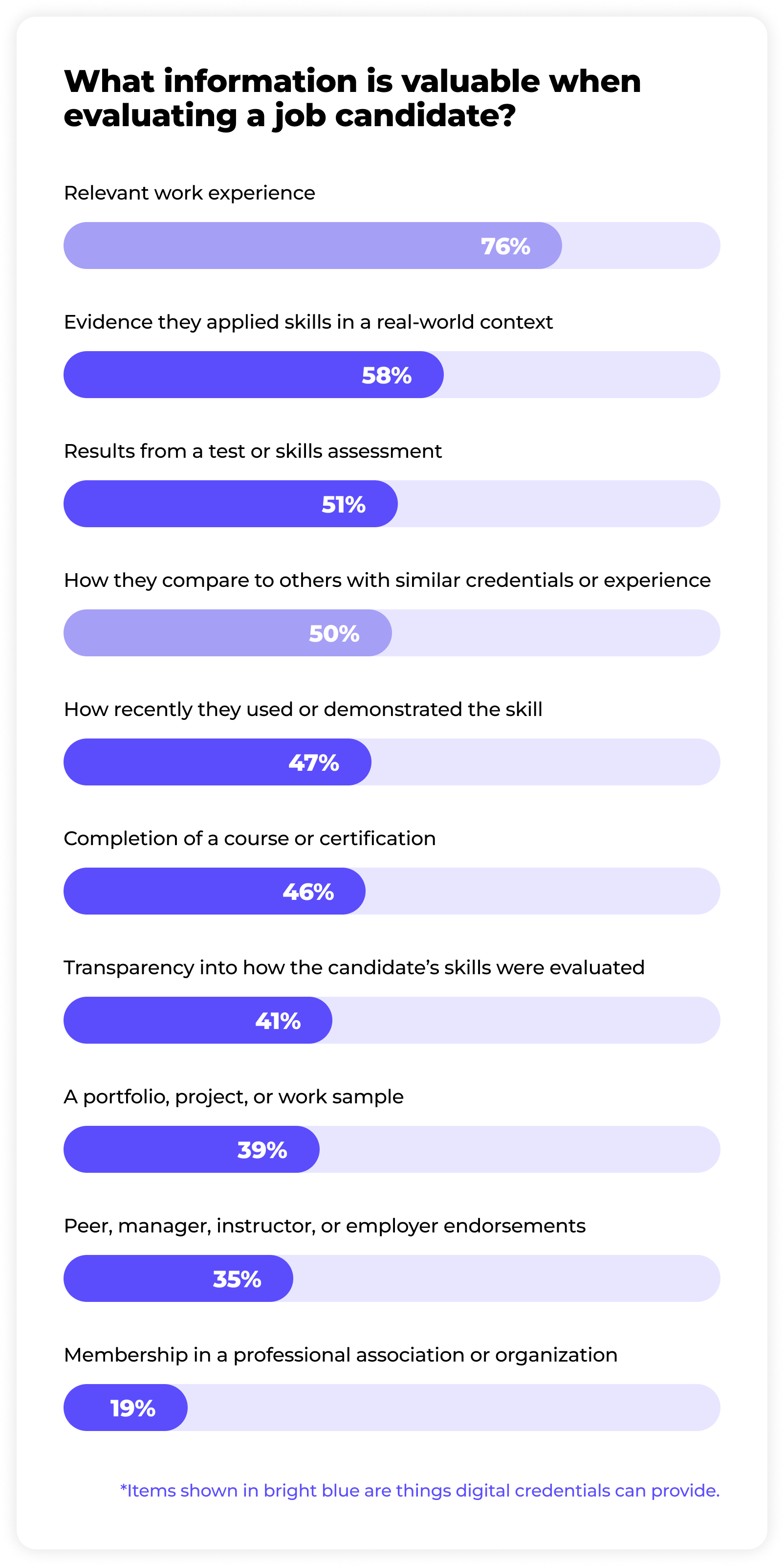
Looking at this from a different perspective, we asked HR and talent leaders what information is most valuable when evaluating job candidates. Their responses cited things such as “evidence they applied skills in a real-world context” and “results from a test or skills assessment.”
Said another way: HR and talent leaders are looking for proof of skills — something that verifiable digital credentials can and do provide.
As Frank Sorokach, Assistant Teaching Professor of Economics at Penn State University, puts it:
“A college degree and a digital badge aren’t mutually exclusive — they’re complementary. Badges map to specific skills and tell employers exactly what a candidate can do.”
Courtney Haynes, Chief Engagement Officer at Opportunity@Work, notes that proof should apply equally to nontraditional candidates:
“Employers should look beyond degrees and see all credentials as signals of potential — including the skills and experiences of STARs (the 70+ million U.S. workers Skilled Through Alternative Routes). Most employers don’t hire every degree-holder automatically without verifying their skills first — employers should give that same opportunity for STARs to show their skills.”
The opportunity for credential issuers
Employers are in the midst of a verification crisis: They’re hungry for trustworthy, verifiable proof of skills and competencies to help them quickly and effectively source and evaluate talent. And this represents a massive opportunity for credential issuers, because they can fill that gap.
As we'll explore throughout this report, there's a significant disconnect between what employers need from credentials and what issuers are currently providing. The organizations that bridge this gap stand not just to meet their goals, but to set their learners and their programs apart from the rest.
But first, it’s important to understand exactly how HR and talent leaders view digital credentials — and whether they're actually using them in hiring decisions. What our research discovered reveals both a critical disconnect and a tremendous opportunity.


Employers are looking, but not finding
Find out what employers really want to see in credentials and why most issuers are missing the mark.


