

Employers are looking, but not finding
Even though it’s clear that digital credentials fill the verification gap, we wanted to understand how employers are thinking about them. More specifically, are HR and talent leaders seeing and/or looking for digital credentials? And do they think they’re valuable in the hiring process?
The answer is a resounding yes.
HR & talent leaders are actively hunting for credentials
The data reveals something remarkable: 91% of HR and talent leaders intentionally look for digital credentials when reviewing applications or resumes. This isn't passive recognition — it's active behavior that demonstrates how valuable credentials are to employers.
91%
of HR and talent leaders intentionally look for digital credentials when reviewing applications or resumes.
There are two reasons employers are looking for digital credentials.
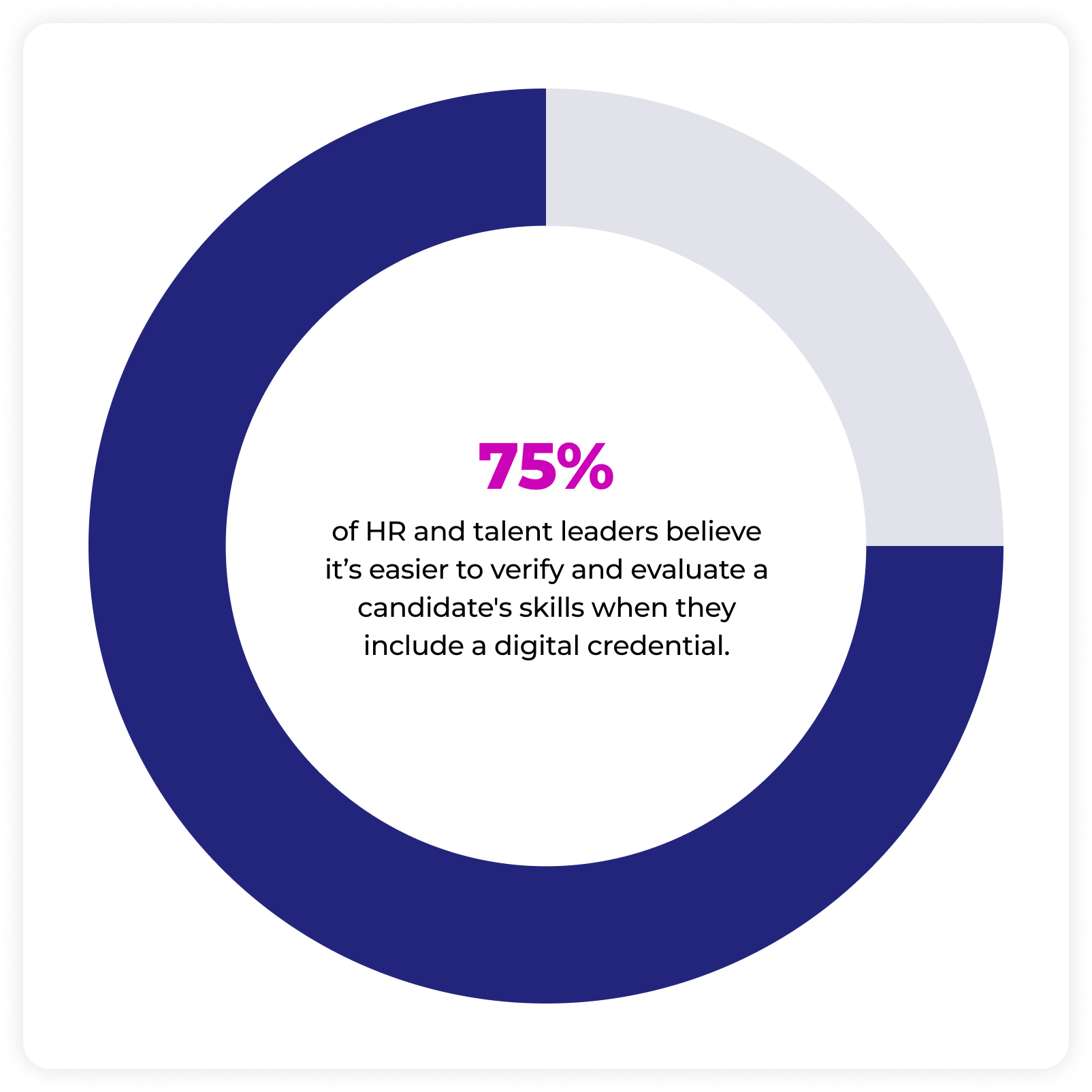
First, 75% of HR and talent leaders believe it’s easier to verify and evaluate a candidate's skills when they include a digital credential. These credentials make their job easier.
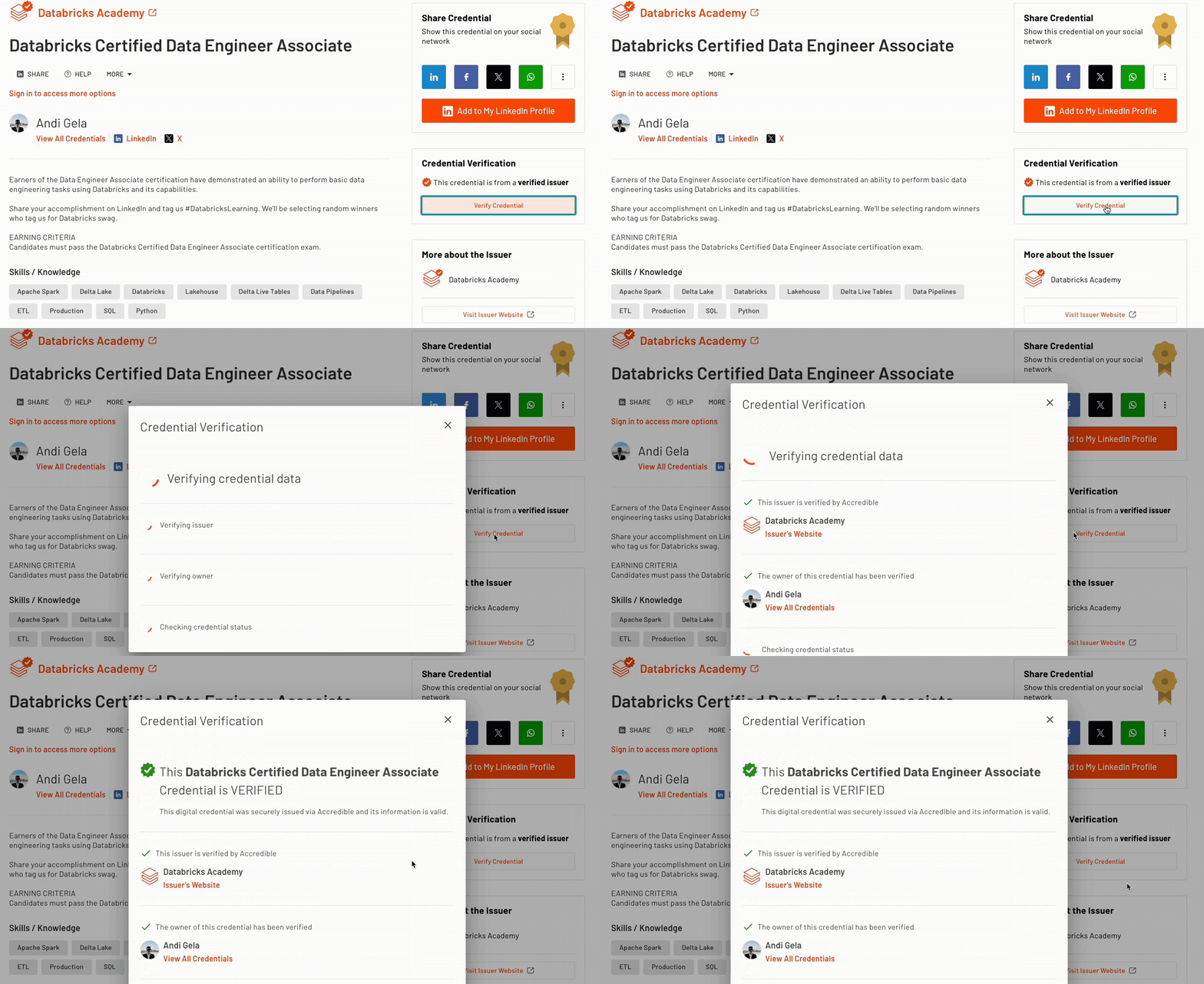
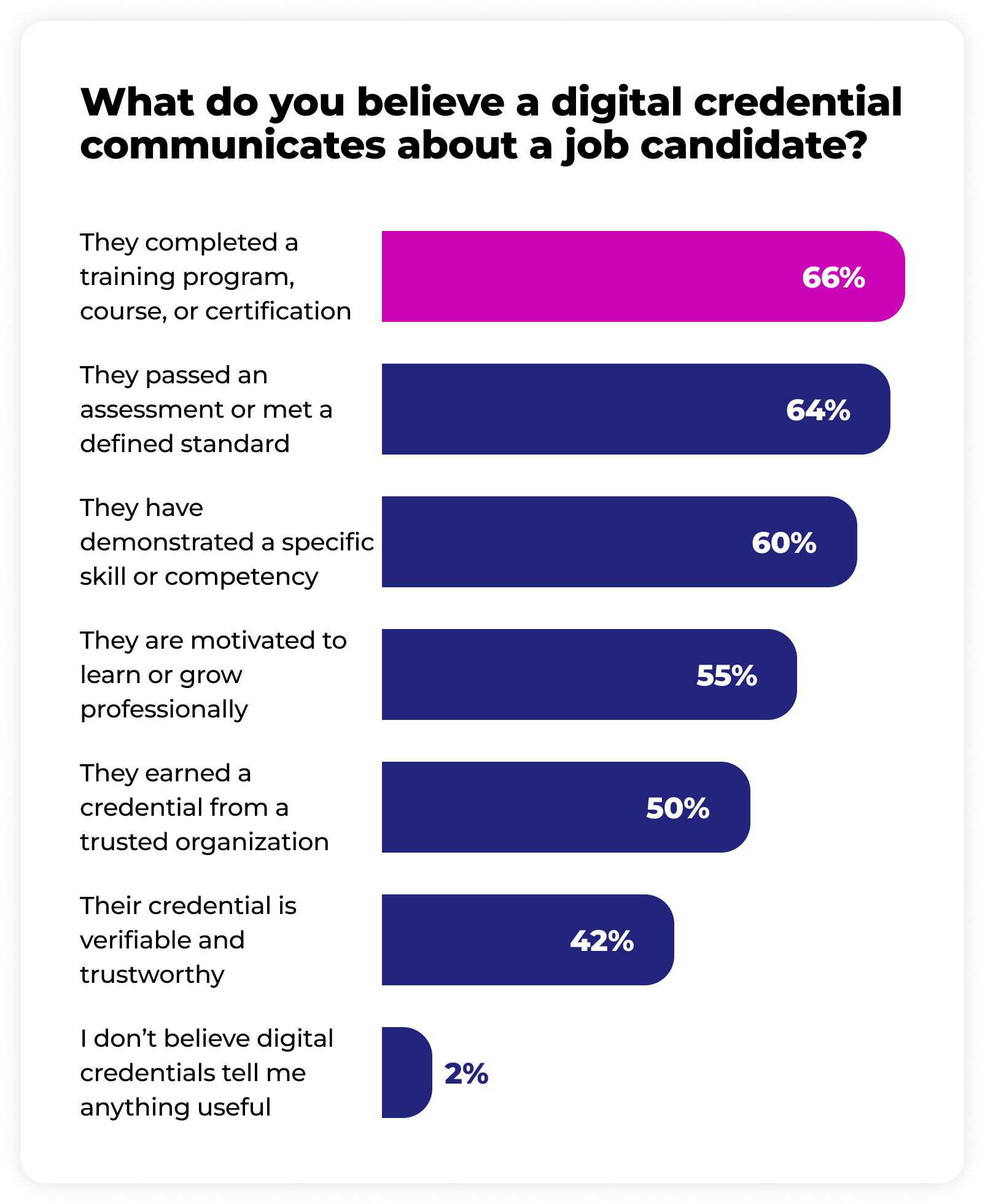
Second, employers see digital credentials as credible proof that candidates possess the specific skills they claim — from completing training and passing assessments to demonstrating defined competencies. This directly addresses the trust gap we identified earlier.
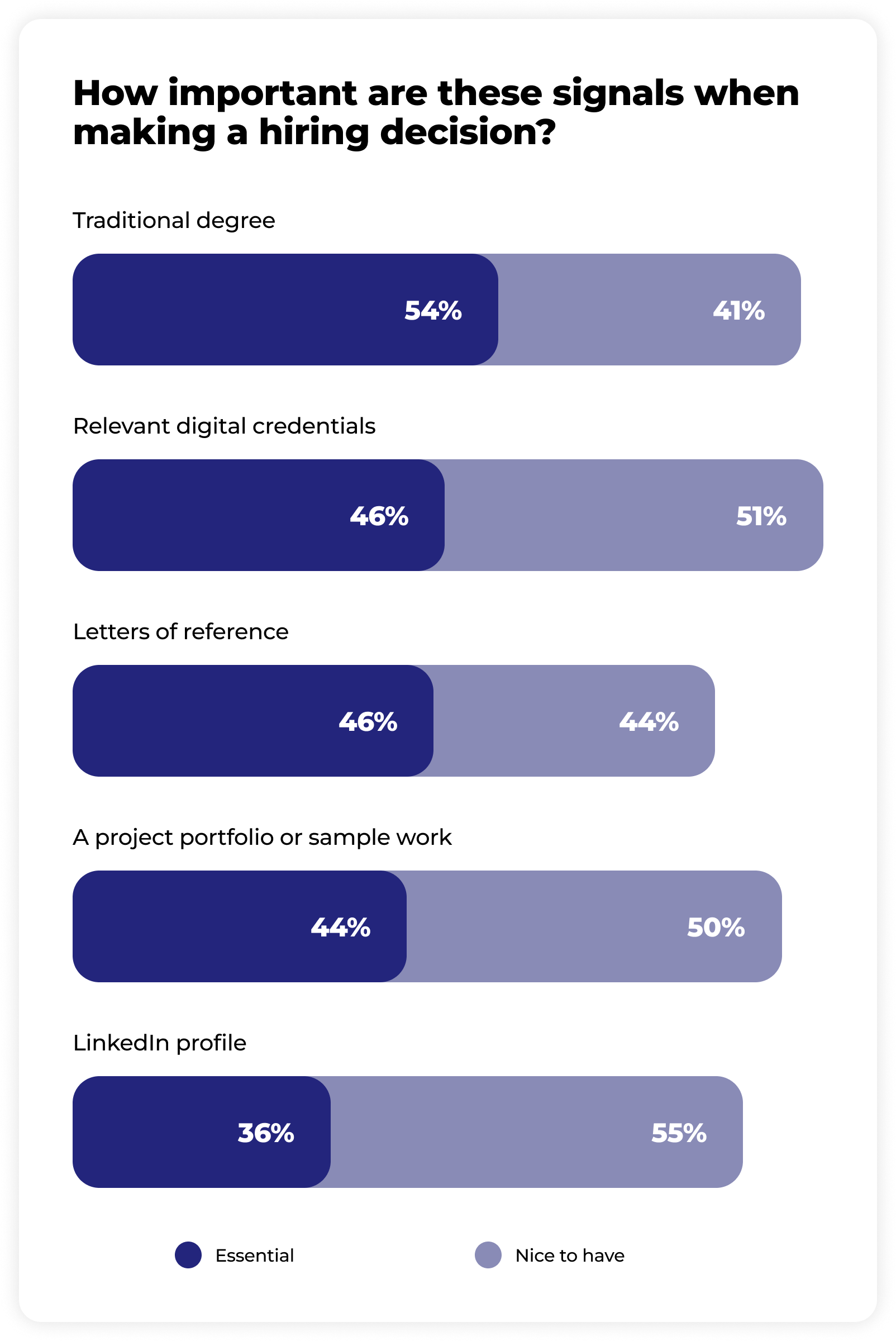
Because digital credentials can both verify and prove skills, 97% of employers consider them essential or valuable when making hiring decisions — putting them on par with degrees, portfolios, and reference letters, and ahead of resumes or LinkedIn profiles in influence on who gets hired.
Credentials have a significant impact on hiring
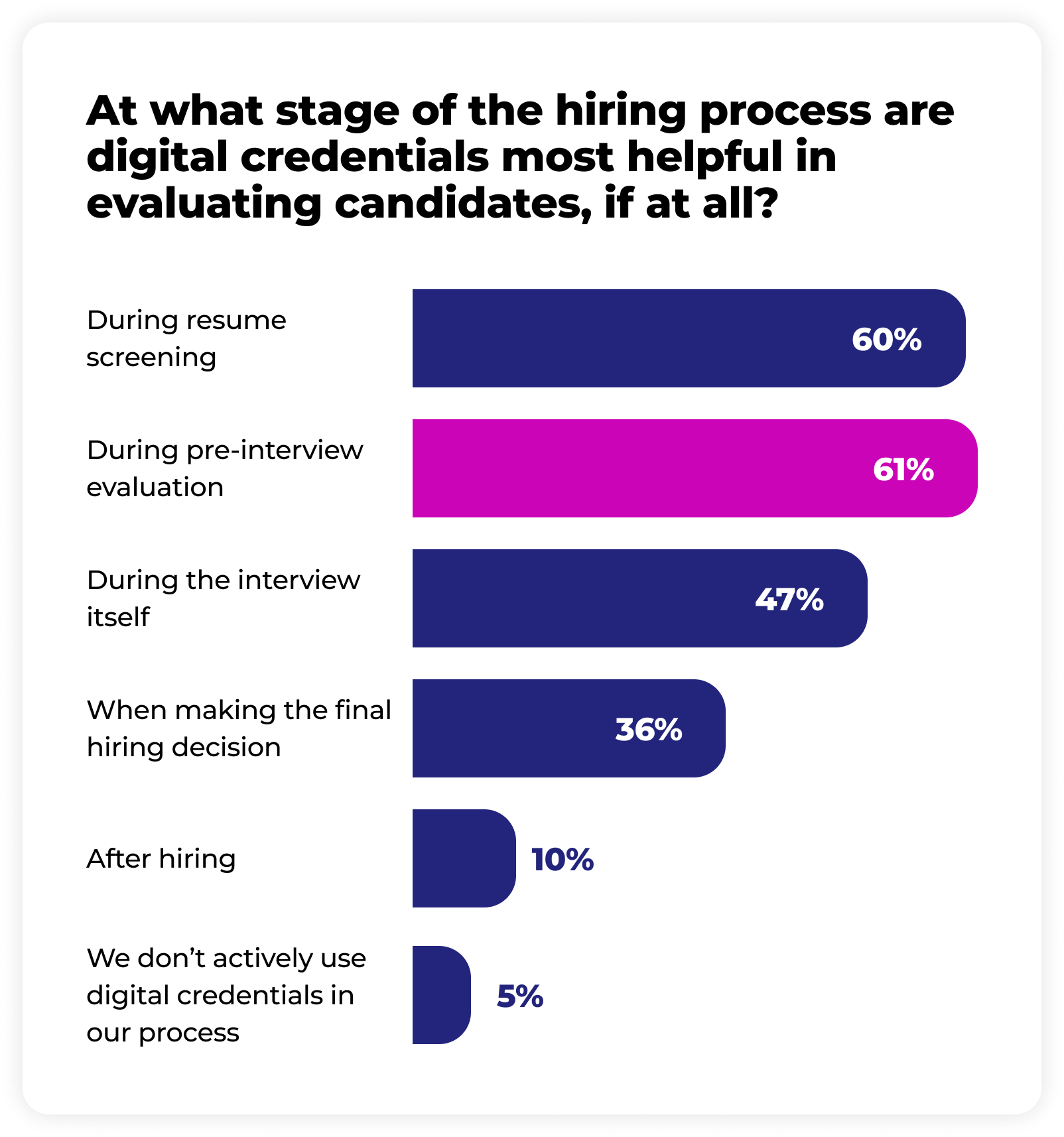
This active interest translates into real impact with how employers choose who to interview and hire. Digital credentials influence employers at multiple stages of the process, with the early screening phases seeing the most impact. This is likely the case because credentials provide the verification they need to move candidates forward when the application pool is at its peak.
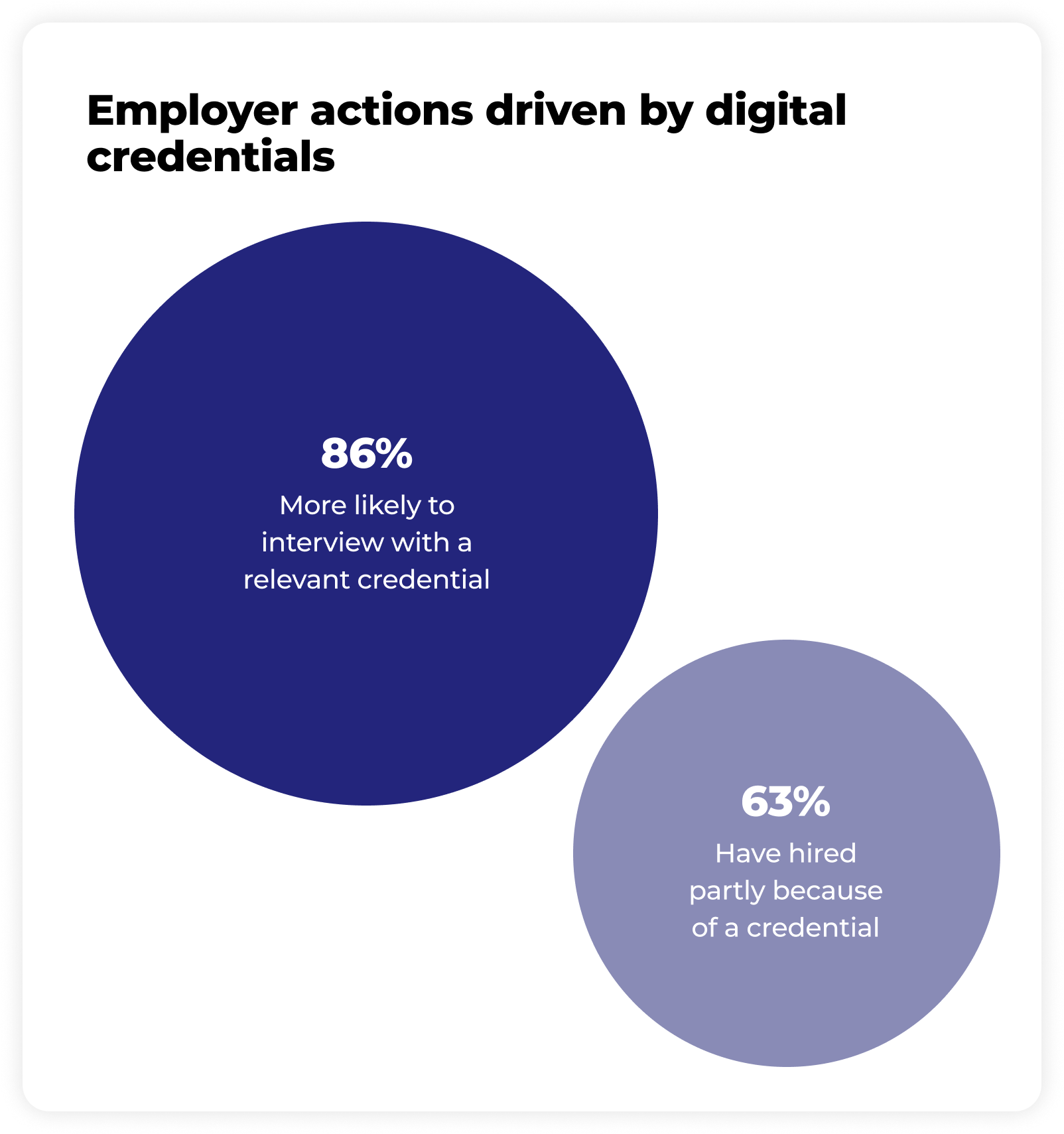
The results speak for themselves: 86% of HR and talent leaders report they would be more likely to interview a candidate with a digital credential showing proof of a key skill. Even more compelling, 63% have actually hired a candidate partly because of a digital credential they earned.
Noah Geisel, Micro-Credentials Program Manager at the University of Colorado Boulder, notes the urgency behind this shift:
“Five years ago, hiring managers spent 8–11 seconds per resume. Today, AI-generated applications flood the process, making candidates harder to differentiate and hiring less effective. Digital credentials make sense as a possible right answer. Right now, most issuers still issue 2019-style badges without metadata — but as soon as employers put that data to work, earners with richer, evidence-backed credentials will have a clear advantage.”
Wendi Safstrom, President of the SHRM Foundation, sees this as part of a larger shift in how qualifications are evaluated:
“HR leaders increasingly recognize that skills and competencies are better indicators of job performance than traditional proxies like degrees. Digital credentials provide validated proof of capabilities — often backed by assessments, project work, or endorsements — giving employers a more nuanced and equitable way to identify top talent.”
Credentials Aren’t Just External — They’re Powering Internal Growth
More than half of employers (57%) now issue digital credentials for employee learning and development. Done right, internal badging programs boost retention, mobility, and leadership pipelines by making skills visible, measurable, and actionable.
Want to see how leading learning and development (L&D) teams are proving value to the C-suite with credential-driven strategies?
Explore How High-Impact L&D Teams Prove Their Value to the C-Suite →
But there's a critical gap
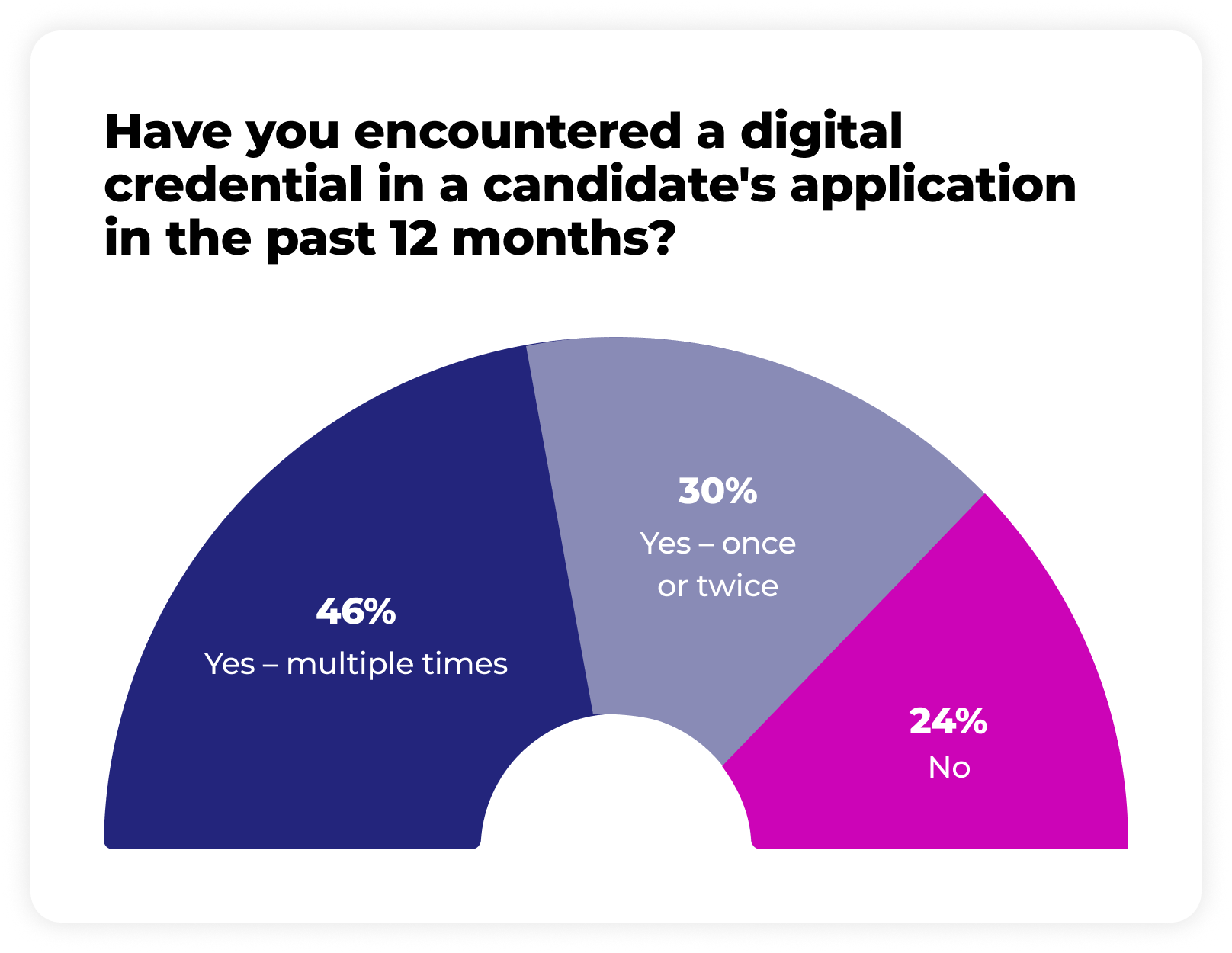
Despite overwhelming employer interest in digital credentials, fewer than half (46%) of HR and talent leaders report regularly encountering them on resumes. This visibility gap means that even when candidates have earned relevant credentials, employers may not see them — sharply limiting their impact on hiring decisions.
As Meena Naik, Senior Director of Education at JFF, notes:
“We’re stuck between early adoption and real integration. Until credentials move as portable, machine-readable datasets into hiring workflows, even strong credentials remain invisible.”
The future of credentials is bright
Employers aren't just receptive to digital credentials. They’re already using them to decide who gets interviewed and hired — and that influence is accelerating. In fact, 81% of HR and talent leaders expect digital credentials to grow in importance over the next two years, signaling a decisive shift in how qualifications are evaluated.


81%
of HR and talent leaders expect digital credentials to grow in importance over the next two years.
For issuers, this is a narrowing window to close the visibility gap before it becomes a competitive liability. And here’s the reality: Learners aren’t the barrier. The barrier is education — helping credential holders understand just how powerful their achievements can be, and how to make them visible where it matters.
Learners aren't the problem — guidance is
Find out how to help your learners actually use their digital credentials instead of just earning them.


