

What's inside the credential matters
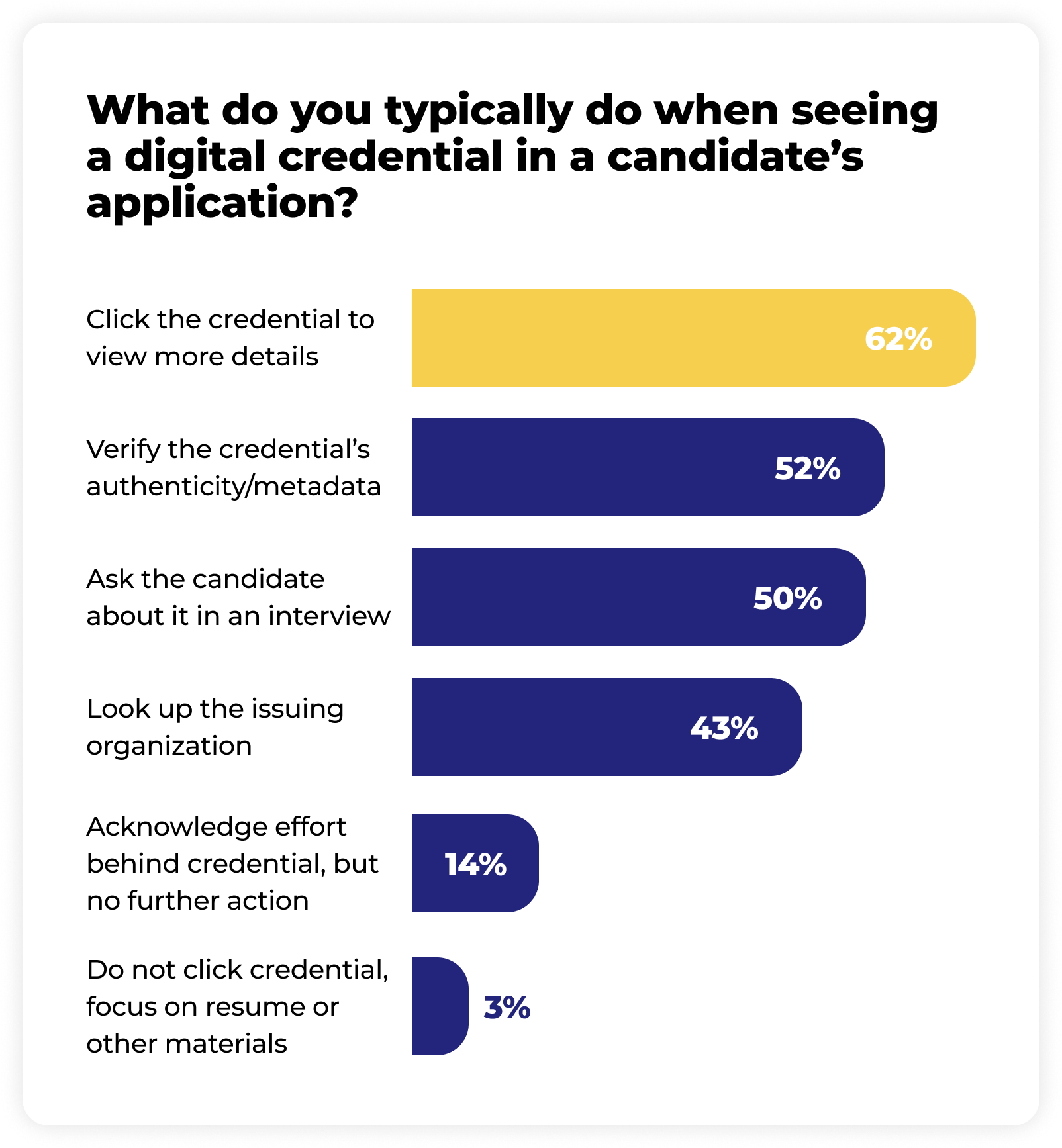
When HR and talent leaders encounter digital credentials, they don't just glance and move on — most click through to view the details, verify authenticity, or even bring it up in an interview. This level of engagement shows genuine employer interest in what a credential represents and validates.
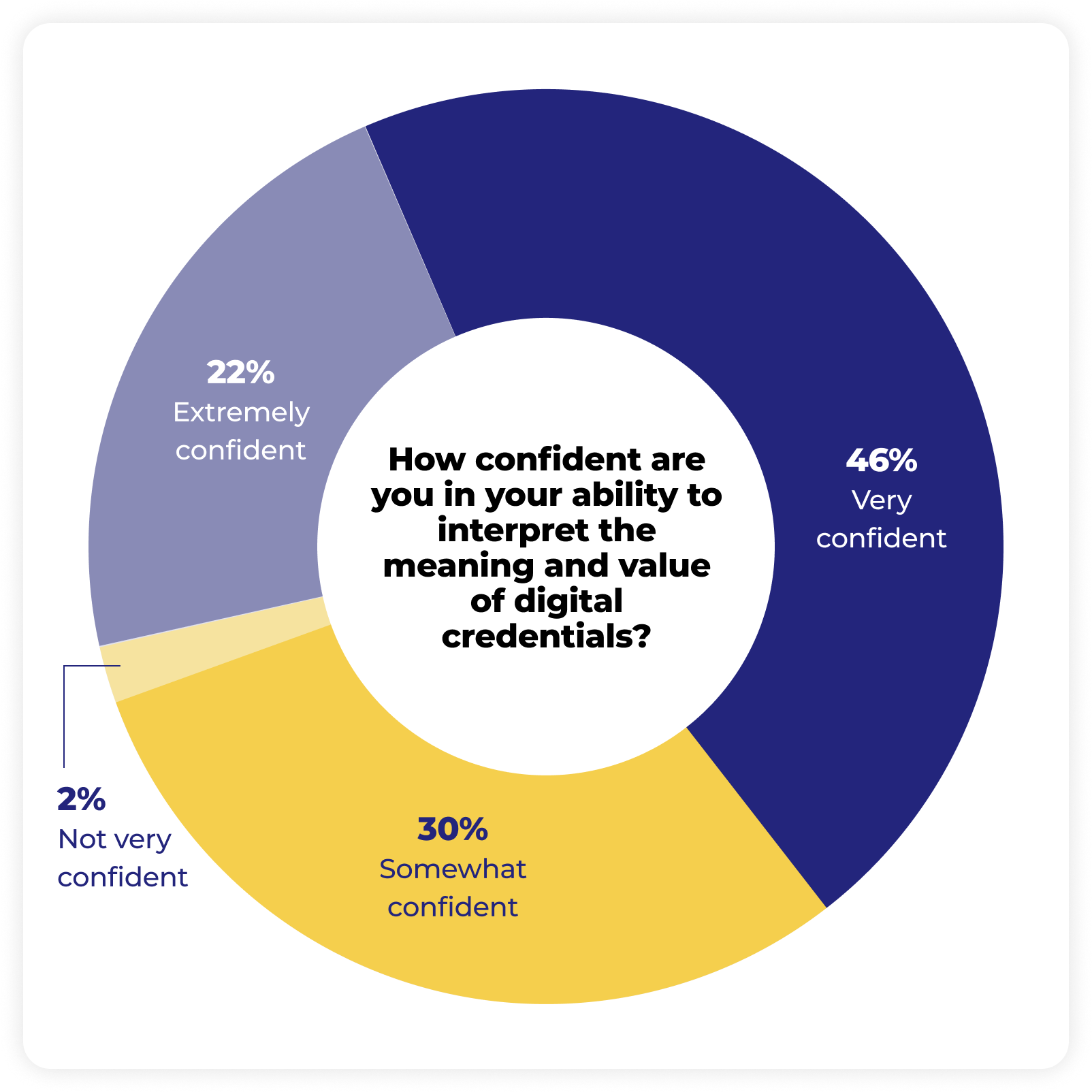
However, only 68% of HR and talent leaders feel confident in their ability to interpret the meaning and value of a digital credential. In other words, nearly one in three employers clicks through with genuine interest, only to come away uncertain.
Closing this interpretation gap — before it costs candidates opportunities — starts with ensuring every credential contains the information employers look for most.
Look for this symbol throughout the report to learn what successful issuers are doing differently.
These are data-driven signals of things you can experiment with to improve your program.
Include relevant information on your credential
For employers, the difference between a credential that inspires confidence and one that raises doubt often comes down to specificity. HR and talent leaders want clear evidence of what the learner has achieved and can do — not vague language that could apply to anyone.
When critical details are missing or overly generic, trust erodes. Even a legitimate credential can be discounted if it doesn’t clearly show:
- What skills were mastered
- How they were validated
- Who verified them
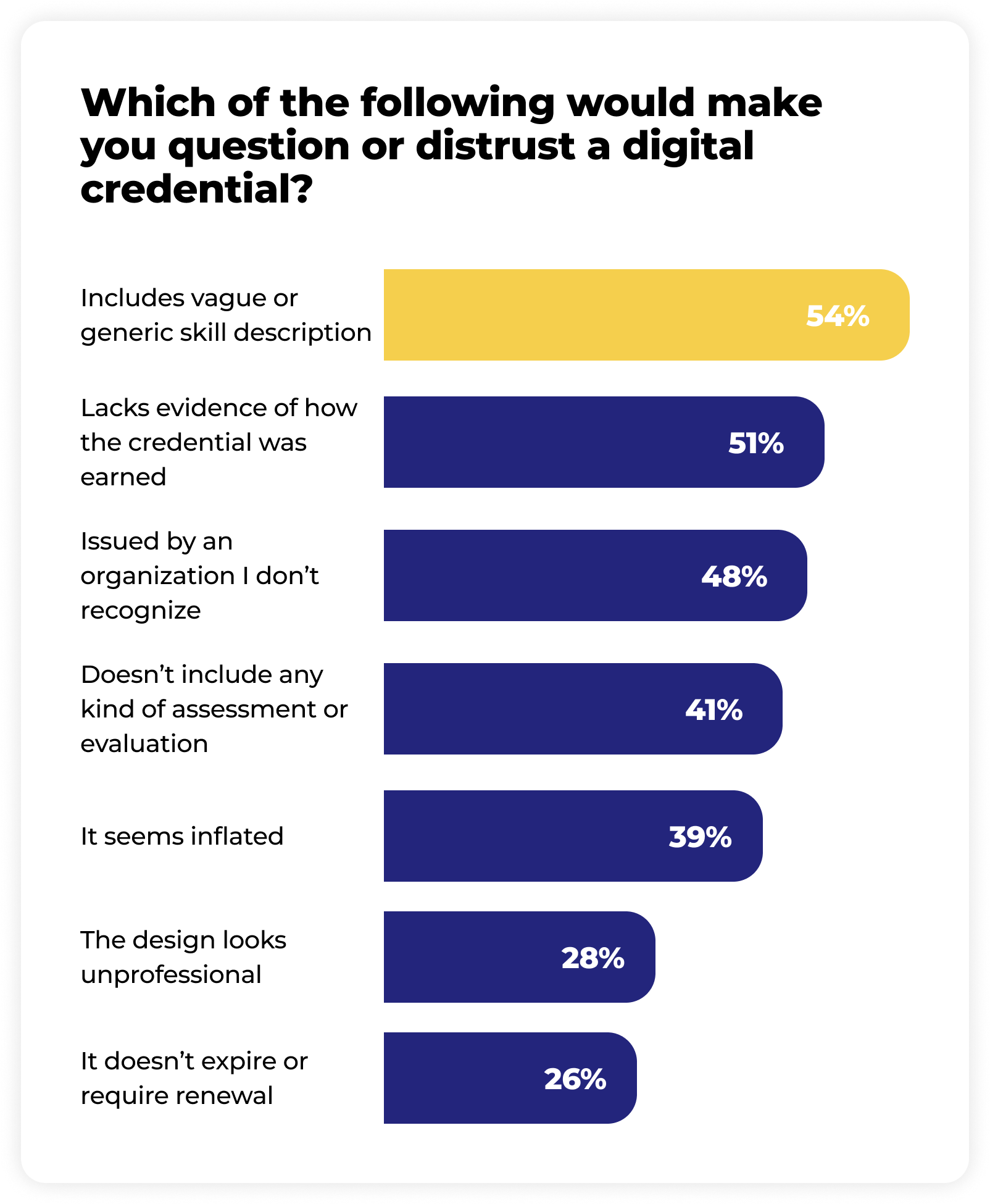
Digging deeper, our research reveals that employers’ expectations for credential content are both clear and consistent. They fall into four core categories:
Basic details: The issuing organization, date of issue, and expiration or recertification date (if applicable) — all of which establish foundational credibility.
Clear skill summary: A concise, plain-language description of the competencies the learner acquired and, where applicable, the level of mastery.
Evidence of mastery: Portfolio pieces, assessment results, or project examples that demonstrate application of those competencies.
Third-party validation: Endorsements, co-branding, or recognitions that add external credibility.
Ashish Rangnekar, CEO of BenchPrep, notes that the real shift is moving from participation markers to proof of applied ability:
“Issuers need to embed applied-skill assessments directly into the credentialing process. This doesn’t mean another high-stakes exam — it means authentic tasks like case studies, simulations, and real projects that can be captured in the credential. When employers see applied ability, a badge shifts from participation trophy to trusted signal.”
Yet, when we compare these priorities to what most issuers actually provide, a significant gap emerges — one that limits the credential’s influence in hiring decisions.
The “level” the learner achieved (49%)
Project or portfolio (93%)
Evidence of what it took to complete (56%)
Criteria used to assess the skill (49%)
This critical metadata turns a digital badge from a static graphic into a trusted, verifiable signal of capability. As Amanda Brantner of the Gies College of Business notes,
“A key part of our approach is ensuring each credential has enough metadata to stand on its own. When someone opens a credential, they can see exactly what the learner completed, what skills they demonstrated, and how it connects to broader outcomes — making it meaningful to both learners and employers.”
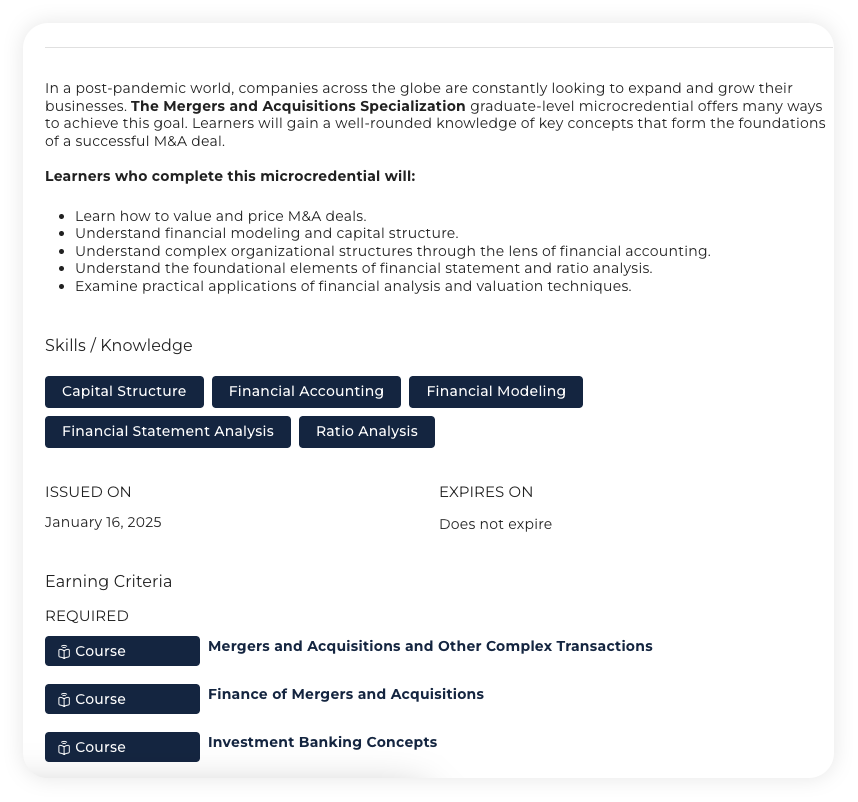
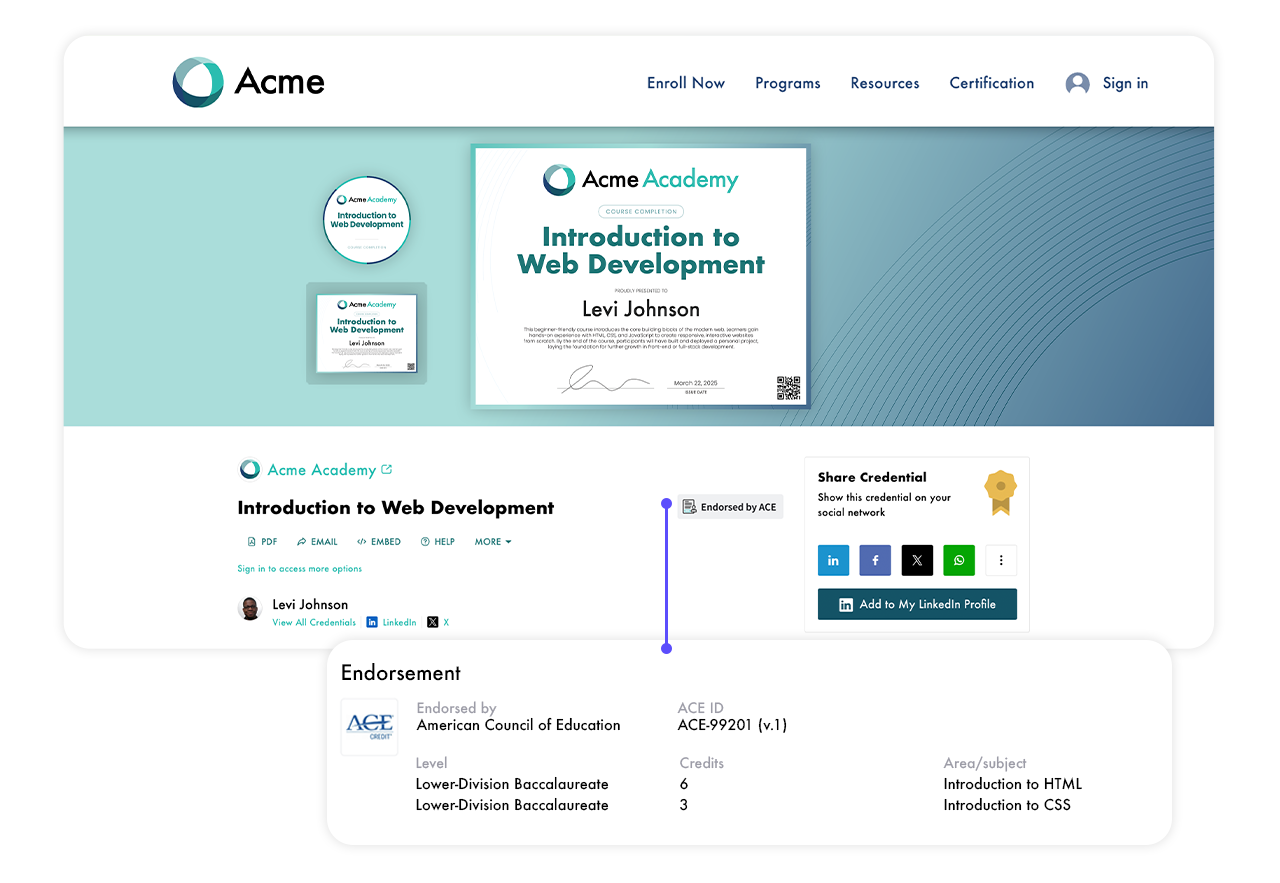
Endorsements add the final layer of credibility. While 94% of employers say endorsements make a credential more trustworthy, only 31% of issuers currently provide them — one of the sharpest gaps in our research. Employers say the most valued endorsements come from academic institutions (73%), employers themselves (64%), industry associations or standards bodies (56%), and regulatory or compliance bodies (46%). By anchoring recognition to these trusted third parties, issuers can transform a credential from program-verified to industry-validated — a signal employers are far more likely to act on.
Endorsements, like this example from the American Council on Education (ACE), extend a credential’s authority beyond the issuing program.
Learn more about how endorsements help your credentials stand out by adding trust, credibility, and value in our blog: Why Endorsements Matter.
Bridging the Credential Content Gap
The takeaway is clear: Employers want this level of detail, but too many issuers aren’t providing it. These aren't minor oversights — they’re missed opportunities to strengthen employer trust, prove learner competency, and improve hiring outcomes. When credential metadata lacks the information employers are seeking, even highly qualified candidates risk being overlooked. Closing this gap transforms credentials from “nice to have” into indispensable hiring assets.


Technical integration is the next frontier
Improving credential design is only half the battle. The most successful issuers pair strong employer relationships with the technical infrastructure that makes credentials instantly visible and actionable within the systems hiring teams use every day.


