

Technical integration is the next frontier
The most successful credential programs make employer adoption inevitable. They don’t wait for hiring teams to decode the value of digital credentials; they engineer it into the process. These issuers embed themselves in employer workflows, align to hiring needs, and integrate credentials into the systems recruiters use every day. The result: credentials that are seen, trusted, and acted on.
Most issuers aren't engaging employers effectively
Despite clear employer demand, many issuers remain passive — hoping employers will discover and value their credentials on their own. That “build it and they might come” mindset leaves recognition to chance and cedes control over how credentials are understood and used in hiring.
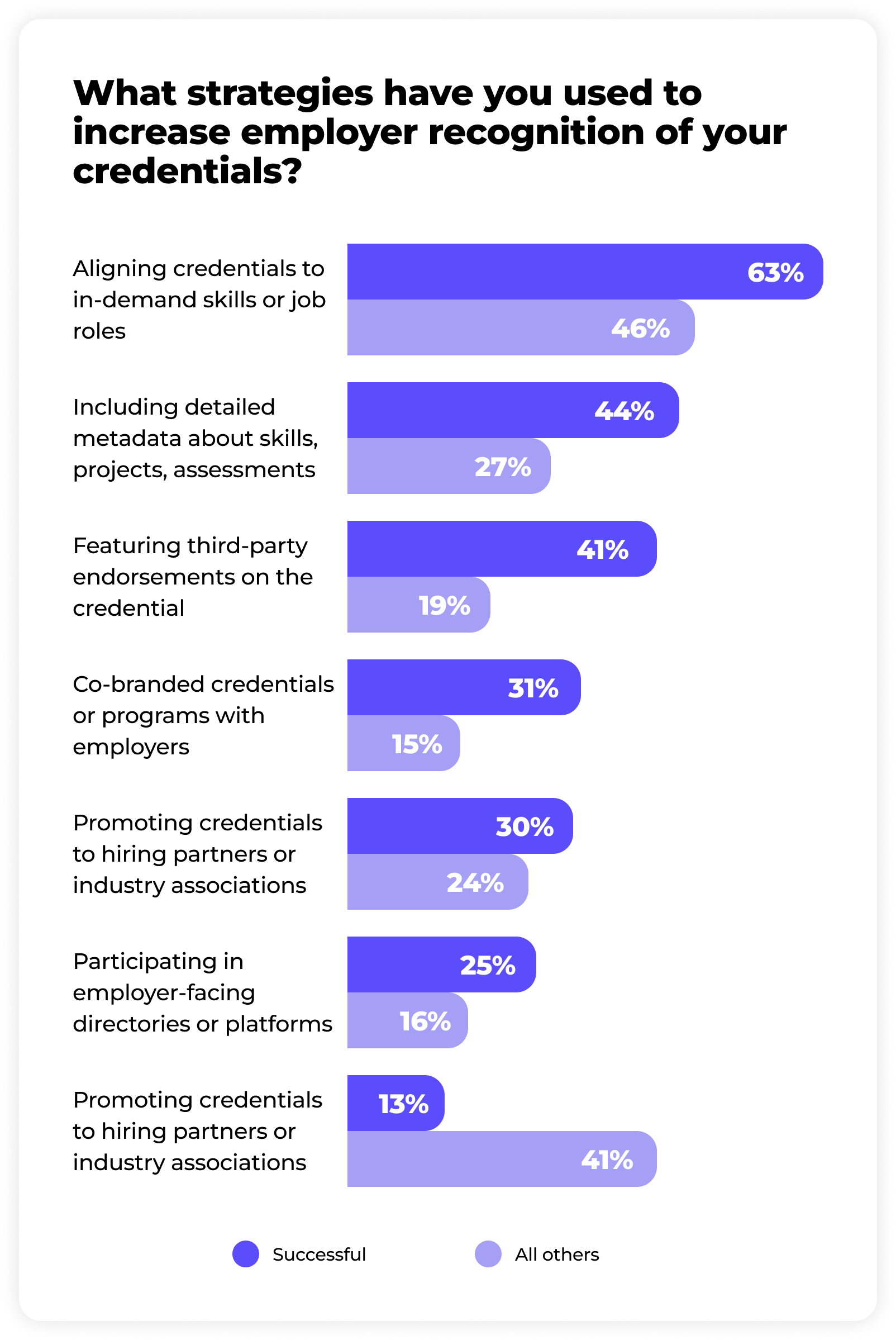
The data points to a different playbook: Successful issuers actively cultivate employer relationships — aligning credentials to in‑demand skills, embedding detailed metadata, and featuring trusted third‑party endorsements.
Nancy Byron, Assistant Dean for Marketing, Academic Innovations, and Strategic Partnerships at Georgia State University, has seen firsthand how this collaboration changes outcomes.
“Higher education must step into the role of trusted convener and academic steward when collaborating with employers. Industry partners know their company-specific skill needs, but it’s up to institutions to design credentials that translate those needs into transferable, industry-recognized competencies,” she explains. “It’s not about pitching programs — it’s about listening, aligning strengths, and building pathways that learners can carry forward.”
Look for this symbol throughout the report to learn what successful issuers are doing differently.
These are data-driven signals of things you can experiment with to improve your program.
The technical integration imperative
Strong employer relationships are only half the equation. Employers also need credentials to work seamlessly within their existing systems — without extra clicks, manual lookups, or uncertainty about what a credential represents.
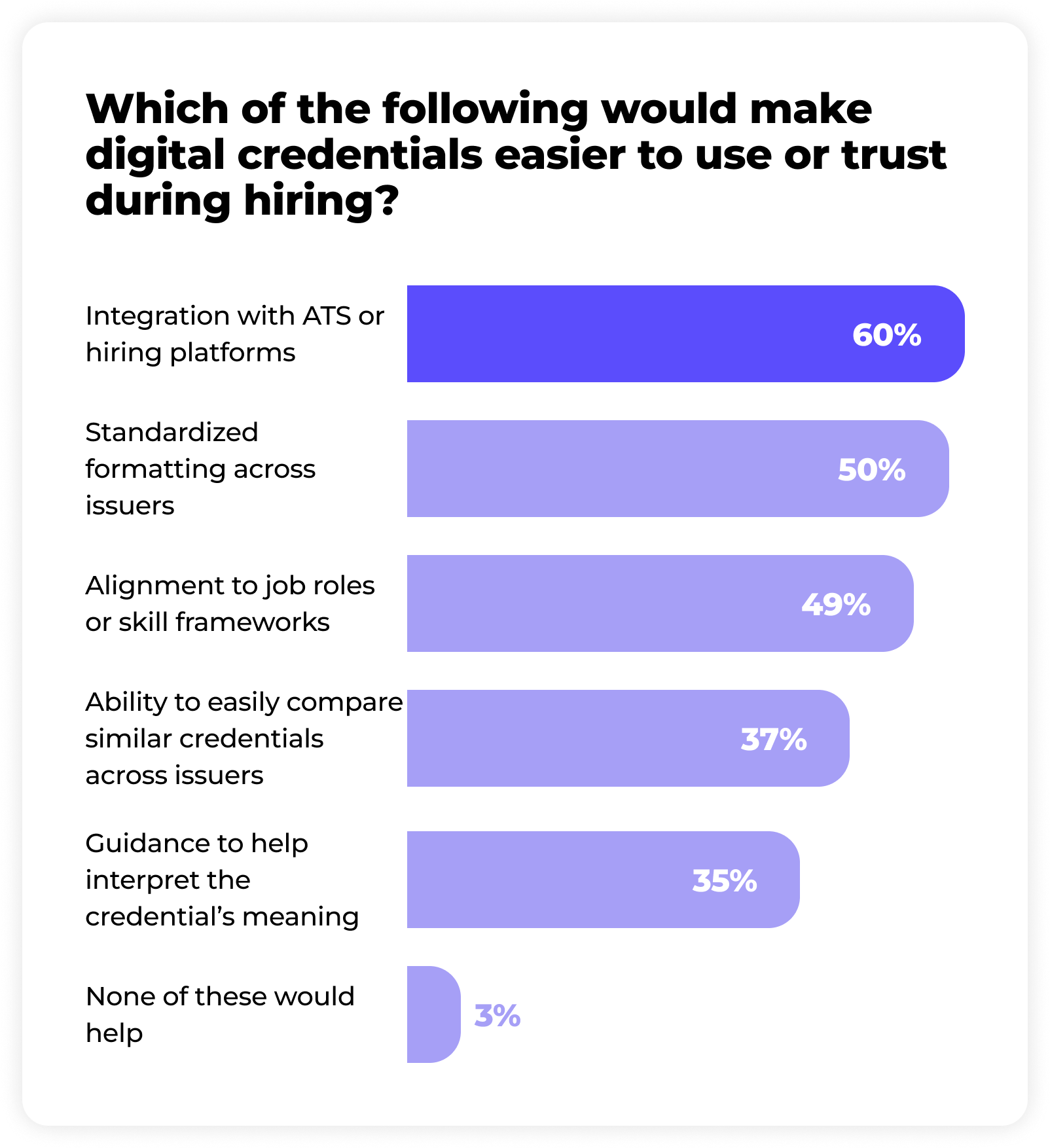
When we asked HR and talent leaders what would make digital credentials easier to use or trust, the top answer by far was integration with applicant tracking systems (ATS) and HR platforms (60%), followed closely by standardized formatting across issuers (50%) and alignment to recognized skill frameworks (49%). The message is clear: Hiring teams want credentials that are as easy to process and compare as resumes are.
Scott Cheney, CEO of Credential Engine, sees the same priorities emerging across the organizations his team works with:
“Scale is getting there, but the ATS/HRIS companies need to make the investment and commitment to this market opportunity. Providers and issuers are ramping up, but there hasn’t been a concomitant set of advances on the employer side.”
One fast way to unlock progress, he notes, is through procurement:
“There’s nothing stopping agencies, institutions, workforce boards, or employers from requiring structured, interoperable credential data in the tools they procure.”
Baking these requirements into contracts ensures that systems can handle open, skills-aligned metadata so credentials flow directly into hiring workflows and can be trusted alongside other candidate information.
The metadata foundation most issuers lack
Meeting integration needs requires more than relationships — it requires machine‑readable metadata aligned to recognized skills frameworks or taxonomies. This technical foundation lets credentials “speak” to hiring systems and be processed alongside other candidate data, improving speed, accuracy, and trust in hiring decisions.
Yet only 34% of issuers currently include this type of structured metadata in their credentials, leaving most unprepared for the integrated hiring systems employers increasingly expect.
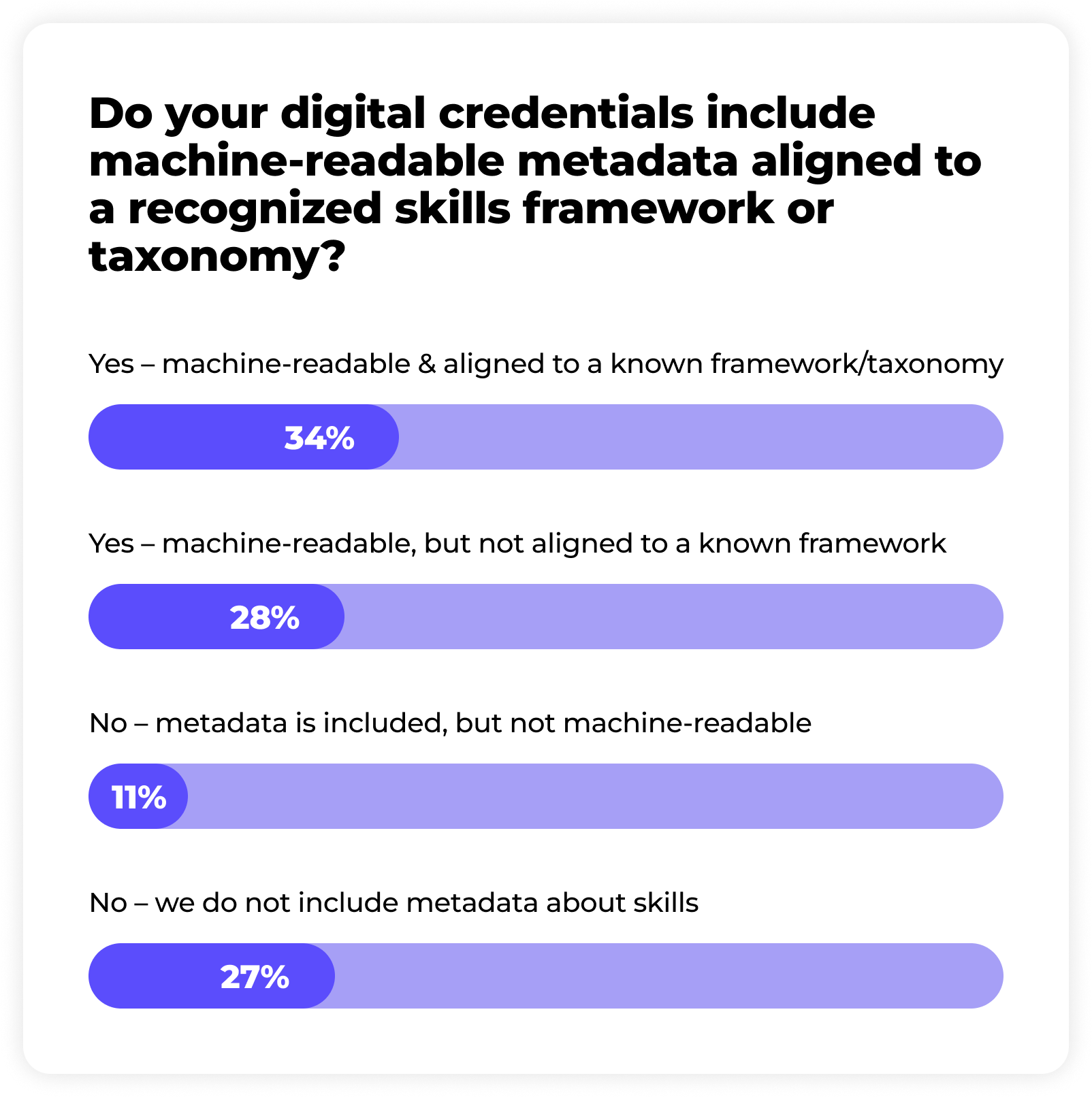
Without this technical layer, even the most impressive credentials risk being invisible in automated workflows — reducing their ability to influence hiring outcomes.
Curtiss Barnes, CEO of 1EdTech Consortium, puts it simply:
“Trust follows transparency. When credentials align to open standards like CASE, Open Badges, and CLR, they flow from issuers into employer systems—making skills comparable, searchable, and usable.”
Wendy Palmer adds a caution from the issuer perspective:
“Most issuers still focus on producing the credential itself, without considering how the data inside will be consumed. The single most important step is embedding employer-relevant, machine-readable skills data so credentials can be read, understood, and acted on in hiring systems.”
And as Noah Geisel emphasizes, the institutions that move first will stand out:
“Forward-thinking, entrepreneurial innovators have the opportunity to give their institutions a head start on issuing credentials that will give their earners a competitive advantage… This inexpensive, reputation-building play may cement a handful of institutions’ brands as leaders in the space for reasons that have to do with the quality of the credentialing practices, not just the quality of the actual programs being credentialed.”
A strategic approach to employer engagement
The most successful issuers don't wait for HR and talent leaders to discover their credentials. Instead, they take a proactive, comprehensive approach to employer engagement that focuses on both building relationships and providing technical updates.


Career support goes beyond the badge
Closing the technical gap is essential — but leaders don’t stop there. They pair integration work with career accelerators that benefit employers and learners alike, turning credentials into interviews, offers, and program growth. Here’s how they do it.


