


Hello and welcome to Certified Insights from your digital credential friends at Accredible. You're in good company with 50K+ education and training leaders.
Each month, we share tips and strategies to help you grow your credentialing program. Up next:
📣 Four practices the most successful credentialing programs share, and a move for each
💬 Where will we see you in 2027?
📚 Certified Reads on Strada’s new employer research, MGI's membership benchmarks, and a digital skills world record
Fall is my favorite stretch of the year. Here in Indiana, the leaves are turning, chili is on the menu, and some of the best teams are playing across football, basketball, and baseball. As a Cubs fan, I hate to see the Brewers win the World Series, but I do love a small-market underdog story.
Fall is when we see what separates the best from everyone else.
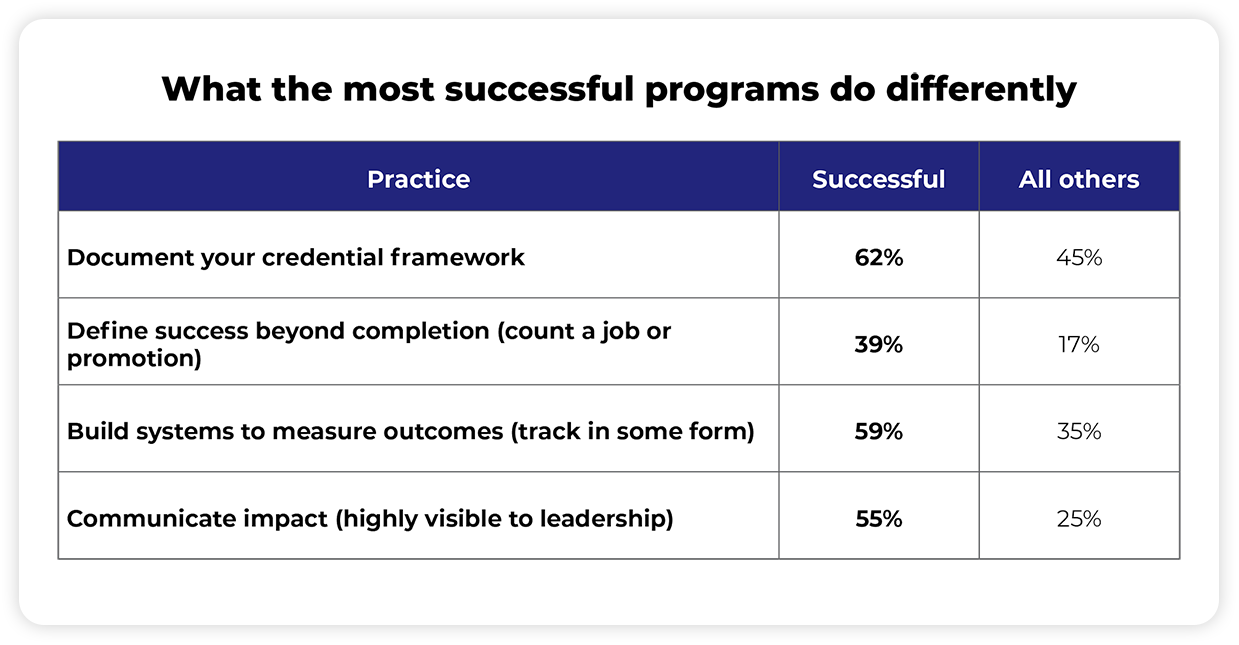
The same goes for credentialing. Every year, our State of Credentialing research looks at what the most successful credential issuers do differently. This year, about half of issuers (54%) rated their programs very or extremely successful. When we compared them with everyone else, the same four practices kept showing up on their side of the chart. Each comes with a move you can make before year-end planning wraps.
Document your credential framework
A framework is the least glamorous practice on this list, and the easiest one to put off. 62% of successful issuers have a documented credential framework, compared with 45% of other issuers. It's the written set of rules for how credentials are designed, issued, and evaluated, and it's what keeps a catalog meaningful once it grows past a handful of badges.
City & Guilds, which grew from under 17,000 to about 300,000 credentials a year, shows what that looks like at scale. On our September panel, Alexandra O'Connor, Senior Manager, Skills Solutions: Service Delivery & Design, walked through its taxonomy: five credential types, each with its own badge shape. A shield signals certified skills. A round badge signals professional development.
When colleagues sent in ideas for new badges through a request form, her team talked each one through against the taxonomy, and some got shelved. Over time, she said, people across the organization came to "understand that it has to have some value. Otherwise, it kind of becomes a meaningless thing."
A full framework takes real time, and our framework and governance guide walks through building one. The first step is smaller: write down what earns each type of credential and who approves a new one, then run your next badge request through it.
Define success beyond completion
I think this one gets underestimated. Most issuers define a successful learner outcome as earning the credential or finishing the course. Successful issuers look further. They're more than twice as likely to count a job or promotion as success (39% vs. 17%), and they lead on every other outcome beyond completion too.
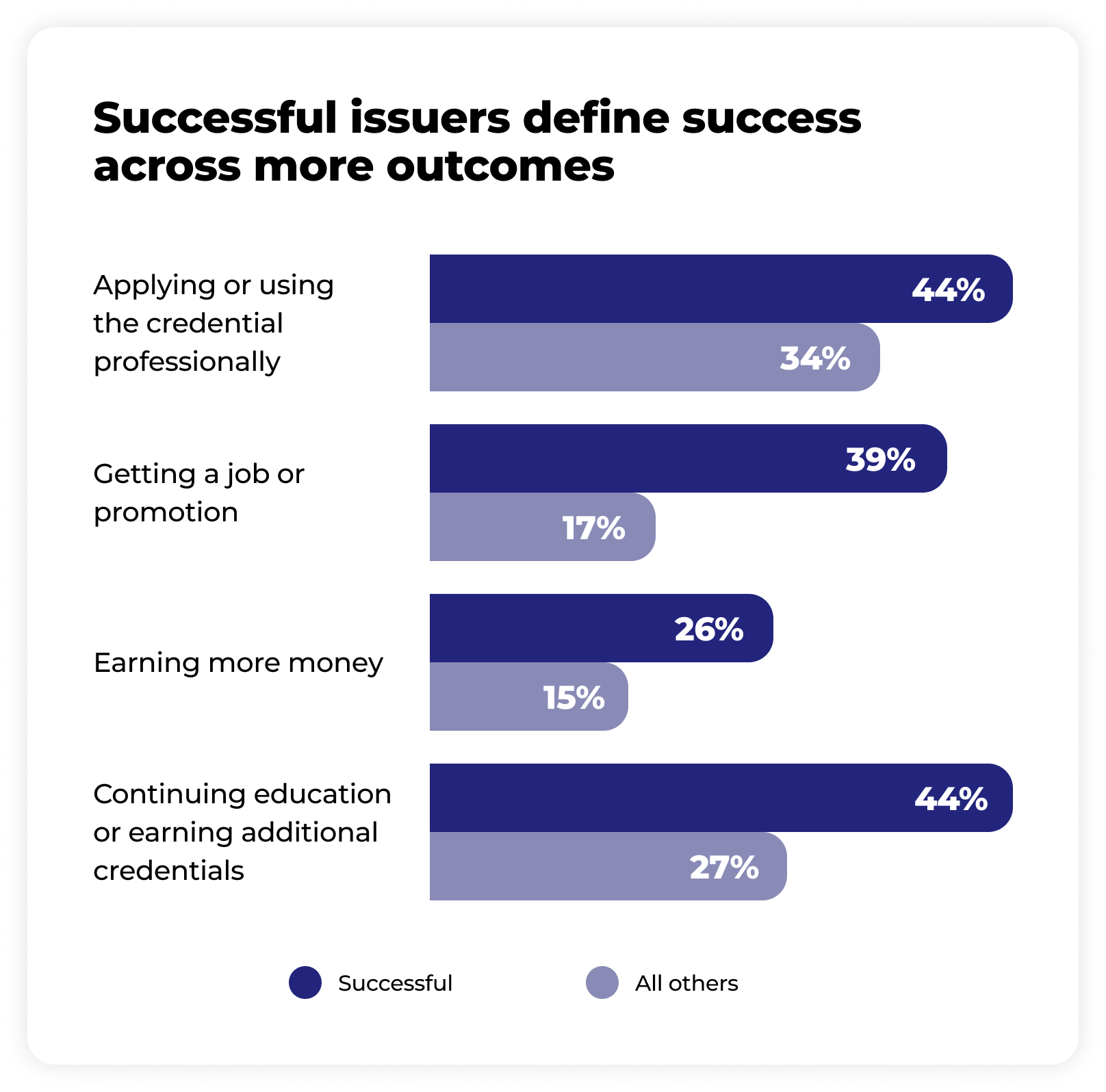
Broader should also mean appropriate to the credential. Stacy Caldwell, President and CEO of CredLens, argued on the panel for stepping back to ask "What is success here?" for each credential, and letting the answer vary. Her example was a credential that leads to someone's first professional job, the first time they have benefits or control over their schedule. That, she said, "is a real shift in someone's life and a real success story," even if it doesn't clear a state's earnings bar for a credential of value.
Start with one sentence per credential describing success for the person who earns it, beyond the moment they earn it. That sentence tells you what to measure next.
Build systems to measure outcomes
This is the one I'd most like every reader to steal. 59% of successful issuers track learner outcomes in some form, compared with 35% of others. And 37% of successful issuers can show with data that learners continued their education, nearly twice the rate of other programs.
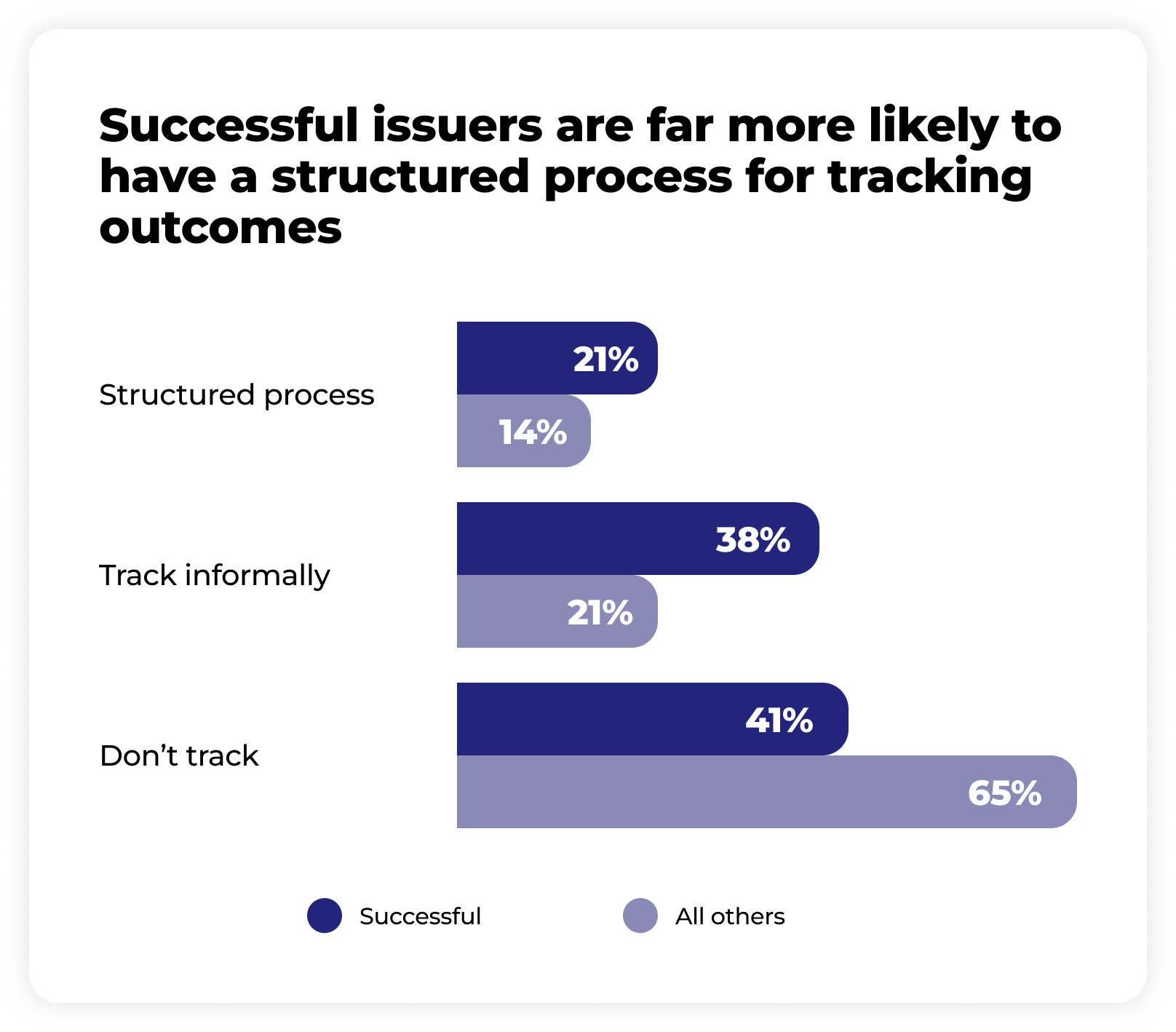
In practice, measurement works best when credential data connects to the systems where outcomes already show up, and when learners get asked on a schedule.
ServiceTitan's certification program handles the first part well. By ServiceTitan's own data, certified users are 92% more likely to get their support issue resolved on the first call. That's a business outcome the support team already tracks, tied back to who holds a credential.
The second part is a rhythm: the same few questions, asked at fixed points like six months and a year after issuance so that the answers can be compared over time. The starting point is usually closer than it looks. Find where one outcome from your success sentence gets recorded today: a CRM, a support desk, a member or alumni database. If it isn't recorded anywhere, put a six-month learner check-in on the calendar.
Communicate impact, not just activity
I said on our webinar that this one is earned. Successful issuers are 2X more likely to say their program is highly visible to senior leadership and considered a strategic initiative (55% vs. 25%). That kind of visibility tends to follow evidence that the program moves something the organization cares about.
Databricks puts activity and outcomes side by side. Active credentials are a company-wide OKR, reviewed in the same monthly business review as every other business metric. Next to that count sits what it produced. In a survey of certified customers and partners, 73% said they'd received a promotion. Databricks also reports that teams with certified practitioners deliver projects more efficiently and at a lower cost. Rachel Canetta, Senior Manager of Certification, sums it up: "They're not just badges; they're metrics."
In your next leadership update, put one outcome next to each activity number you report. Issued and shared counts show the program is running. An outcome shows what it did. Our guide From Credentials to Consequence covers how leading programs tie credential data to the metrics their leadership tracks.
Where to start
You don't need all four at once. Pick the one where your program is thinnest and take its first step.
Section 6 of the 2026 State of Credentialing report goes deeper on each practice, with more data and examples. Alex and Stacy's full conversation is in the on-demand webinar.
If your program runs on Accredible and already does some of this, today is the last day to nominate it for the 2026 Certified Impact Awards. Nominations close at 11:59 p.m. ET tonight, November 5.
Until next time,
Ryan
Senior Director @ Accredible
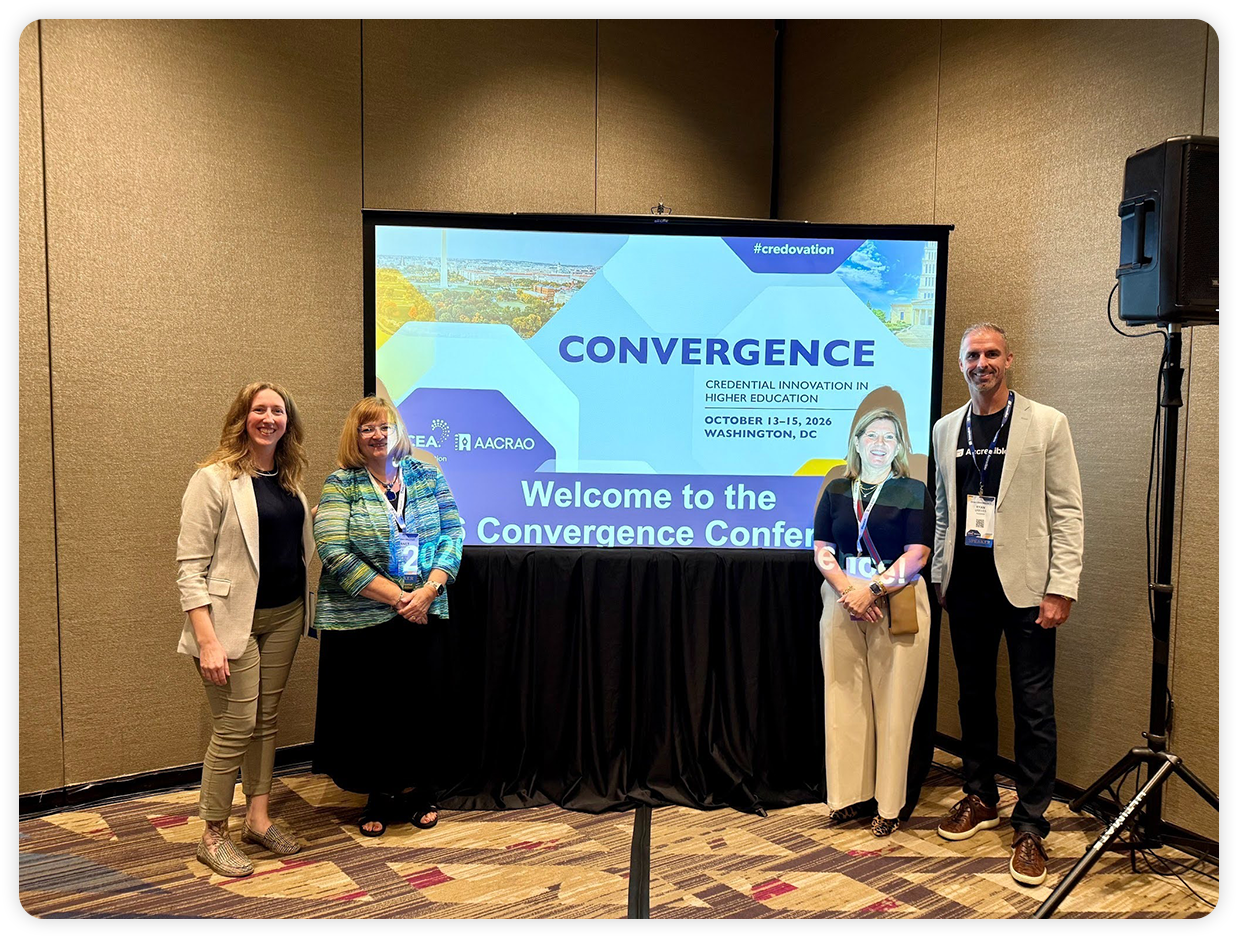
This community learns best in the same room. At UPCEA Convergence, Janet Schreck of Johns Hopkins University, Tanya Austin of Iowa State University, and Nola Czarnik of the University of Michigan compared notes on getting microcredentials past the pilot. Where will we see you next? 📩 Reply with your 2027 events.
Strada surveyed 2,500 employers: 85% call work experience important for entry-level hires, ahead of every academic credential tested. Industry certifications were rated important more often than bachelor’s degrees.
Connected Nation Earns Guinness World Records Title for Longest Internet Literacy Live Stream
Connected Nation set the record for the longest internet literacy live stream: 25 hours of free digital skills training with partners on six continents. Participants earned credentials from Accredible and Educating for Leadership.
2026 Membership Marketing Benchmarking Report — Marketing General Inc.
MGI’s 18th annual survey of 450+ associations finds membership growth near historic lows, with the inability to articulate member value cited as the top barrier. Continuing education remains the second-biggest reason members join.
OLC Accelerate 2026 — November 16–19, 2026
OLC's annual conference on online and digital learning across K-12, higher ed, and corporate L&D.
Beyond the Exam: How Klaviyo Academy Turns Its Certificate Program into Growth — November 17, 2026
A free CEdMA webinar where Klaviyo Academy's Lauren Pruemer and Maura Evans share how they built role-based certificates, made partner certification required, and report what happens after certification to leadership.
What Your Credentials Should Do After You Issue Them — Watch on demand
A 30-minute demo of what a credential can do once it's issued: share to LinkedIn in one click with no learner account, issue straight from your LMS, and bring earners back for what's next.
Tired of juggling paper certificates, PDFs, and endless manual processes to track learner achievements?
Or running into scaling limitations with your current digital credentialing solution?
Accredible has you covered. Create and issue branded digital credentials that showcase skills and provide real value — without the hassle.
Know someone who'd find value in Certified Insights? Forward this email and invite them to subscribe.
Did a friend forward this email to you? Sign up to get this newsletter next month.

Accredible is the world’s leading digital credential platform, enabling education and training leaders to increase learner engagement and drive program growth.


Accredible is the world’s leading digital credential platform, enabling education and training leaders to increase learner engagement and drive program growth.

