

Hello and welcome to Certified Insights from your digital credential friends at Accredible. You’re in good company with 58K+ education and training leaders.
Each month, we share tips and strategies to help you grow your credentialing program. Up next:
🧱 Why smart programs build frameworks before they scale
📊 What makes employers distrust credentials — and how to earn back their trust
🔗 Trust signals, ecosystem tools, and new experiments shaping credential transparency
It usually starts with one badge. Then, a few more. And before you know it, 30 teams across your organization are issuing credentials with different icons, naming conventions, and criteria.
At that point, you don’t just have a badge library. You have a badge sprawl.
Most credentialing programs hit this moment eventually — the point where growth outpaces governance. And by the time leaders realize they need a framework, they’re already in cleanup mode.
The good news? You don’t have to wait until things get messy to build a solid foundation.
Frameworks aren’t red tape — they’re your growth strategy.
A credential framework isn’t just a design document or a technical schema. It’s the structure that turns scattered credentials into a coherent, credible system. One that scales without confusion.
It does three big things:
Employers are increasingly skeptical of credentials that lack transparency or standards. The most common red flags?
Early results from our 2025 State of Credentialing survey of 500+ HR leaders back this up:
These aren’t cosmetic — they’re trust signals. Inconsistent or vague credentials get ignored.
And yet, many programs are still flying without a framework. Our latest survey shows just over half of credential issuers (52%) have a documented credential framework. The rest? They’re relying on informal systems — or no structure at all.
So, what goes into a credential framework? At minimum:
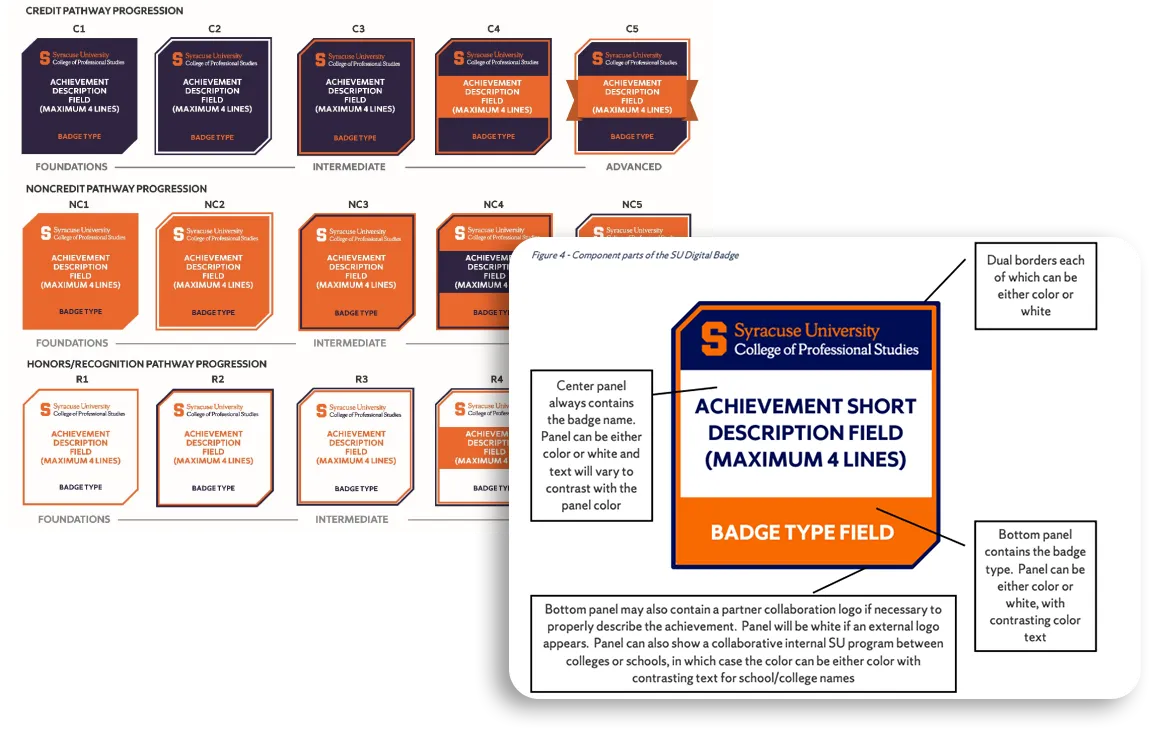
The best frameworks also define pathways and levels — making it easier to stack credentials or expand over time.
The strongest programs use their frameworks as growth infrastructure:
None of those programs waited until things broke to get serious about structure.
Signs it’s time to step back and align
Whether you’re just getting started or already scaling, here are a few signals you might need a framework:
If any of those sound familiar, you’re not alone. Most teams hit this point. What matters is how you respond.
3 early moves to build momentum
You don’t have to build the perfect framework all at once. In fact, the best way to start is small and intentional.
Here are three high-impact moves I recommend to nearly every team I work with:
1. Audit what you’ve got
Inventory your current credentials — across departments, teams, and platforms. Look for overlap, inconsistency, or missing metadata. This gives you a clear picture of what you’re working with (and how messy it’s gotten).
2. Sketch a basic structure
Start thinking in levels, categories, or pathways. Use sticky notes or slides. The point isn’t to get it perfect — it’s to make your assumptions visible so others can help improve them.
3. Set a review process
Decide how new credentials will be reviewed, approved, and updated. Who gets input? Who has final say? Even a lightweight process can prevent chaos as you grow.
Junior Achievement USA started small — a team workshop, sticky notes, and a rough sketch of the structure. Their initial framework helped a federated network of 100+ area teams align on design, naming, and criteria. Today, 80% of learners engage with their credentials, and nearly half share them on LinkedIn.
You’ll find more steps and templates in our newest guide, but these three moves can build clarity right now — even before you have full buy-in or formal governance in place.
Final thought: You’re not behind — but you do need a plan
If your credentialing program is growing, structure is coming for you — either by design or by default.
A framework doesn’t have to be complicated. But it does have to be intentional. It’s what turns good credentials into a great system.
“Having Trimble Learning leaders meet with Accredible to design our framework was incredibly worthwhile. It brought our global teams together, gave us clarity, and helped us align credentialing to our digital transformation goals.”
— Basia Bullard, Global Learning Solutions Director, Trimble
Ready to build yours?
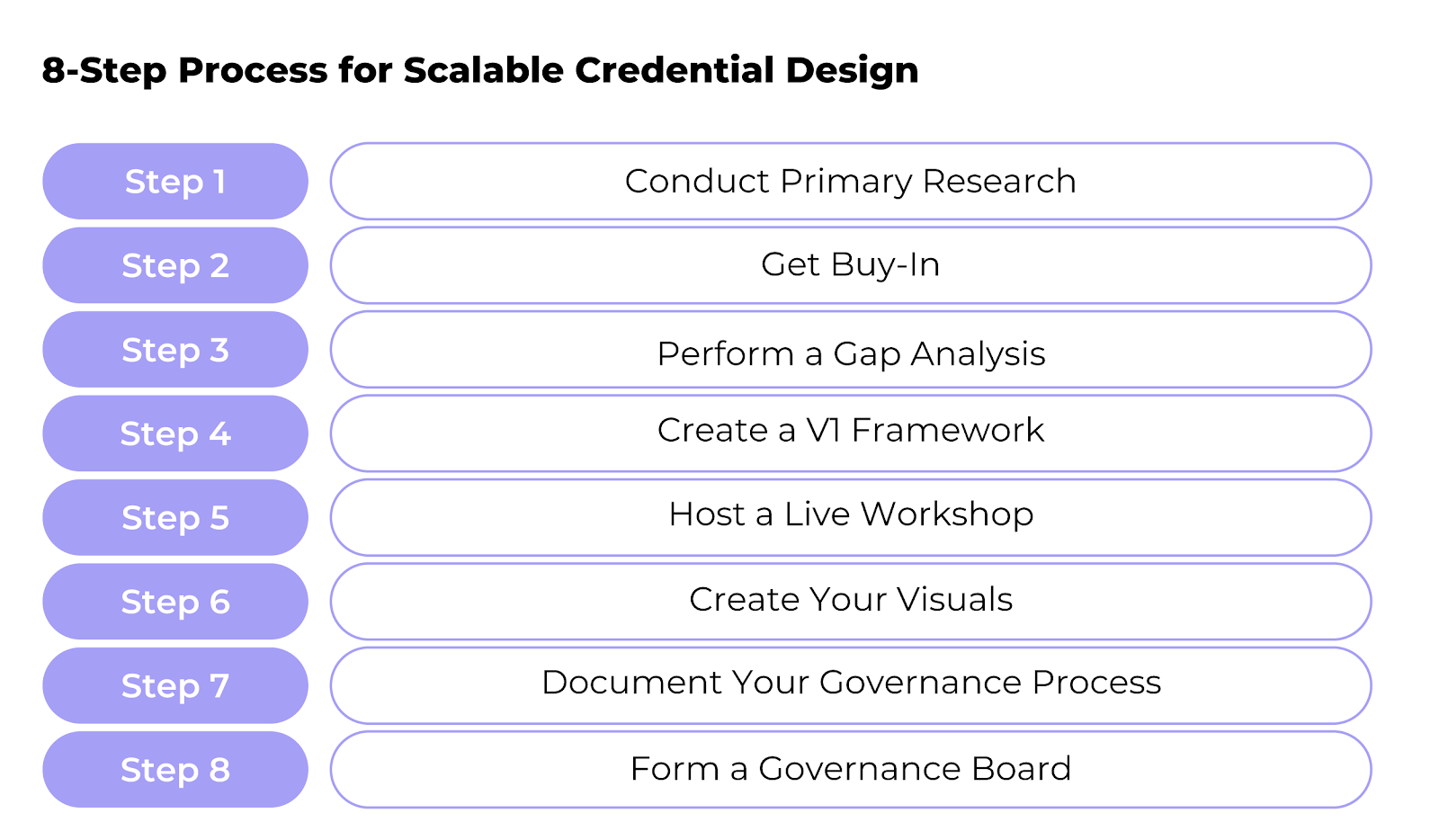
The guide includes visuals, examples, and templates from programs that have done this — plus the full 8-step process we use with clients. It’s the resource I wish every team had before scaling.
Not sure where to start?
We’ve helped dozens of credentialing teams create frameworks that fit their structure, pace, and goals.
Until next time,
Maise
Director of Professional Services @ Accredible
Let’s connect on LinkedIn — I’m always happy to chat about credentialing strategies!
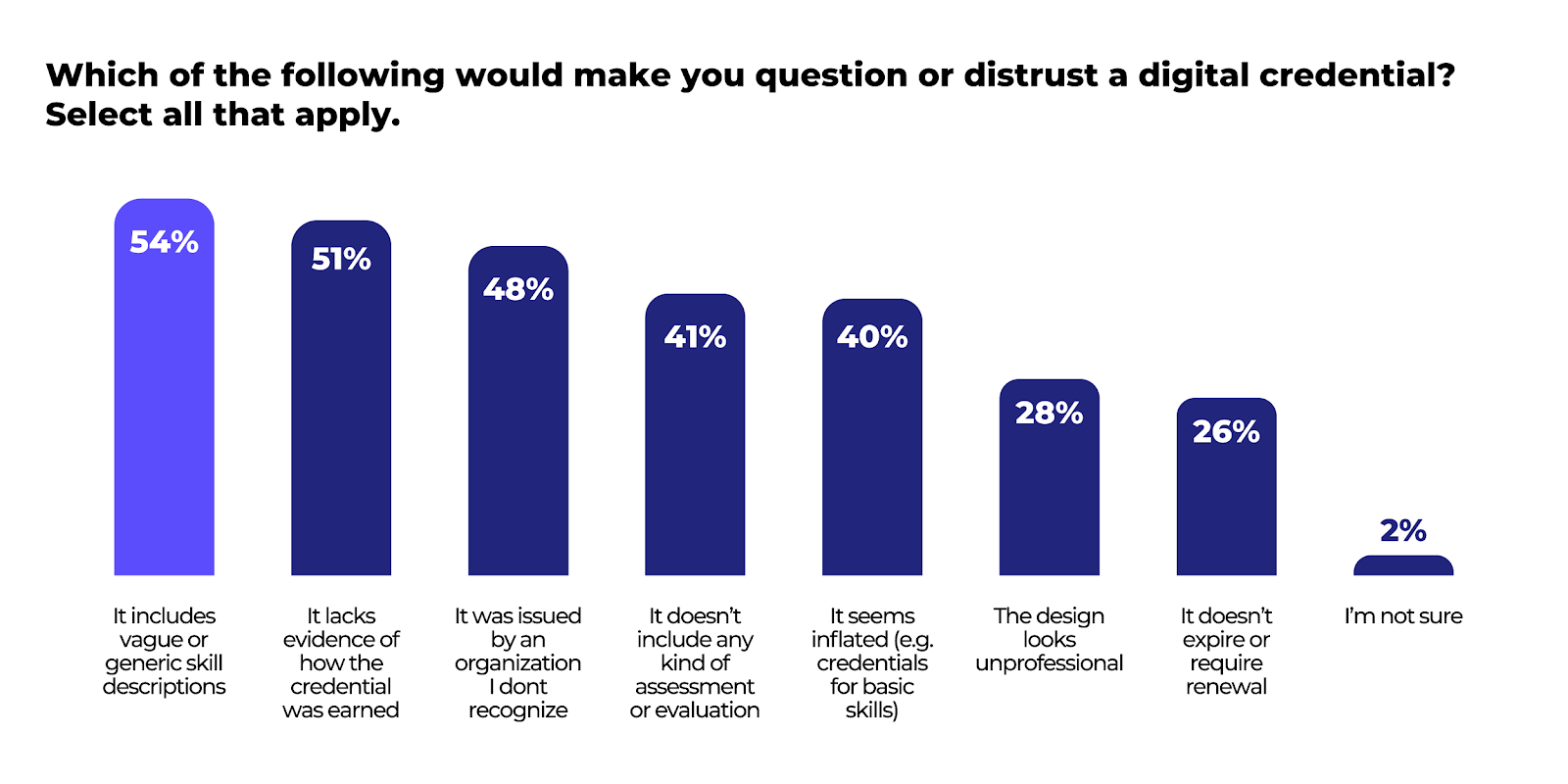
From our preliminary 2025 State of Credentialing Employer Survey of 500+ HR and talent leaders:
Employers are skeptical of credentials with vague skills, unclear evidence, or unknown issuers.
🗣️ What’s one change you’ve made (or want to make) to build more trust in your credentials? Reply to this email — we may feature your insight in the next issue.
Microcredentials That Matter — Lifelong Learning Edge
What makes a microcredential matter? Wendy Palmer outlines the three trust signals employers care about most — and how to design with transparency, consistency, and purpose from the start.
Building Trust in a Digital World: Scalable Solutions for Verifiable Credential Ecosystems
How do you prove your credentials are trustworthy? New tools from Credential Engine and the Digital Credentials Consortium outline scalable solutions for issuer verification and trust-building in credential ecosystems.
The CredLens Experiment — Work Shift
States are building smarter credential systems — and CredLens is helping. See how this new experiment is surfacing quality data, improving transparency, and setting the stage for more trusted frameworks.
What High-Impact L&D Looks Like in 2025 — and How to Get There — July 15, 2025
Only 4% of L&D teams report on outcomes the C-suite cares about. In this webinar, David Leaser (architect of IBM’s award-winning digital badge program) and Accredible’s Maise Hunns share how leading orgs are using skills data and digital credentials to show real business impact.
The Badge Summit — July 21-23, 2025
This annual gathering of educators, technologists, and credentialing leaders explores the future of digital badges, microcredentials, and skills-based learning. Join in person at CU Boulder or virtually.
ASAE Annual Meeting & Expo — August 10–13, 2025
From credentialing to member engagement, ASAE brings together association leaders shaping the future of professional learning. Join us in Los Angeles to connect, learn, and explore what’s next for your credentialing strategy.
Tired of juggling paper certificates, PDFs, and endless manual processes to track learner achievements?
Or running into scaling limitations with your current digital credentialing solution?
Accredible has you covered. Create and issue branded digital credentials that showcase skills and provide real value — without the hassle.
Know someone who'd find value in Certified Insights? Forward this email and invite them to subscribe.
Did a friend forward this email to you? Sign up to get this newsletter next month.

Accredible is the world’s leading digital credential platform, enabling education and training leaders to increase learner engagement and drive program growth.


Accredible is the world’s leading digital credential platform, enabling education and training leaders to increase learner engagement and drive program growth.

