


Hello and welcome to Certified Insights from your digital credential friends at Accredible. You’re in good company with 58K+ education and training leaders.
Each month, we share tips and strategies to help you grow your credentialing program. Up next:
📊 How top L&D teams are using skills data to earn C-suite trust
🧠 WGU’s Sarah DeMark asks: “Can we please stop calling them ‘soft skills’?”
🌱 Barriers to employee development, Workforce Pell momentum, and what it takes to build a more equitable talent system
What do learning hours, course completion rates, and satisfaction scores actually tell you?
They’re signals — but not the whole story.
Those metrics don’t show whether employees retained the information, how they’re applying it on the job, or what business outcomes the learning is driving. Yet these are still the numbers many L&D teams bring to the C-suite. And the disconnect is costing us.
According to Boston Consulting Group, only 4% of L&D leaders report on the outcomes of their skill-building programs — whether in terms of business results (like productivity or tool adoption) or talent outcomes (like employee engagement or career mobility). That gap doesn’t just reflect a reporting issue. It puts even great programs at risk.
In today’s climate — with leaner budgets, AI reshaping roles, and rising pressure to prove value — activity metrics aren’t enough.
We need to show business impact.
And more L&D teams are starting to do just that:
This is what it looks like when learning becomes visible, measurable, and tied directly to performance, retention, and mobility.
In a recent conversation with Maise Hunns, Director of Professional Services at Accredible, and David Leaser, Co-Founder of the Digital Badge Academy and former badge program architect at IBM, we explored what high-impact L&D really looks like — and how leaders can build toward it.
Here’s a preview of the first three steps. The full 6-step framework is available in the companion blog post.
Step 1: Align KPIs to Monday morning problems
Executives don’t wake up thinking about learning hours. They’re focused on reducing attrition, accelerating productivity, and improving team performance.
That’s where your metrics need to point.
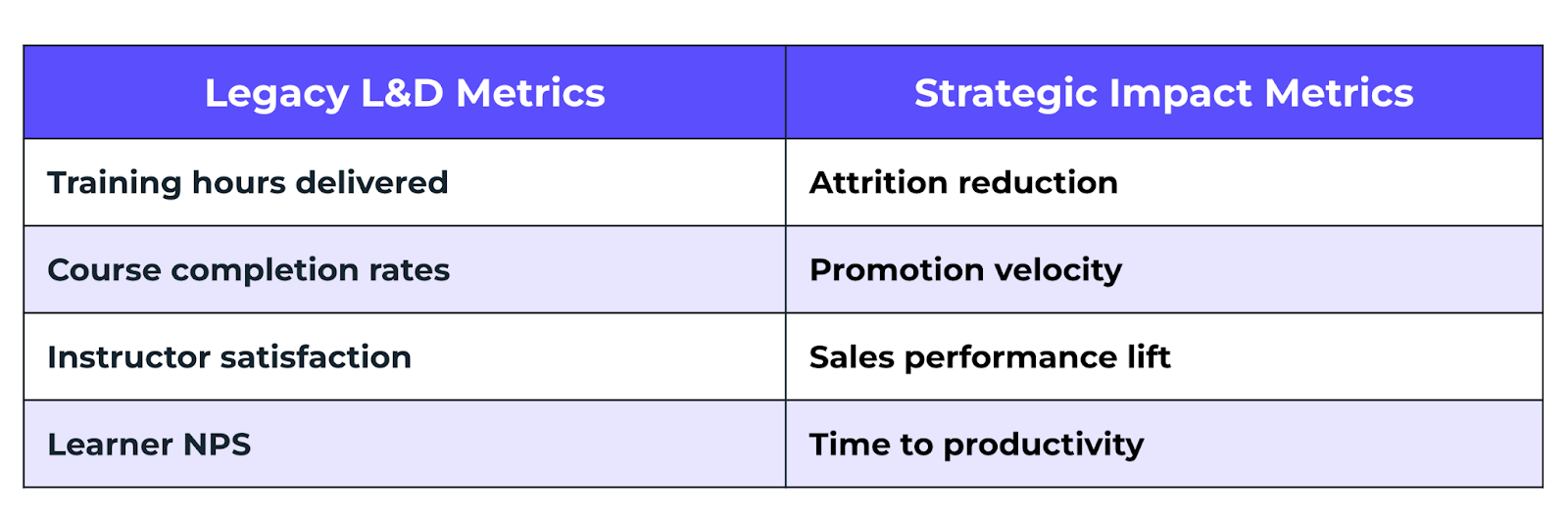
“You can still track completions,” Maise said, “but if that’s the only thing you’re reporting, you’ll stay invisible to the business.” The shift is about relevance. Strategic L&D teams don’t abandon learning metrics — they connect them to impact.
David shared how this mindset shift played out at IBM: “When I was doing the badge program, I thought everybody cared about badges. Turns out, no one did. But when I said I could help them increase leads and reduce support costs, they listened.”
Step 2: Identify the skills that move the needle
Your org’s top priorities — things like digital transformation or customer experience — rely on people with specific, durable skills: data literacy, systems thinking, negotiation, and collaboration.
Don’t boil the ocean. Identify which capabilities truly drive performance and mobility. Use stakeholder interviews to align on skills and a shared language.
Maise shared how one organization unlocked this through leadership interviews: “Once we heard ‘faster client onboarding’ three times, we knew we weren’t just talking about training — we were solving a time-to-productivity challenge.”
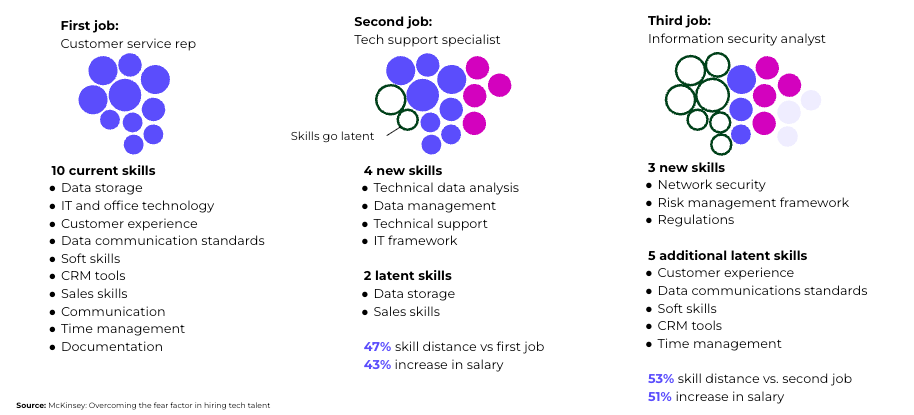
McKinsey research underscores the power of this mindset. On paper, a customer service rep, tech support agent, and security analyst may seem unrelated. But skills analysis shows significant overlap — just a few additional competencies can unlock internal mobility. That’s the case for skills-based workforce planning over role-based replacement.
Step 3: Credential with structure and credibility
Here’s where visibility becomes usable.
A rich credential isn’t just a badge — it’s a structured data object. It includes skill tags, proficiency levels, linked projects or scores, and even third-party endorsements from groups like The American Council on Education. These credentials are searchable, system-ready, and trusted across the org.
David shared how a large Asia Pacific company assessed and credentialed employees with metadata-rich digital badges to gain visibility into existing skills.
“Because that metadata was in a consistent, consumable, searchable format, they discovered that many women and minorities were severely underemployed — not due to a lack of skills, but because job descriptions and seniority were limiting their mobility.”
With new insights gained from digital credentials, the company enrolled these employees in a leadership development program and promoted them into roles where they could shine.
Maise put it simply: “A badge isn’t the point. The point is, what can we do with the data behind the badge?”
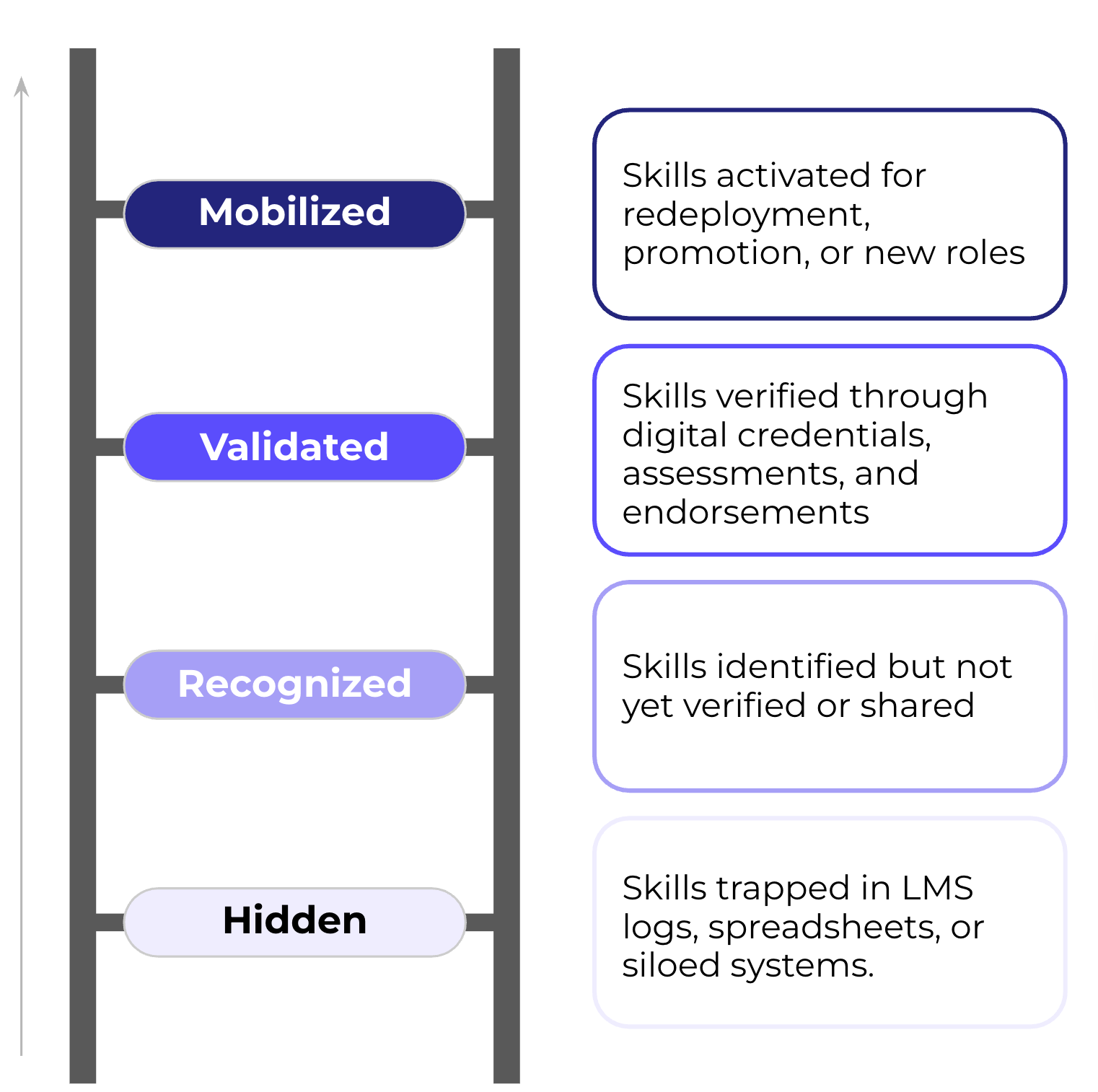
Capability Visibility Ladder: This is the path from unmeasured skills to actionable talent intelligence. Where’s your org today?
Preview: What’s in the full framework?
Steps 1–3 make skills visible and structured. Steps 4–6 help you turn that visibility into decisions:
Correlate credential data with outcomes like sales, CSAT, or retention — even if you start in a spreadsheet.
Ask follow-up questions 30–90 days post-credential to measure confidence, application, and impact.
Report on metrics that matter — like % promoted, time to ramp, or cost savings — to earn executive trust and alignment.
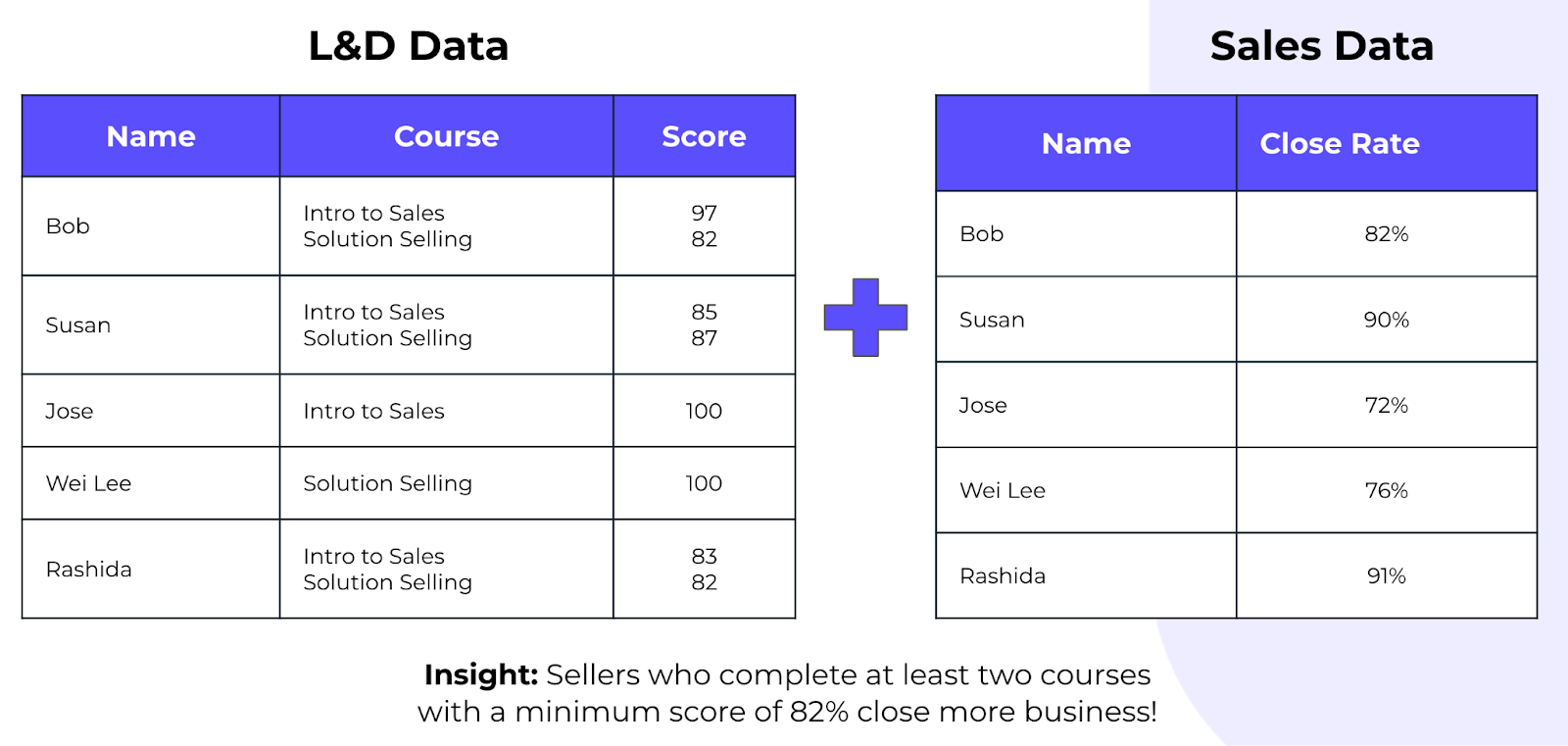
An example of how companies have linked learning to business outcomes.
Even if your current systems aren’t built for this yet, you can start with small, manual steps. Visibility isn’t about technology — it’s about intent.
👉 Get the complete 6-step blueprint in our new blog post, which includes real-world examples and a copy-ready learner outcomes survey to help you measure what matters.
Final thought
L&D’s next chapter isn’t about offering more training — it’s about generating better decisions.
The most impactful programs aren’t just supporting the business; they’re shaping how it hires, promotes, and grows. That’s a different kind of influence. And it starts with skills your organization can see and trust.
Until next time,
Ryan
Senior Director @ Accredible

“Can we please stop calling them ‘soft skills’?”
In a recent LinkedIn post, Sarah DeMark, Vice Provost at WGU, applauded Sandra Sjoberg’s article arguing for a shift in how we define — and value — the human skills that matter most: communication, collaboration, adaptability, emotional intelligence.
These skills are in high demand, but notoriously hard to measure. Some call them “power skills.” Others, “durable” or “human” skills.
Are you credentialing these types of skills today? If so, how are you measuring them and signaling their value to learners and employers? Hit reply and let us know.
Addressing the Barriers Blocking Employee Development — Gallup
Only 1 in 4 employees strongly agree they’ve had growth opportunities at work. Gallup outlines how a lack of manager support, unclear paths, and weak learning cultures are holding back development, and what leaders can do to fix it.
The Future of Talent Development: Reimagining Systems for 2025 and Beyond — The Aspen Institute
UpSkill America's Haley Glover and Walmart's Sean Murphy explore what it takes to build a talent system that supports economic mobility, starting with stronger employer commitments and better data on skills and outcomes.
Budget Bill Expands Pell Eligibility: What’s Next for Students and Providers? — JFF
A new “Workforce Pell” provision extends financial aid to shorter, non-degree programs — a big win for learners pursuing faster, skills-based pathways. Junior Achievement USA’s Holly Garner highlights how this could support real credentialed career mobility.
ASAE Annual Meeting & Expo — August 10–13, 2025
From credentialing to member engagement, ASAE brings together association leaders shaping the future of professional learning. Join us in Los Angeles to connect, learn, and explore what’s next for your credentialing strategy.
From Issuance to Impact: A Blueprint for Usable and Trusted Credentials — August 20, 2025
Most programs issue credentials. Fewer make them trusted, shared, and measurable. In this 45-minute session, learn how leading organizations design digital credentials that drive real-world outcomes, and how to help learners and employers actually use them.
UPCEA Convergence 2025 — September 29–October 1, 2025
This future-focused gathering explores the intersection of credential innovation, employer collaboration, and learner mobility. Join leaders across higher ed, workforce, and corporate learning this fall in Washington, D.C.
Tired of juggling paper certificates, PDFs, and endless manual processes to track learner achievements?
Or running into scaling limitations with your current digital credentialing solution?
Accredible has you covered. Create and issue branded digital credentials that showcase skills and provide real value — without the hassle.
Know someone who'd find value in Certified Insights? Forward this email and invite them to subscribe.
Did a friend forward this email to you? Sign up to get this newsletter next month.

Accredible is the world’s leading digital credential platform, enabling education and training leaders to increase learner engagement and drive program growth.


Accredible is the world’s leading digital credential platform, enabling education and training leaders to increase learner engagement and drive program growth.

