


Most of us have several physical credentials to prove our identity. We might hold a driver’s license or passport, for example. But, more and more of these essential documents are becoming digitized, giving us a safer, more convenient way to prove someone is who they say they are.
In this blog, we explore what verifiable credentials are. Then we’ll dive into the who, how, and why behind their issue, and how they can impact business processes and revenue.
What are verifiable credentials?
Verifiable credentials are a digital version of ID documents, certificates, licenses, etc. Issued by trusted organizations, they can be securely shared and verified.
Like their paper counterparts, they provide evidence of important information about a person. This could be diplomas and degrees, medical licenses, criminal record checks, or residency certificates.
Similar to digital credentials, they’re designed to be tamper-proof and highly secure. A digital credential can cover a broad scope, representing membership, personal growth, or digital versions of a university qualification. However, a verifiable digital credential includes cryptographic evidence that proves the qualification is genuine and hasn’t been tampered with.
They also include digital signatures so an organization can verify the authenticity and integrity of the document.
Users can store these documents on a computer, smartphone, a credential holder like a digital wallet, or via the cloud. This means they can be accessed at any time, making it an easy and convenient way to prove someone’s identity or qualifications whenever needed.
Why are they important?
As technology advances, we’re seeing more institutions digitalize their operations. As a result, an increasing number of organizations are also relying on verifiable credentials.
Their importance lies in their ability to enable trust in decentralized systems, eliminate fraud, and speed up credentialing processes. This is essential in fields like healthcare, education, finance, and employment, where validating licenses and qualifications is critical.
As the world becomes more globalized and remote work more mainstream, it’s even more important for establishing trust with potential employees or business partners who you may work with virtually.
Banks and other financial service providers often use verifiable credentials to confirm a customer’s identity before completing online transactions. Recruitment managers and HR teams can also use them alongside ERP systems integration to verify a candidate’s qualifications during the recruitment process.
In these scenarios, digital credentials provide a scalable, secure, and efficient solution.
What are some examples of verifiable credentials?
Verifiable credentials can be used across various industries. From a residency certificate to a university degree, there are countless real-world applications.
Employment records
Checking people are who they say they are is vital for recruitment. Making a credential verifiable digitally allows recruiters to account for a candidate’s:
- Employment history
- Workplace skill endorsements
- Background checks
Financial documents
Financial planning and analysis is a huge responsibility and can have massive repercussions for lenders and borrowers. For this reason, the finance industry may prefer digital credentials over physical credentials for verifying things like credit scores and income.
Academic certifications
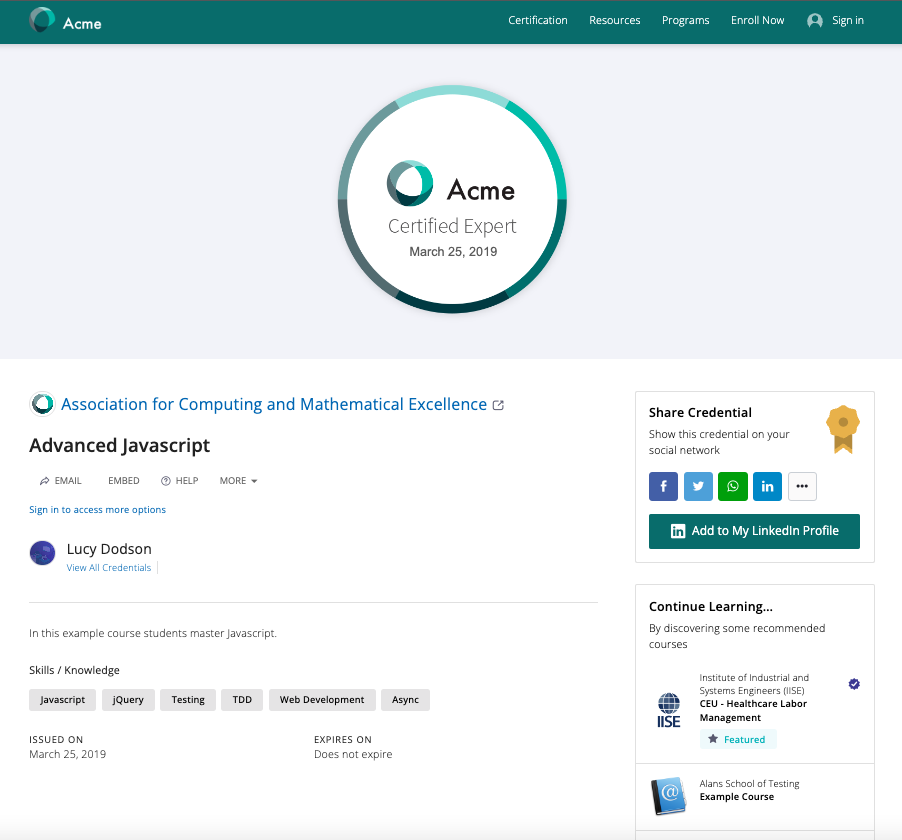
Universities and course providers may offer certificates in digital credential formats, including:
- Diplomas and degrees
- Professional certifications
- Transcript records
- Course certificates for specific skills
Health records
As you can imagine, the healthcare industry is stringent about licensing and identity checks. They may ask for a credential type like:
- Vaccine certificates
- Medical licenses
Travel and tourism documents
Tourism associations, governing bodies, and industry associations may ask for verification in different scenarios. For example, if someone is requesting to join a membership scheme with a relevant travel association or applying for a job with a tourism operator, the company will want to verify any certifications or awards that the person claims to have.
In these cases, they may need to verify documents such as:
- Membership documents
- Visas and immigration documents
- Travel health certificates
- Award certificates
3 use cases for verifiable credentials
- Recruitment
Before hiring someone to join their retention call center, a business can use verifiable credentials to check applicants have the right training or certifications for the role. During the application process, the candidate may claim to have taken online classes in phone etiquette or completed an e-learning course in customer service. Verifying these claims by requesting verifiable credentials ensures agents have the relevant skills and experience they need to handle high-stakes customer interactions.
- Healthcare
Healthcare providers can validate medical licenses or vaccine records to check doctors and nurses meet industry standards and patient safety regulations. These checks can also apply to patients, helping healthcare professionals create appropriate treatment plans based on an individual’s previous medical history.
- Education
Universities or online education providers often request verifiable credentials before enrolling someone on a higher education course that requires a foundation degree or other training. For example, someone looking to take a course in microservices design patterns Java may need a relevant qualification in software design or architecture.

Understanding the benefits of verifiable credentials
Verifiable credentials offer a number of benefits for both businesses and individuals.
Ease meets speed
Using verifiable credentials reduces time spent on manual verification processes. Instead of searching through piles of paperwork and filing cabinets for a physical document or having to call various individuals and agencies, businesses can use online services and systems to validate employee access or vendor credentials.
As well as saving time, this helps to reduce errors, boost employee productivity (and their morale), and improve efficiency.
Greater customer trust
Trustworthy credentials improve customer confidence. This is especially true in industries like finance or healthcare. Knowing an organization uses verified credentials reassures customers that their sensitive information will be handled by qualified professionals, fostering customer loyalty and retention.
Less risk of fraud
Fake degrees, certifications, or misrepresented qualifications can lead to poor hiring decisions, compliance violations, and even legal consequences.
For example, if a medical professional fabricates their licenses, it could have severe repercussions for patients who may be mistreated and go on to sue the healthcare provider. Verifying identity documents, financial information, and professional qualifications leaves you less exposed to fraud risks, allowing you to operate more safely and efficiently.
Higher profitability
Being able to easily and conveniently access digital credentials leads to better hiring decisions, compliance, and risk management. When it comes to your company’s profitability analysis, this should be music to your ears.
What is profitability analysis? It’s a process that gauges your company’s ability to generate profit. As verifiable credentials make your workflow more productive and reduce the risk of fraud and data breaches, this can help you reduce the cost of potential liabilities.
As a bonus, you’ll also improve customer satisfaction rates and facilitate secure partnerships and transactions, opening up new revenue opportunities.
Who issues verifiable credentials?
Verifiable credentials come from all kinds of providers and organizations. The most common issuers include:
- Educational institutes: Schools, colleges, and training providers issue credentials like diplomas, certifications, and micro-credentials.
- Government authorities: Digital IDs, passports, and other official documents are commonly issued by governments.
- Employers: Work experience letters, skill endorsements, and professional references fall under this category.
- Professional bodies: Industry associations issue licenses and certifications for regulated professions, such as accounting or healthcare.
- Technology providers: Companies in technology-driven sectors issue specialized certifications, such as credentials for developers and cybersecurity licenses.
How do you authenticate credentials?
Authenticating credentials is an essential part of the process, so you need to make sure it’s thorough, robust, and secure.
To see what this looks like in practice, let’s imagine you’re hiring a chartered accountant and need to check if the candidate has the required qualifications for the role. Here’s how it works:
- Request the credential
First, the applicant has to provide the verifiable credential. Whether it’s by email, digital wallet, or another online service, these documents should contain essential information like what the qualification is, who issued it, and when it was issued. They should also include the digital signatures of the issuer.
- Verify the issuer and confirm details
Check that the issuer is, in fact, a reliable, trusted organization. To do this, you’ll need to validate the issuer’s public key by checking a public registry or blockchain.
Then, compare the credential’s cryptographic signature with the issuer’s public key to confirm that they issued the credential.
It’s also crucial to make sure the credential hasn’t been tampered with since it was issued. Confirm any change in data, such as the candidate’s name or certification date, as these might invalidate the signature. If the signature matches, the credential’s data is verified as authentic.
- Validate ownership
So far, it looks like the candidate has proven the authenticity of the verified credential. Now, check if they are the rightful owner.
The candidate should have a private key that only they have access to. Your system should be able to validate the private-public key pair to confirm ownership, for example by getting the applicant to respond to the verification system’s cryptographic challenge.
- Confirm expiry or revocation status
Confirm if the credential is still valid and hasn’t been revoked. Your system should be able to check the credential’s expiration date or its status in the issuer’s registry. If the credential is revoked (for example, due to malpractice or outdated knowledge), it will show as invalid.
- Approve the credential
If all checks are successful, you can trust that the certification is genuine and the information is accurate and up-to-date.
Now you can confidently move the candidate to the next hiring stage knowing they are a qualified accountant.
Secure your business with verifiable credentials
As we become a digital-first world, verifiable credentials are likely to play an even more important role in establishing trust with those we work with.
They’re also essential for operating securely online and making our processes more efficient, regardless of the industry you operate in.
Integrating verifiable credentials into your daily operations can also improve transparency, reduce fraud, and drive profitability. Embrace these digital documents to stay ahead in a rapidly evolving digital landscape.


