


When it comes to hiring, most of us are familiar with the classic drill — scanning résumés for degrees, certifications, or years of experience. But have you ever stopped to think if these metrics truly measure someone’s ability to perform a job?
Enter skills validation, a game-changer in building inclusive workplaces and hiring practices. But what is skills validation? Why does it matter? How does skills validation promote inclusion? Let’s take a closer look.
What is Skills Validation, and Why Does it Matter?
Skills validation is the process of assessing and confirming a person’s actual abilities in a specific area. It’s not just about what’s written on paper — it’s about whether someone can apply what they know to solve real-world problems.
Here’s why it’s a big deal:
- Fairness first: Traditional hiring methods often favor candidates with privileged access to education or specific networks. Skills validation levels the playing field.
- Better matches: Companies that validate skills get candidates who can hit the ground running, saving time and money on training.
- Bridging skills gaps: By identifying what skills someone lacks, organizations can offer targeted training programs that fill the gaps.
Skills validation challenges the over-reliance on credentials and focuses on actual performance, ensuring companies hire based on potential rather than pedigree. Plus, it fosters innovation by encouraging a workforce with diverse experiences and practical expertise.
The Problem with Traditional Hiring Practices
Relying on traditional hiring methods—résumés, cover letters, and unstructured interviews—often does more harm than good. These practices are designed to simplify hiring decisions but frequently miss the mark.
Pedigree Over Potential
Résumé-based hiring prioritizes surface-level credentials, such as degrees, certifications, or past job titles, which may not reflect a person’s actual abilities. This approach excludes candidates with non-traditional educational paths or those who’ve gained skills through unconventional experiences.
Hidden Biases in the Process
Traditional methods are rife with unconscious bias. Factors like a candidate’s name, university, or even hobbies can trigger assumptions that overshadow their true capabilities. This doesn’t just limit opportunities for individuals — it also stifles innovation within organizations by creating homogeneous teams.
Ineffectiveness in Gauging Real Skills
Interview questions like "Where do you see yourself in five years?" or "Tell me about a challenge you’ve faced." can reveal personality traits but rarely measure technical or role-specific abilities. Without validated skills, companies risk hiring based on likability or gut feelings instead of proven competence.
Missed Opportunities for Growth
Many candidates possess strong transferable skills — like problem-solving or adaptability — but these are often overlooked in favor of job-specific experience. By focusing on rigid qualifications, employers may miss candidates with the potential to excel after a brief period of targeted training.
Traditional hiring might feel familiar and straightforward, but it’s increasingly out of sync with the needs of a fast-evolving workforce. The future of hiring lies in approaches that prioritize what candidates can do, not just what they’ve done.
How Skills Validation Promotes Inclusion
Skills validation helps create workplaces where everyone gets a fair shot by shifting the focus from traditional credentials to actual ability.
Skills validation expands the applicant pool definition by ensuring that candidates are assessed based on their actual abilities, not just their educational background or past roles. This allows for a more diverse and inclusive range of candidates to be considered.
Here’s how it drives inclusion and why it matters:
Eliminating Credential Bias
Requiring specific degrees or certifications often excludes people from underrepresented backgrounds who may not have had access to higher education. With skills validation, candidates are assessed on what they can do, not where they’ve been, opening doors to a broader talent pool.
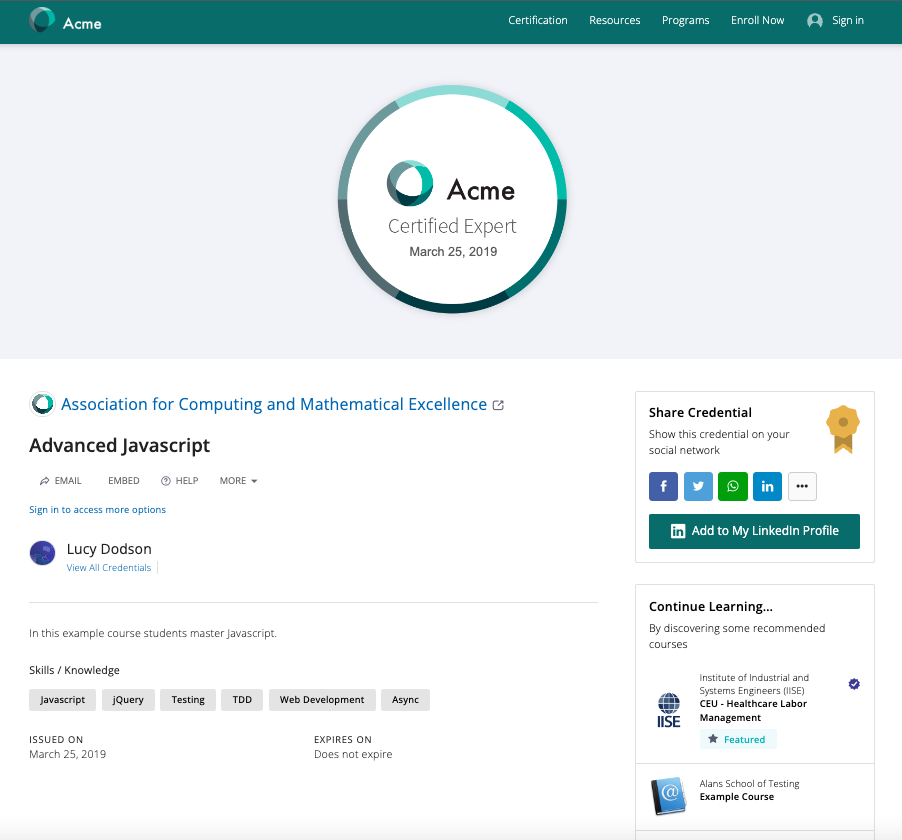
Digital credentials remove many barriers to entry for underrepresented groups, offering an easy-to-access way to showcase and verify skills gained through non-traditional learning paths. By focusing on verifiable competencies rather than just degrees, companies can open doors to a more diverse applicant pool.
Recognizing Transferable Skills
Transferable skills — like communication, teamwork, and problem-solving — are universal, yet they’re often undervalued in traditional hiring. Skills validation tools highlight these abilities, ensuring that candidates from non-linear career paths are seen for their strengths.
Breaking Barriers for Underrepresented Groups
By valuing real-world experience, skills validation makes it easier for people returning to the workforce, career changers, or those with non-traditional educational paths to thrive. It gives everyone the chance to demonstrate their competencies, leveling the playing field.
Encouraging Continuous Development
A focus on skills validation fosters a culture of growth. Candidates and employees alike are motivated to refine their abilities, knowing these will be recognized and rewarded. This creates a workplace ecosystem where diversity of experience and perspectives drives innovation.
Removing Bias in Assessments
Modern skills validation methods — like structured interviews, simulations, or task-based assessments — are designed to be more objective than traditional practices. These approaches reduce the impact of personal bias, ensuring decisions are based on capability, not assumptions.
By incorporating skills validation into your hiring practices, you align your recruitment efforts with your business capabilities model, ensuring that the talent you bring in directly supports your organization’s strategic goals and growth.
Inclusion thrives when individuals are evaluated for their skills and potential rather than judged by superficial markers of success. Skills validation isn’t just fair — it’s transformative.
Methods of Skills Validation
There’s no one-size-fits-all method for validating skills, but there are several effective approaches, each tailored to different roles and industries. Let’s dive deeper into these methods and how they can be applied.
1. Hands-On Assessments
These are direct, practical tests of a candidate’s ability to perform job-specific tasks. For instance:
- A software developer might write code to solve a problem.
- A customer service candidate could respond to a mock customer inquiry.
Hands-on assessments offer clear evidence of what a candidate can do, making them ideal for roles that require technical or task-oriented skills. By integrating hands-on assessments into their hiring processes, companies can develop credentials that go beyond traditional education or job titles, showcasing a candidate's true capabilities.
2. Simulations
Simulations mimic real workplace challenges, putting candidates in situations they’re likely to encounter on the job. Examples include:
- A sales simulation where candidates handle objections and close a deal.
- A leadership scenario requiring participants to manage a team crisis.
These methods are particularly useful for evaluating soft skills like decision-making, communication, and teamwork in a controlled, measurable way.
3. Structured Interviews
Unlike casual, free-flowing interviews, structured interviews focus on competency-based questions tied to measurable outcomes. For example:
- “Can you describe a time when you improved a process? What steps did you take, and what was the result?”
This consistency helps ensure every candidate is evaluated on the same criteria, reducing bias and increasing reliability.
4. Digital Tools
Technology offers innovative ways to validate skills with precision and scalability. For example:
- Online tests and quizzes can assess knowledge in areas like programming, accounting, or language proficiency.
- Gamified assessments evaluate problem-solving or critical thinking through engaging, game-like activities.
- AI-driven platforms analyze responses to provide data-backed insights into a candidate’s strengths and areas for improvement.
- An online video conferencing API can enhance remote skills validation by allowing companies to conduct live simulations, structured interviews, or even real-time problem-solving assessments.
5. Portfolios and Work Samples
For creative or technical roles, reviewing a candidate’s portfolio or past projects can be highly effective. This approach offers tangible evidence of their work quality and style, which can be difficult to measure through interviews alone.
6. Peer Reviews and Group Exercises
Team-oriented roles benefit from observing candidates in group settings. Peer reviews or collaborative exercises, like brainstorming sessions, help evaluate interpersonal skills, adaptability, and how well someone works within a team.
7. Role-Specific Certifications
While not always necessary, certifications tied to skill proficiency (e.g., in IT, project management, or design tools) can supplement other validation methods. These provide additional assurance of a candidate’s competency in specific areas.
By tailoring your methods to the role, you’ll ensure a fair, efficient, and accurate validation process that benefits both the candidate and your organization.
Each validation method has strengths, but no single approach captures the full picture of a candidate’s abilities. Combining multiple methods — like a hands-on assessment paired with a structured interview — gives a more well-rounded view of their skills and potential.
You can also consider using technology such as Oleeo candidate relationship management systems alongside skills validation to ensure that all candidates feel valued and informed throughout the hiring process.
This also fosters an inclusive environment where talent is recognized for their potential, not just their credentials.
Avoiding Validation Failures
Validation doesn’t always go smoothly. Even the most well-intentioned efforts can fall short if the process isn’t thoughtfully designed. Here are some common pitfalls and how to address them:
1. Criteria Are Unclear
If you don’t have a clear idea of what “success” looks like, it’s impossible to measure it effectively. This can lead to inconsistent evaluations or a mismatch between the skills tested and the actual needs of the role. To avoid this:
- Define role-specific benchmarks before beginning the validation process.
- Collaborate with team leads or subject-matter experts to determine what success entails.
2. Tools Are Poorly Chosen
Not all validation methods suit every role or skill set. Using irrelevant or overly generic tools wastes time and can misrepresent a candidate’s abilities. For instance:
- A written test might be ineffective for evaluating hands-on technical skills like carpentry or coding.
- Simulations could miss interpersonal skills if they focus solely on task execution.
Leveraging technology such as an applicant tracking system benefits the skills validation process by helping to align applicant competencies with role-specific needs. To get it right, align the tools with the specific competencies the role requires.
3. Feedback Isn’t Provided
Feedback is essential for both candidates and hiring teams. Without it:
- Candidates don’t know how to improve their skills, potentially discouraging talented individuals from applying again.
- Companies miss the opportunity to build relationships with future prospects or identify internal gaps in the validation process.
Employee involvement in the skills validation process can help identify potential pitfalls, such as unclear criteria or poorly chosen tools. When employees contribute to refining the process, they’re more likely to feel engaged and invested in the outcomes.
This collaborative approach not only improves the validation process but also ensures that skills assessments are both relevant and fair.
4. Overlooking Inclusivity
A lack of inclusivity in the validation process can lead to unfair outcomes. For example, using tools that assume specific cultural knowledge or requiring access to costly resources may unintentionally exclude qualified candidates. Ensure your methods are accessible to all, regardless of background.
5. Failing to Adapt and Review
Skills validation isn’t a one-and-done process. Regularly revisiting and refining your methods ensures they stay relevant as job roles and industry demands evolve. Conduct post-hiring reviews to assess whether validation accurately predicted performance.
Avoiding these failures requires thoughtful planning, adaptability, and a commitment to fairness. When done right, skills validation strengthens hiring processes and ensures every candidate has a fair chance to succeed.
Final Thoughts
Skills validation is more than just a hiring tool — it’s a pathway to building fair, inclusive, and dynamic workplaces. By focusing on what candidates can do rather than where they’ve been, organizations open doors to untapped talent and foster a culture of innovation and growth.
While challenges like unclear criteria or poorly chosen tools can arise, thoughtful planning and a commitment to inclusivity ensure a robust validation process. As industries evolve, embracing skills validation isn’t just a smart move — it’s the key to staying ahead in the talent game.


